
5 Budget Alternatives To Very Expensive Watches
There is something slightly amusing about the world of watches.
One brand can spend years developing an extraordinarily complicated movement, finish every component by hand, use precious metals throughout and charge you the sort of money that could buy an actual house.
Another brand can look at roughly the same design language, put together an excellent watch using proven movements and charge considerably less.
And sometimes, that second option makes a rather compelling argument.
To be absolutely clear, we are not suggesting that any of the watches below are better than their vastly more expensive counterparts. They are not. A Vacheron Constantin perpetual calendar is not suddenly going to be outclassed by a Venezianico because we have written a slightly cheeky article about it.
These are five watches that capture some of the design language, functionality or general wrist presence of vastly more expensive pieces, while remaining firmly within the realms of financial sanity.
And there is another interesting point. These brands have genuine watchmaking credentials. These are not random fashion watches attempting to look expensive. They are established watch brands producing serious mechanical or technically interesting watches at prices that are accessible to considerably more people.
So, let us get into it.
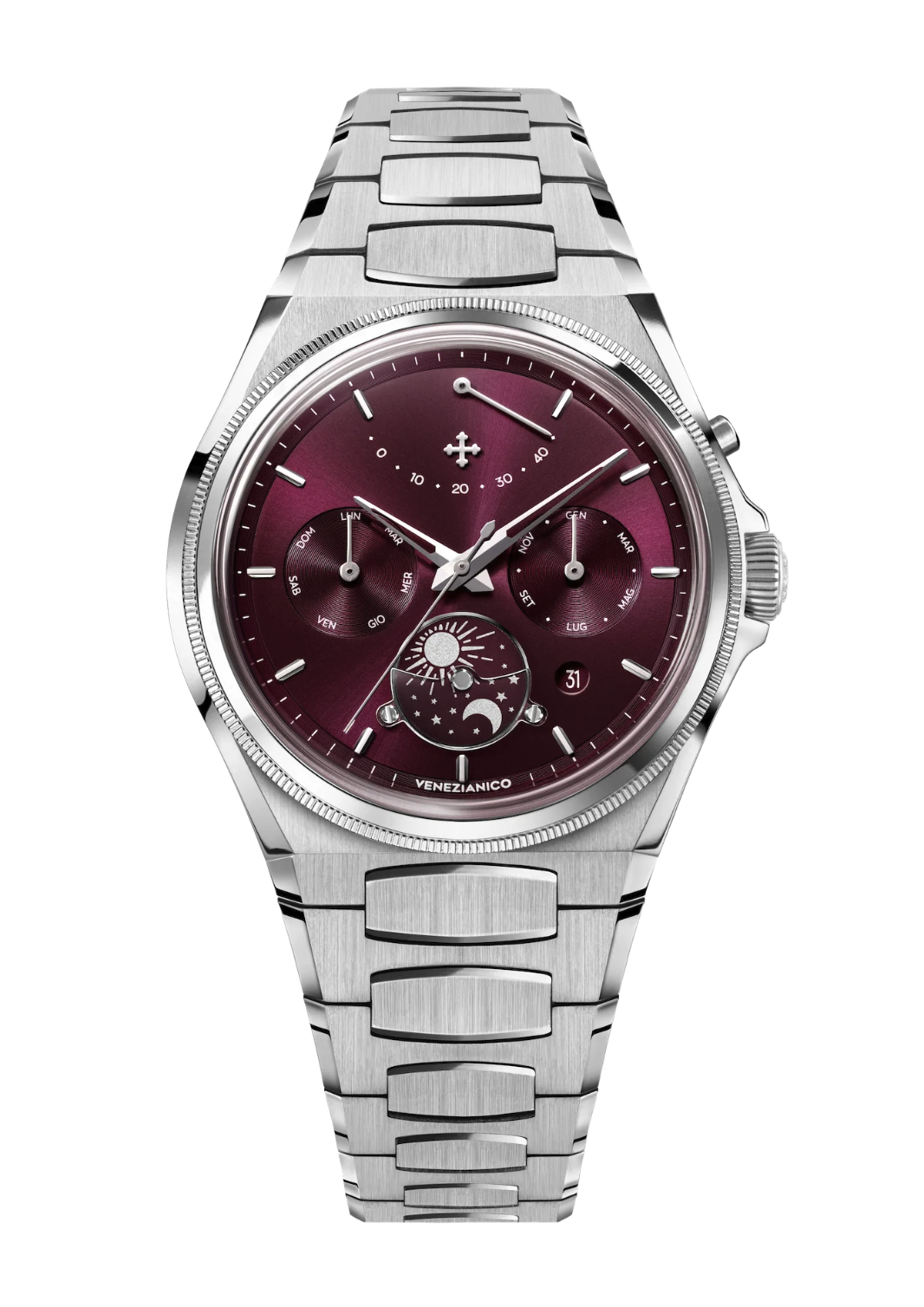
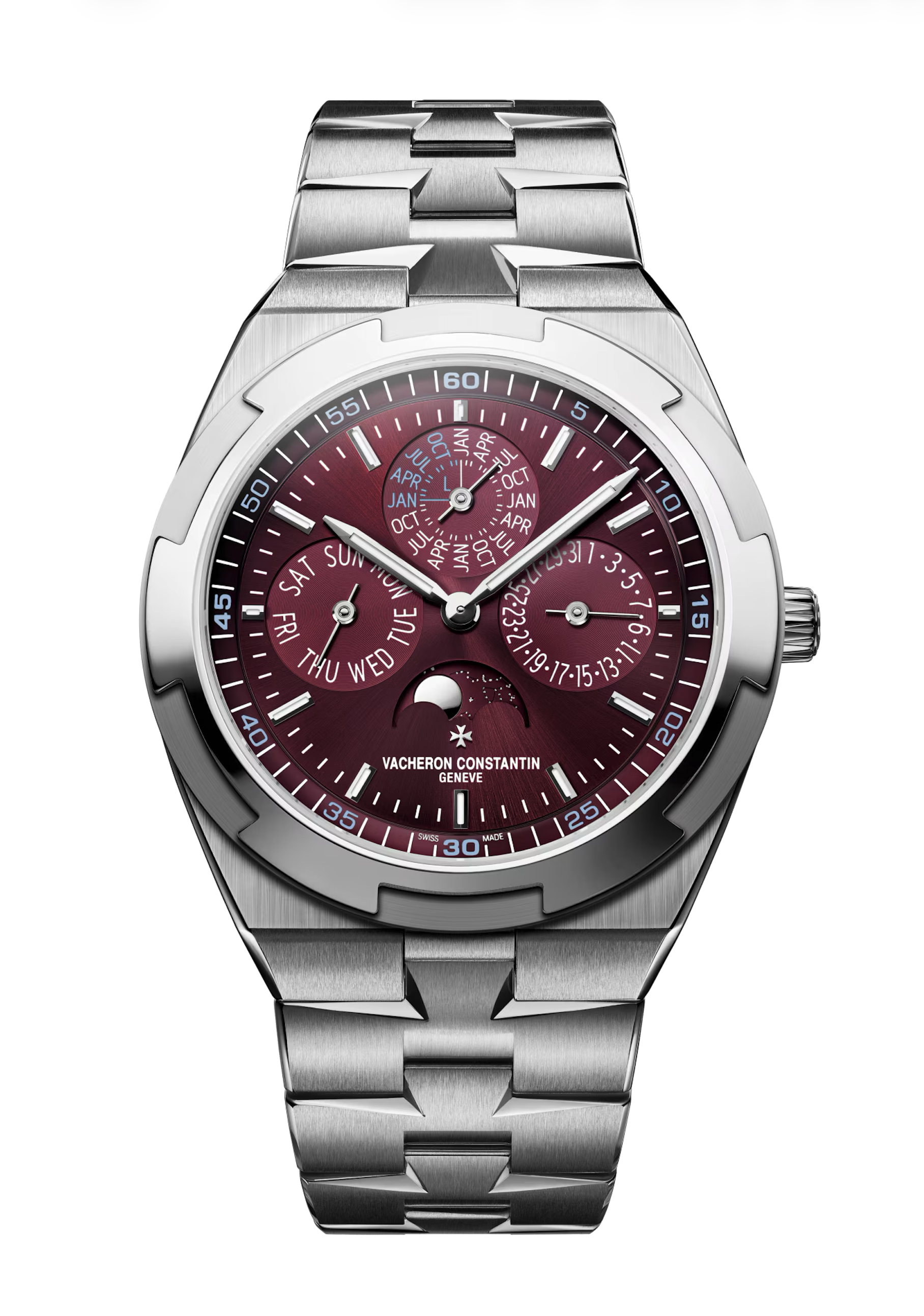
1. Vacheron Constantin Overseas Perpetual Calendar Vs Venezianico Arsenale Calendario
This might be the most outrageous comparison on the list.
At the top of the mountain sits the Vacheron Constantin Overseas Perpetual Calendar Ultra Thin, a 41.5mm white gold masterpiece with an incredibly slim 8.1mm profile and the sort of perpetual calendar complication that makes most normal people simply ask what day it is.
The reference we are looking at is currently listed by a UK authorised retailer at around £119,000.
Inside is Vacheron Constantin's calibre 1120 QP, an ultra thin automatic movement with 276 components, 36 jewels and a 40 hour power reserve. It displays the day, date, month, leap year and moon phase, with the perpetual calendar designed to remain accurate until 2100. It also carries the prestigious Geneva Seal.
It is, in other words, proper serious watchmaking.
And then there is the Venezianico Arsenale Calendario.
At approximately £1,030 after converting its current €1,200 price, the Venezianico is not pretending to be a Vacheron. But it does give you a similarly sophisticated multi information dial, integrated bracelet and a rather impressive amount of mechanical theatre for the money.
The Arsenale uses a Miyota 9100 automatic movement with a complete calendar, power reserve indicator and day night display. It has a 40mm stainless steel case, sapphire crystal and 50 metre water resistance.
The clever part is the way Venezianico has designed the dial. There is a considerable amount going on, but rather than simply throwing sub dials everywhere, the information is arranged into a deliberately architectural layout.
Is it a perpetual calendar? No.
Is it made from white gold? No.
Does it carry the Geneva Seal? Absolutely not.
But for roughly one hundred and fifteenth of the price, it gives you a watch with genuine mechanical complexity, a distinctive design and a serious amount of personality.
Key Specs
Vacheron Constantin Overseas Perpetual Calendar
• Approximately £119,000
• 41.5mm white gold case
• 8.1mm thick
• Automatic calibre 1120 QP
• Perpetual calendar and moon phase
• 40 hour power reserve
• Geneva Seal
• 50 metre water resistance
Venezianico Arsenale Calendario
• Approximately £1,030
• 40mm stainless steel case
• 9.6mm thick
• Miyota 9100 automatic movement
• Complete calendar and power reserve
• Day night display
• Sapphire crystal
• 50 metre water resistance
The Verdict
The Vacheron wins by an astronomical margin if we are talking pure horology. The Venezianico wins by an equally astronomical margin if we are talking about how much money remains in your bank account.
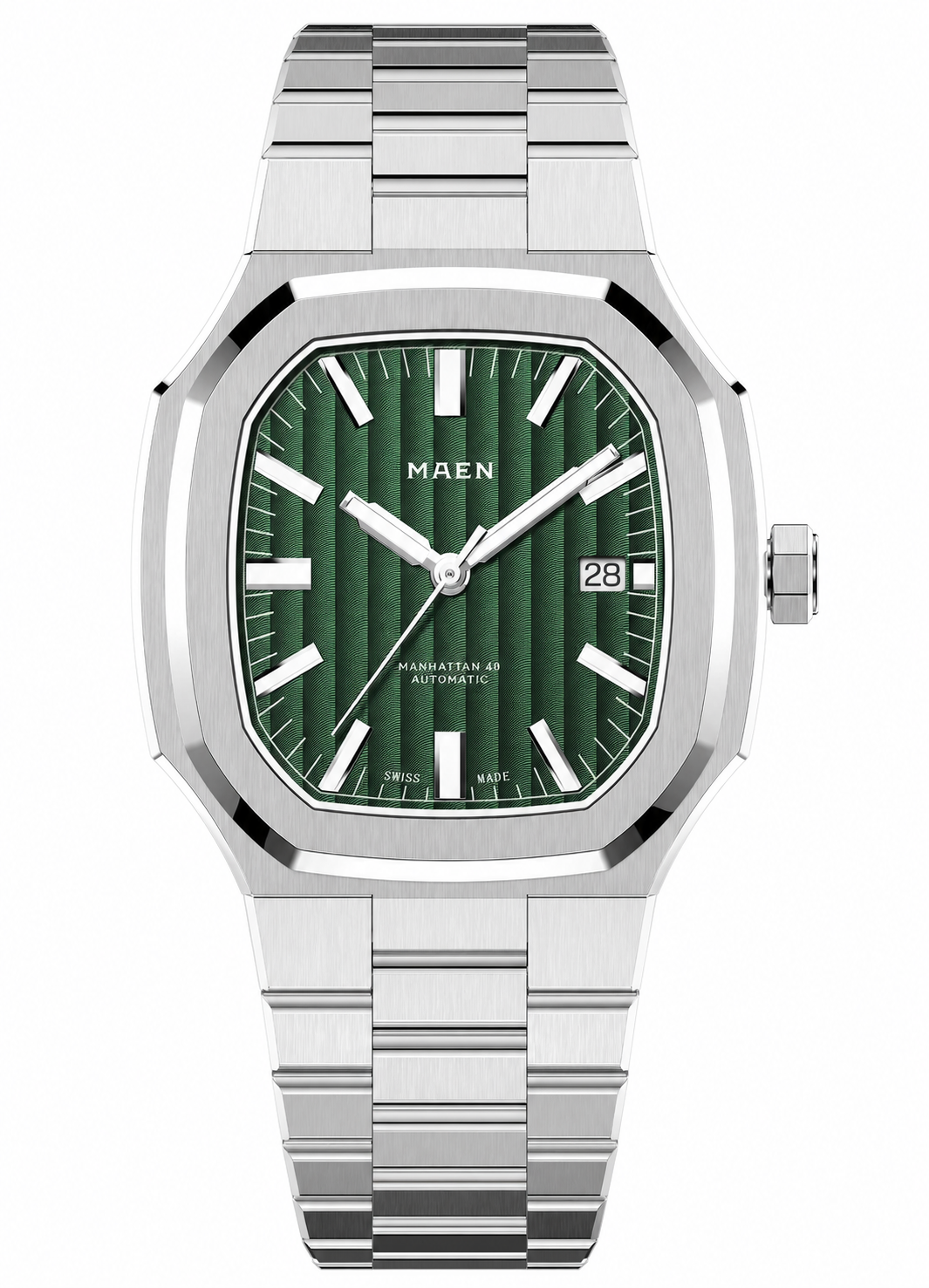
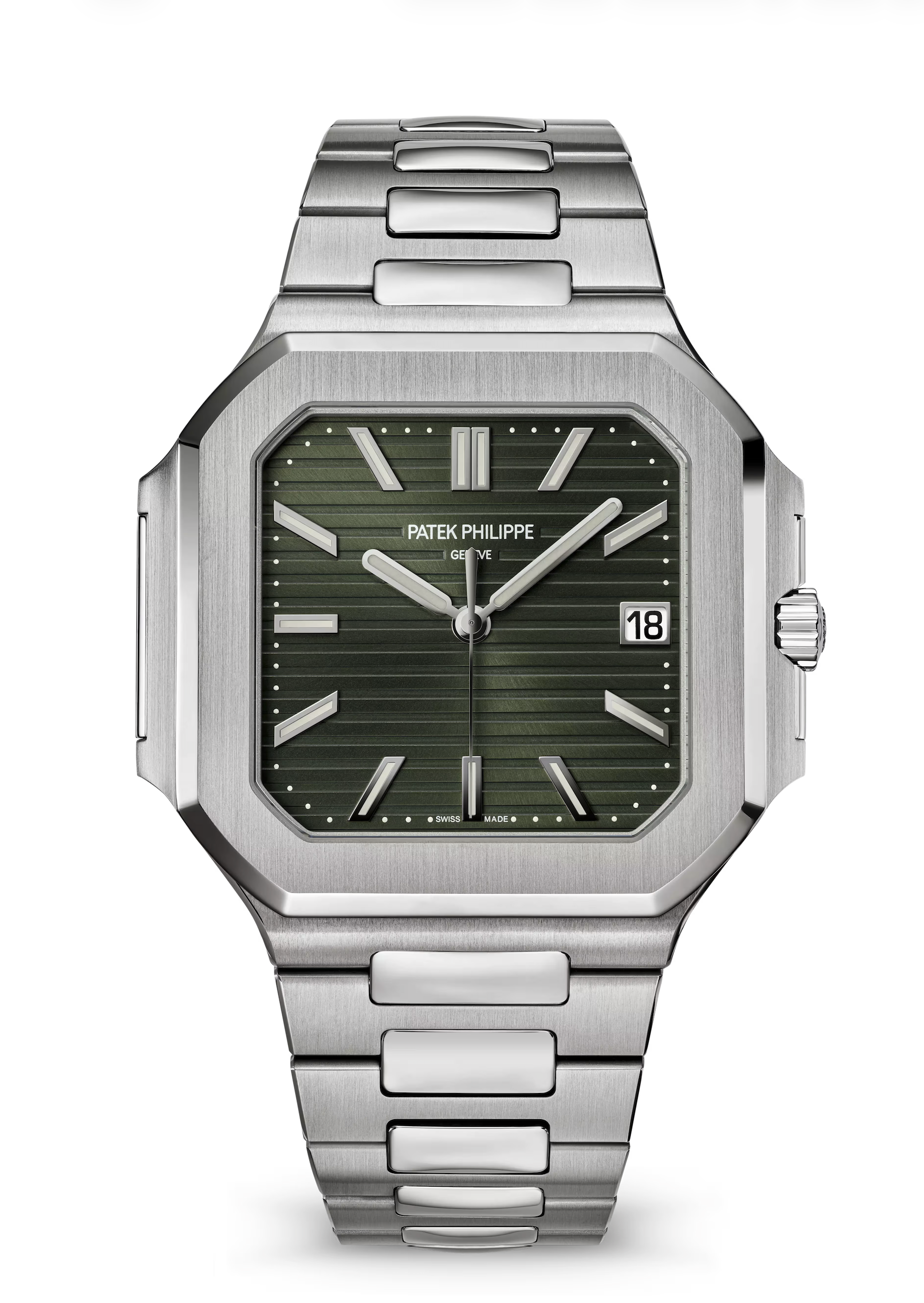
2. Patek Philippe Cubitus Vs MAEN Manhattan 40
The Patek Philippe Cubitus has caused more than a few raised eyebrows since its arrival.
Love it or hate it, the Cubitus is unmistakably Patek Philippe. The 5821/1A combines a square case with rounded edges, an integrated steel bracelet and a horizontally embossed olive green dial.
It is also £36,740.
Inside sits Patek's self winding calibre 26 330 S C with sweep seconds, a date display and a 21 carat gold central rotor. The case measures 45mm and the watch uses the sort of finishing you would expect from one of the world's most prestigious watchmakers.
But if what attracted you to the Cubitus was the integrated bracelet, angular case and 1970s inspired sports watch aesthetic, there is another option worth considering.
Enter the MAEN Manhattan 40.
At approximately £685, the Manhattan is almost comically cheaper.
It does not have a Patek movement. It does not have Patek finishing. It does not have Patek's heritage or status.
What it does have is a 40mm stainless steel case, integrated bracelet, sapphire crystal, a Swiss made La Joux Perret G100 automatic movement and around 65 hours of power reserve.
The Marsh Green version also has a vertically elongated Côtes de Genève dial that catches the light beautifully. The case combines polished and brushed surfaces and the bracelet has been designed specifically to feel like part of the case rather than an afterthought.
And this is where the MAEN becomes interesting.
The Cubitus is very much a luxury statement.
The Manhattan is more of a watch enthusiast's secret handshake.
You get the general integrated sports watch experience without needing to sell your car, remortgage the house or explain to your partner why there is suddenly a £36,740 hole in the bank account.
Key Specs
Patek Philippe Cubitus 5821/1A
• £36,740
• 45mm stainless steel case
• Self winding calibre 26 330 S C
• Date display
• 21 carat gold rotor
• Integrated stainless steel bracelet
• Olive green embossed dial
• Approximately £685
• 40mm stainless steel case
• La Joux Perret G100 automatic movement
• Approximately 65 hour power reserve
• Sapphire crystal
• Integrated stainless steel bracelet
• 100 metre water resistance
The Verdict
Patek Philippe makes the superior watch.
MAEN makes a remarkably convincing argument that you do not necessarily need Patek Philippe's price tag to enjoy the same general genre of watch.
3. Rolex Daytona Vs Seiko Prospex Speedtimer
This is perhaps the easiest comparison on the list because the two watches share something very important.
They are both chronographs with serious motorsport DNA.
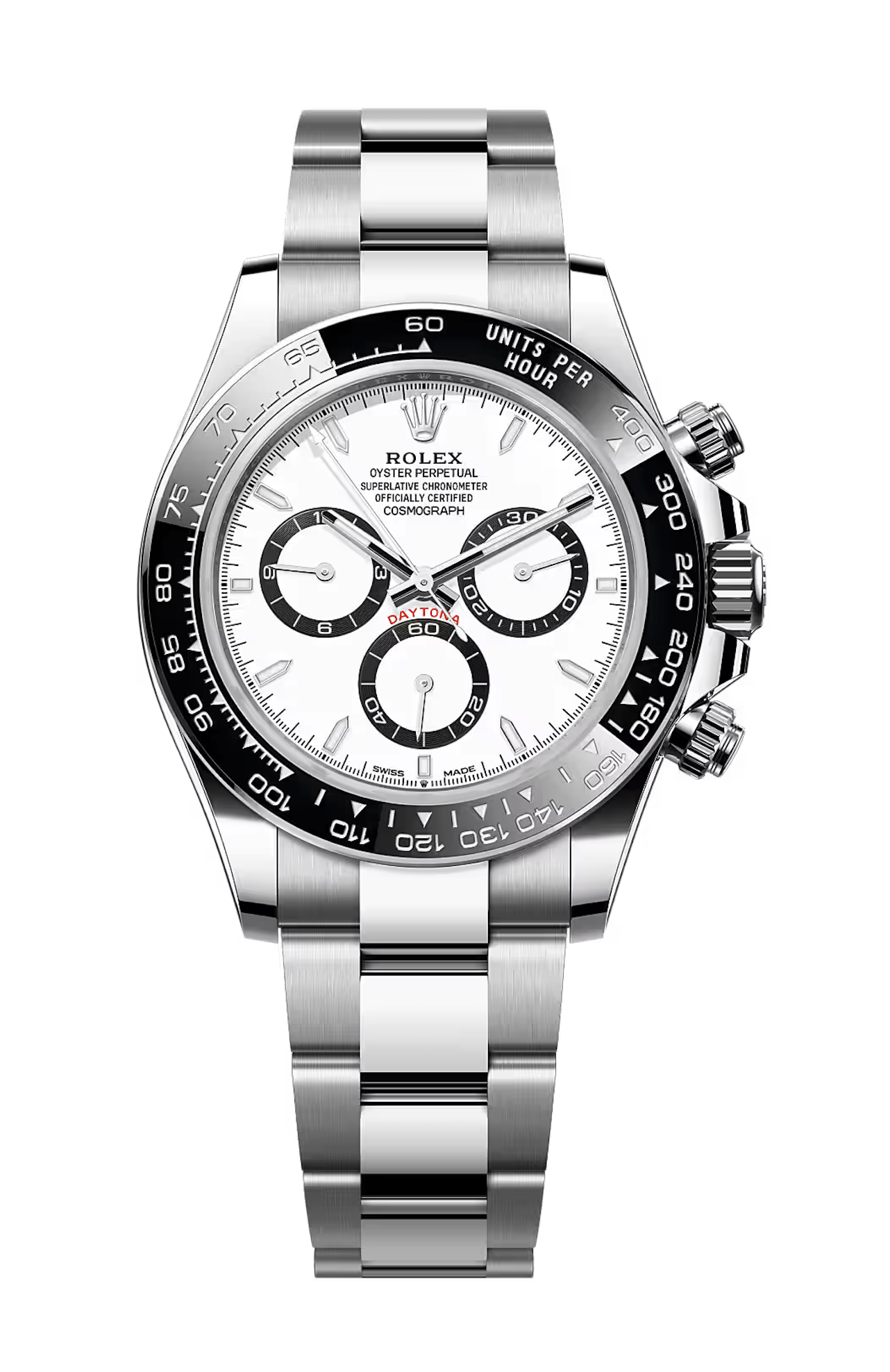
The Rolex Cosmograph Daytona is one of the most famous chronographs ever produced. The current Oystersteel version comes in at £14,050 and features a 40mm case, Oyster bracelet and black Cerachrom bezel with tachymetric scale.
It is also one of those watches where the price is about far more than the components.
You are buying Rolex. The history. The recognition. The engineering. The finishing. The bracelet. The name on the dial. And, of course, the considerable desirability that surrounds the Daytona.
But then Seiko comes along and says, quite reasonably, "How about £640?"
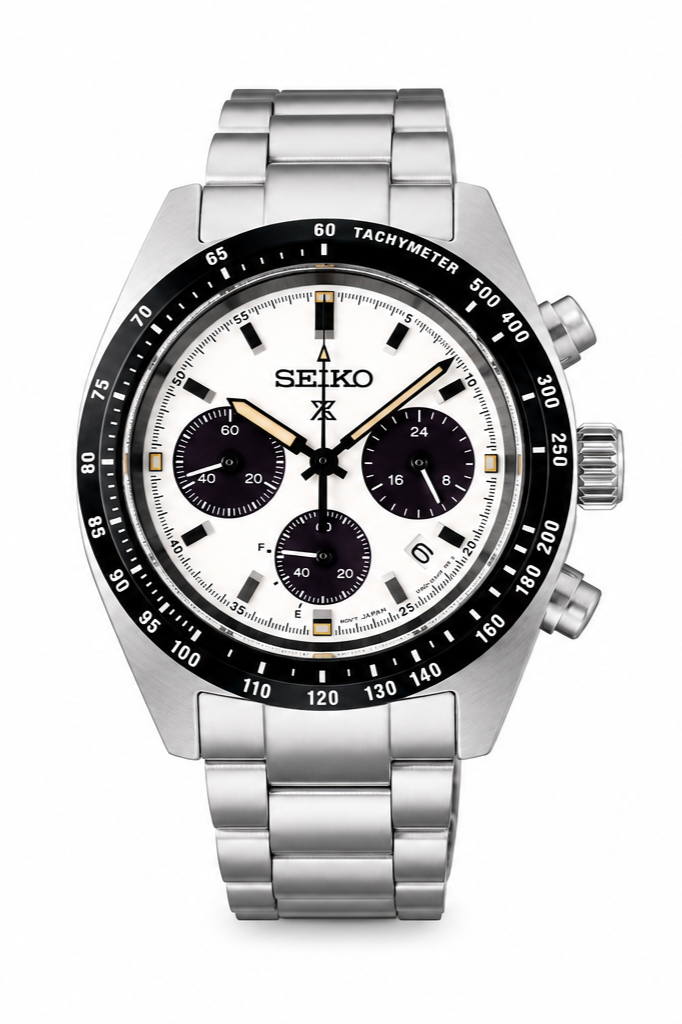
The Seiko Prospex Speedtimer SSC961 takes the familiar panda chronograph formula and gives it a very Seiko interpretation.
It has a 39mm stainless steel case, solar powered V192 movement, sapphire crystal, 100 metre water resistance and approximately six months of power reserve when fully charged.
It is also incredibly practical.
There is no winding. No worrying about whether you have worn it enough. No frantic shaking of the wrist because you forgot to wind it.
It just gets on with it.
And at £640, you could buy more than twenty of them for the price of the Rolex.
That is the sort of sentence that makes watch collecting feel slightly ridiculous.
Key Specs
Rolex Cosmograph Daytona 126500LN
• £14,050
• 40mm Oystersteel case
• Automatic chronograph movement
• Black Cerachrom tachymetric bezel
• Oyster bracelet
• White dial with contrasting black sub dials
• Rolex Oyster case
Seiko Prospex Speedtimer SSC961
• £640
• 39mm stainless steel case
• Seiko V192 solar movement
• Approximately six month power reserve
• Sapphire crystal
• 100 metre water resistance
• Stainless steel bracelet
The Verdict
The Daytona is the icon. The Seiko is the sensible one. And if you simply want a very good looking chronograph that you can wear every day without worrying about it, the Seiko makes an enormous amount of sense.
4. Audemars Piguet Royal Oak Vs Tissot PRX
We could probably have written this entire article around the Tissot PRX.
Few watches have done more to bring integrated bracelet sports watch styling to a much wider audience.
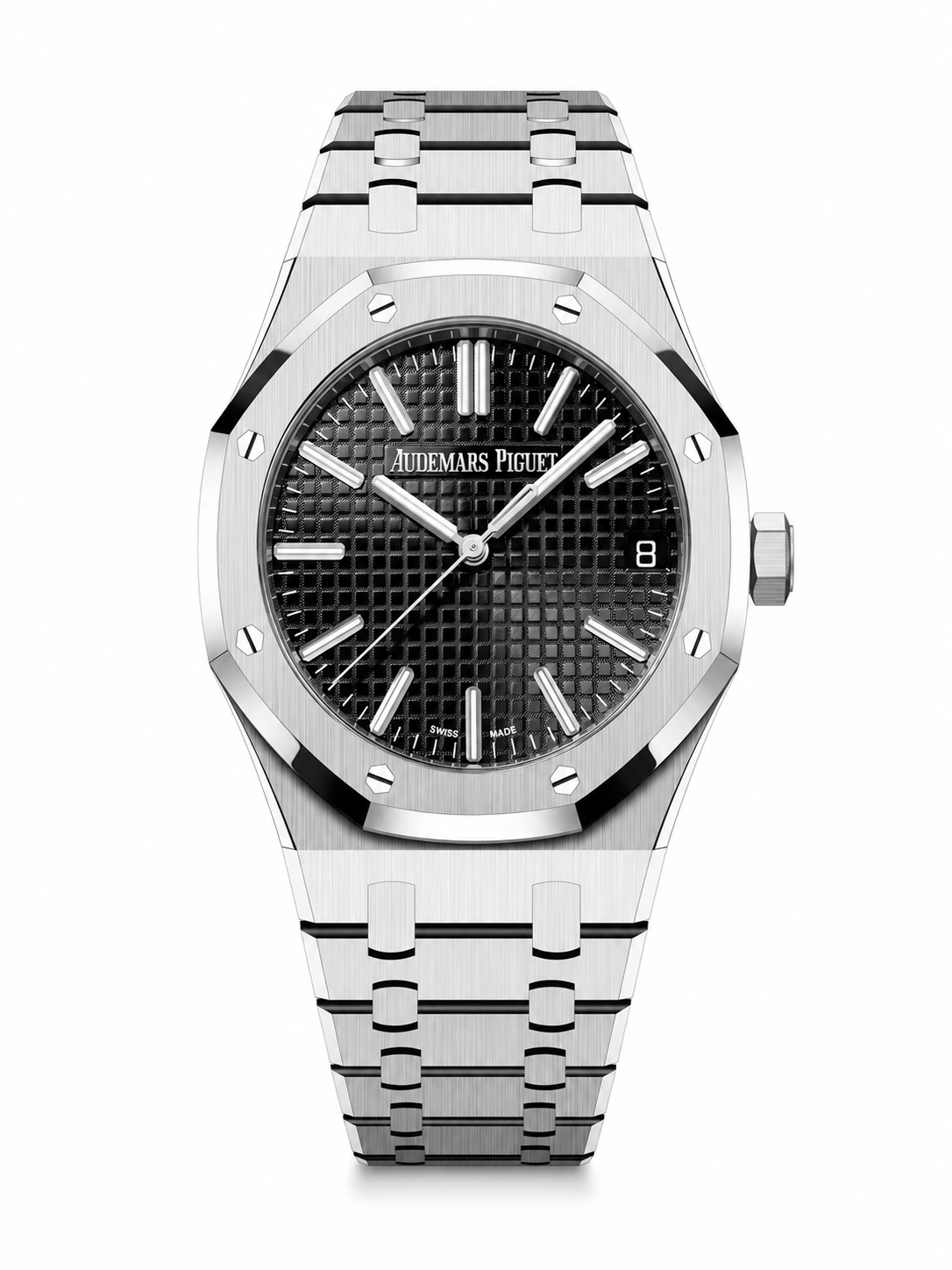
The Audemars Piguet Royal Oak is one of the defining watches of modern luxury watchmaking. The 41mm Royal Oak Selfwinding we are comparing here features the famous octagonal case, integrated steel bracelet and black Grande Tapisserie dial.
The exact current retail price is not displayed on the Audemars Piguet product page, but the 15510ST family has a listed retail price around £25,200, with current market prices considerably higher.
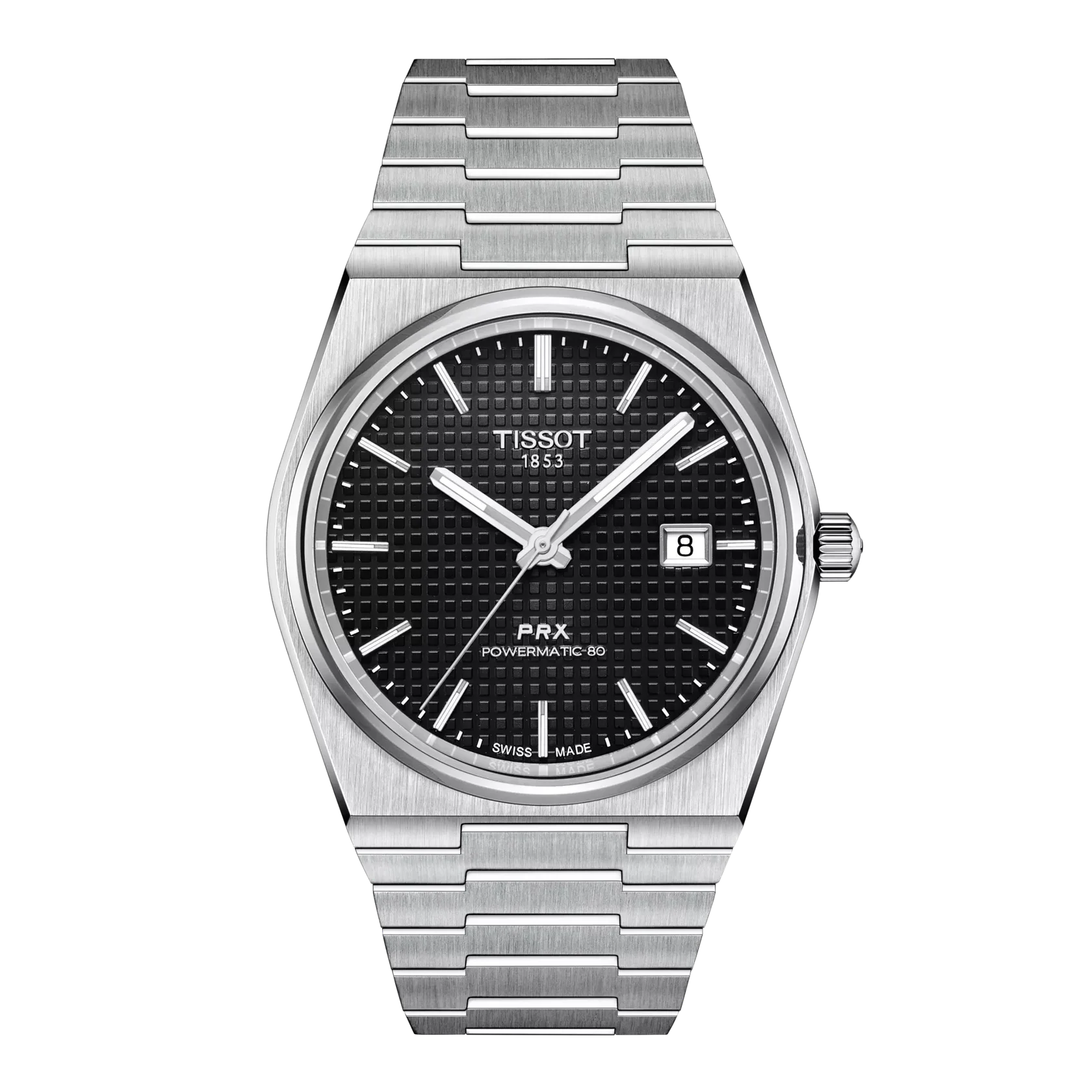
Then there is the Tissot PRX Powermatic 80. £640. Forty millimetres. Stainless steel. Sapphire crystal. Swiss automatic movement. Eighty hours of power reserve. And an integrated bracelet.
The PRX is not a Royal Oak. It was never intended to be. But it taps into exactly the same broad design trend that makes integrated bracelet sports watches so appealing.
The PRX also has genuine heritage of its own. Tissot originally introduced the PRX design in 1978 and today's automatic version combines that vintage influence with the modern Powermatic 80 movement.
The result is a watch that looks considerably more expensive than its price suggests.
The 40mm case is 10.93mm thick, it has 100 metre water resistance, sapphire crystal and an 80 hour power reserve.
It is almost offensively good value.
Key Specs
Audemars Piguet Royal Oak Selfwinding
• Around £25,200 retail
• 41mm stainless steel case
• Automatic movement
• Black Grande Tapisserie dial
• Integrated stainless steel bracelet
• High end hand finishing
• 50 metre water resistance
• £640
• 40mm stainless steel case
• Swiss automatic movement
• 80 hour power reserve
• Sapphire crystal
• Integrated stainless steel bracelet
• 100 metre water resistance
The Verdict
If you want a Royal Oak, buy a Royal Oak. If you want an extremely good Swiss automatic integrated bracelet watch for £640, buy the PRX. The fact that both statements can be true is rather wonderful.
5. Cartier Tank Must Vs Frederique Constant Classics Carrée
Not every expensive watch alternative has to involve sports watches.
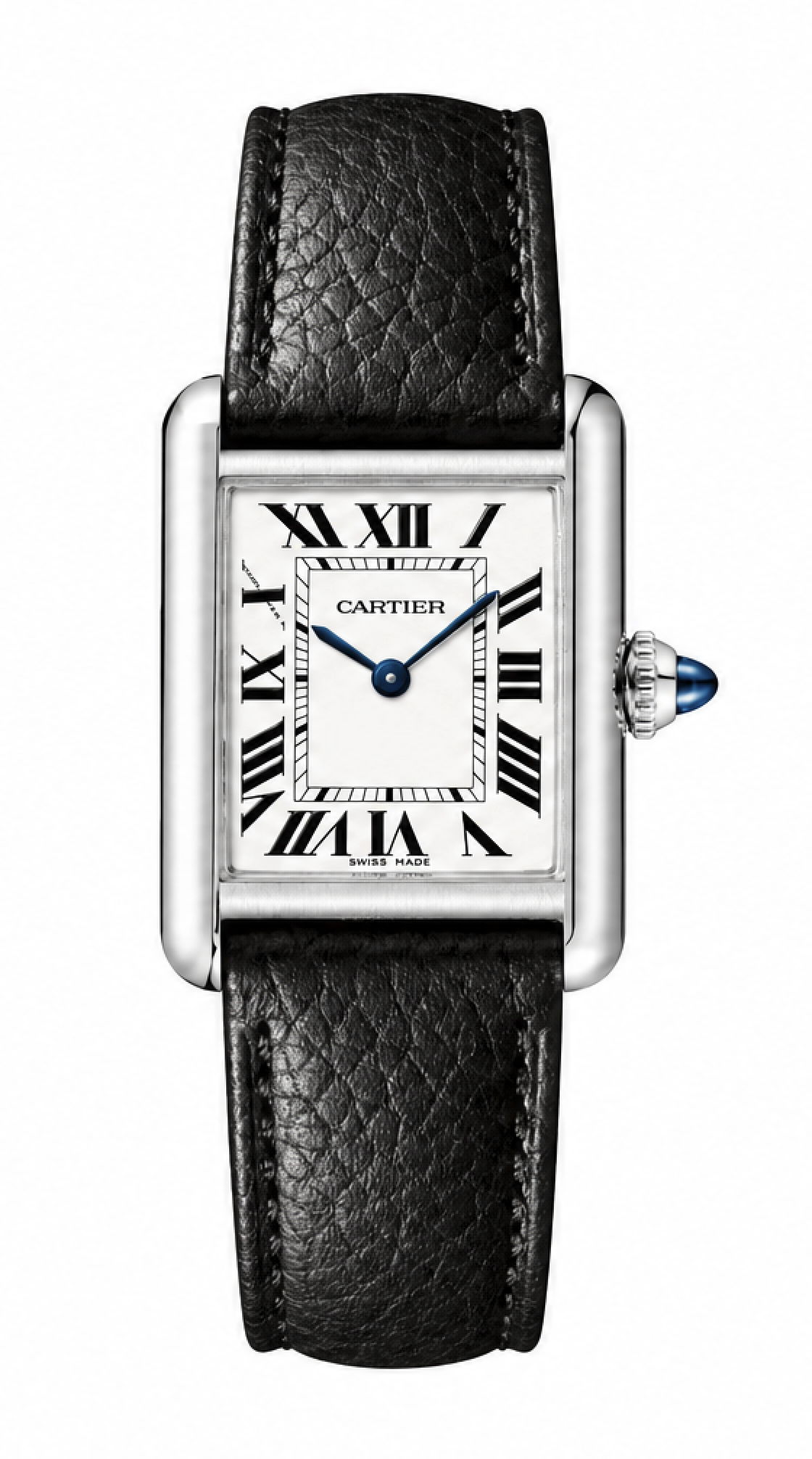
The Cartier Tank is one of the most recognisable watch designs ever created.
Designed by Louis Cartier in 1917, the Tank has spent more than a century becoming one of the defining shapes in watchmaking.
The Tank Must we are looking at here is the large steel model with Cartier's high autonomy quartz movement. It measures 33.7mm by 25.5mm and is just 6.6mm thick. It is a beautifully simple watch, with a silvered dial, blue hands and the unmistakable Tank case.
Its current UK price has been around £3,700.
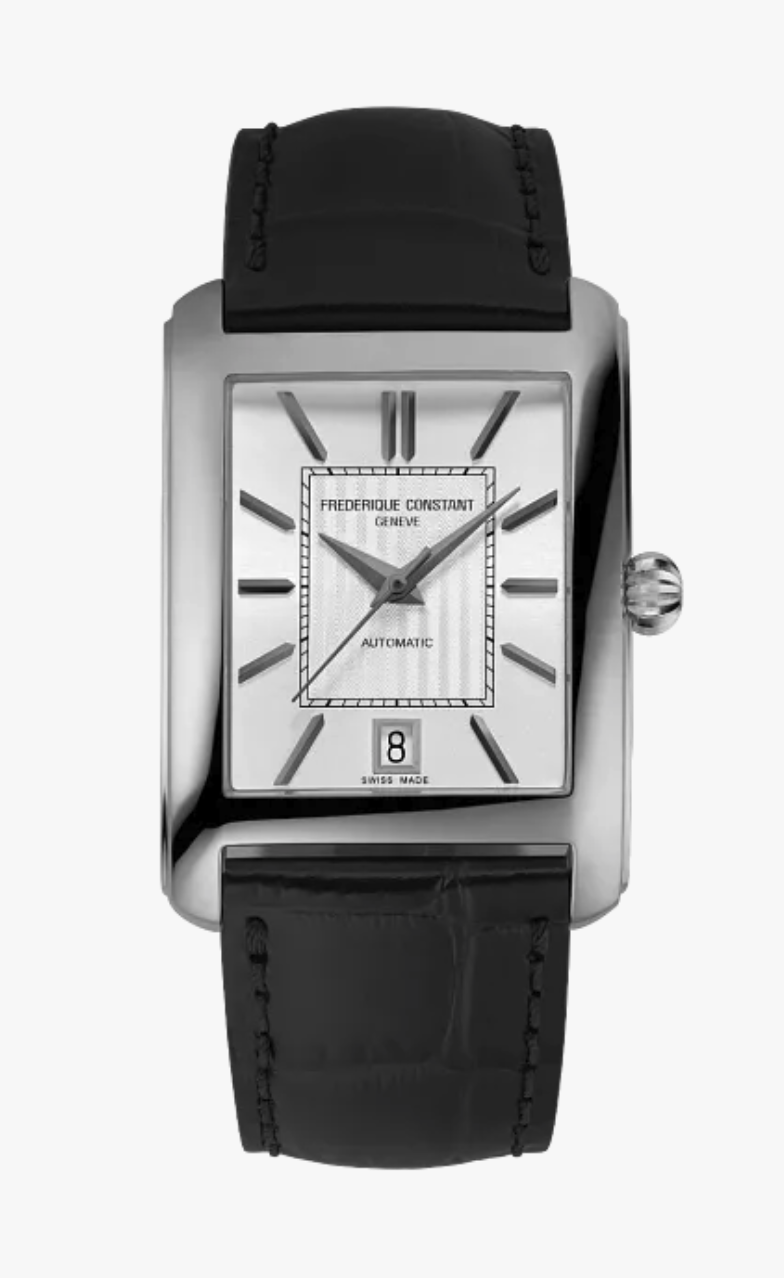
And then there is Frederique Constant.
The Classics Carrée is not a Tank. It has a square case rather than the very specific proportions of the Cartier, and its styling is more traditional.
But the idea is similar. Elegant rectangular case. Silver dial. Black indexes. Leather strap. Automatic movement. And a price of £995.
The Carrée is powered by Frederique Constant's FC 303 automatic calibre, giving you hours, minutes, seconds and date functions with a 38 hour power reserve. It also has a display caseback and 30 metre water resistance.
This is arguably the most interesting comparison because the Frederique Constant does not simply attempt to copy the Cartier.
Instead, it takes the same broad concept of an elegant rectangular dress watch and creates its own interpretation.
And that is exactly what we want to see.
Key Specs
• Approximately £3,700
• 33.7mm by 25.5mm case
• 6.6mm thick
• Steel case and bracelet
• High autonomy quartz movement
• Silvered dial
• 30 metre water resistance
Frederique Constant Classics Carrée
• £995
• Square stainless steel case
• FC 303 Swiss automatic movement
• Date display
• 38 hour power reserve
• Sapphire display caseback
• Black leather strap
• 30 metre water resistance
The Verdict
Cartier wins the design icon battle. Frederique Constant wins the mechanical movement battle. Your bank manager wins the overall argument.
The Real Point Of These Comparisons
There is a temptation in watch collecting to assume that price automatically equals quality. It does not.
Price can buy precious metals, hand finishing, complicated movements, extensive research and development, exceptional bracelets, exclusivity, heritage and an enormous amount of prestige. But price can also buy a name. And that is where things get interesting.
A £119,000 Vacheron Constantin is unquestionably a more sophisticated watch than a £1,030 Venezianico. The Patek is a more prestigious and technically refined product than the MAEN. The Rolex Daytona is a more accomplished luxury chronograph than the Seiko.
That is not really the argument.
The argument is whether the additional money delivers an equivalent increase in enjoyment. And that is entirely subjective.
If owning a Patek Philippe is your dream, buying a MAEN is not going to cure that itch.
If you have always wanted a Daytona because of its history, buying a Seiko will not magically turn into a Rolex when you look at your wrist.
But if you simply love the design language, the functionality and the experience of wearing a particular type of watch, suddenly the cheaper alternatives become extremely compelling.
And this is where the modern watch industry is becoming particularly interesting.
Brands such as Seiko, Tissot, Frederique Constant, MAEN and Venezianico are producing watches with genuine mechanical credibility at prices that bring them within reach of a much wider audience.
They are not pretending to be Patek, Rolex, Vacheron Constantin or Audemars Piguet. They do not need to.
Are The Cheaper Watches Actually Better Value?
This is where we would say yes. Not better watches. Better value.
There is a huge difference.
The Vacheron Constantin has an ultra thin perpetual calendar movement, a precious metal case, Geneva Seal certification and the extraordinary craftsmanship that comes with one of the great names in Swiss watchmaking.
The Venezianico has a Miyota movement and a stainless steel case. Those two statements can happily coexist.
But if the question is whether the Venezianico gives you £1,030 worth of enjoyment, the answer could very easily be yes.
The same applies to the Tissot PRX. At £640, you get a Swiss automatic movement, sapphire crystal, 80 hours of power reserve and an integrated bracelet from a brand with genuine historical significance. That is not a cheap watch. It is simply a remarkably affordable one.
The Volume Argument
There is another fascinating aspect to all of this.
A high horology brand can sell relatively small numbers of a particular complicated watch and still make the economics work because the value of each individual piece is enormous.
Brands such as Seiko and Tissot operate at an entirely different end of the market.
Their watches can be produced and sold in vastly greater numbers, putting interesting designs and proven movements onto the wrists of thousands upon thousands of enthusiasts. And that matters.
The future of watch collecting is not necessarily about everyone owning a Rolex, Patek Philippe or Audemars Piguet. It could be about more people owning several genuinely good watches from a range of brands. One expensive watch might give you the ultimate luxury experience. Five great watches at sensible prices could give you something arguably more useful. Choice!
Winding Things Up
We love expensive watches. That is rather important to establish before anyone accuses us of watch heresy.
There is something genuinely special about owning a piece of haute horlogerie. The craftsmanship, finishing, history and engineering can be extraordinary. But there is also something hugely enjoyable about discovering a watch that costs a fraction of the price and thinking:
"Blimey, that's actually rather good."
The Vacheron Constantin is in another league to the Venezianico.
The Patek Philippe is in another league to the MAEN.
The Rolex Daytona is in another league to the Seiko.
The Audemars Piguet is in another league to the Tissot.
And the Cartier Tank is one of the most recognisable designs in watchmaking history.
But the cheaper watches are not trying to beat them. They are simply making the question of whether you need the expensive one considerably more difficult. And perhaps that is the real sign of a healthy watch industry.
You can spend £119,000 on a watch. Or around £1,000. Both can tell you the time. The fun is deciding how much you want to spend to enjoy the journey between those two numbers.
