
REC Habu On The Wrist Review: A Piece Of The Blackbird You Can Actually Wear
So, it’s not common for me to be so interested in a watch after writing about it that I actually put my hand in my pocket and buy one. But that is what has happened with the REC Habu. Here’s what my honest thoughts are after a month on the wrist.
I will admit, I originally expected the REC Habu to be all about the story. When a watch contains a genuine piece of SR-71 Blackbird, it is very easy for that to become the whole point. You almost forgive everything else before you have even put it on.
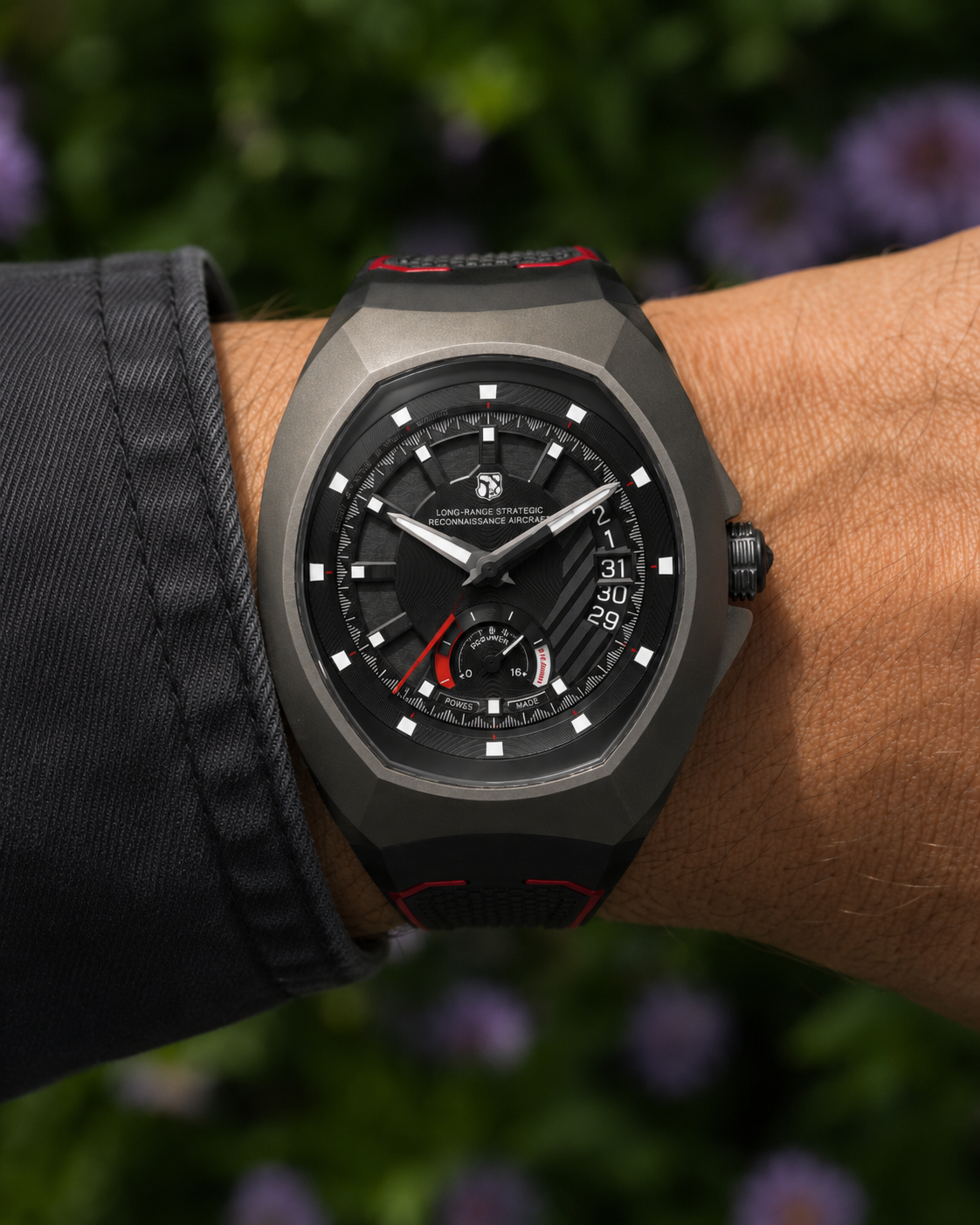
But that would be unfair to what REC has actually done here. Yes, the aircraft material is the headline act, and rightly so, but the Habu is not just a clever concept in a watch case. On the wrist, it feels like a proper piece of design, with real thought given to shape, comfort and wearability.
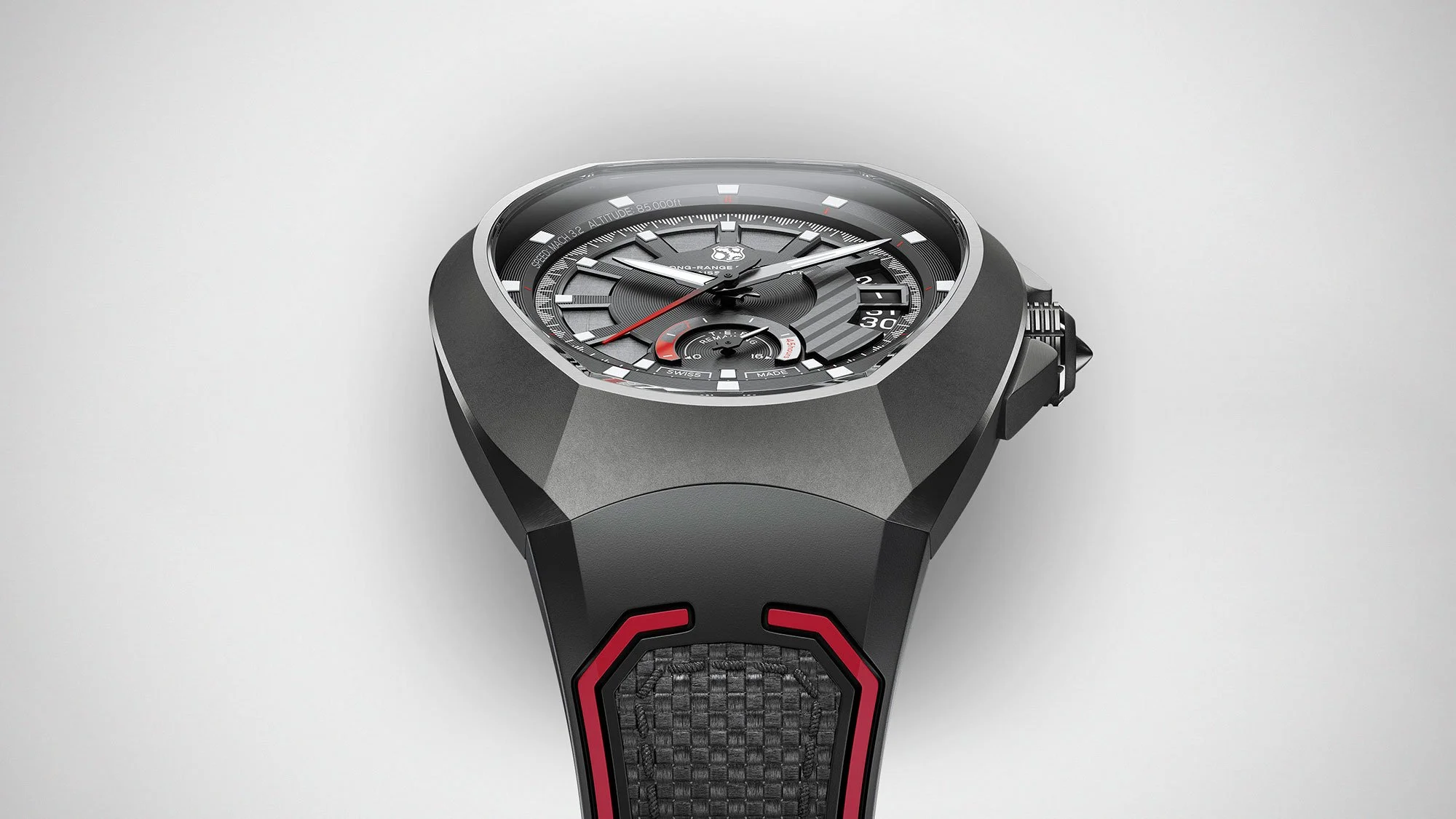
The obvious talking point is the piece of the SR-71 sitting behind the main face. It is slightly mad, in the best possible way. This is not an aviation-inspired texture, or a dial pattern designed to look a bit like aircraft metal after three strong coffees and a mood board session. This is an actual piece of the plane itself.
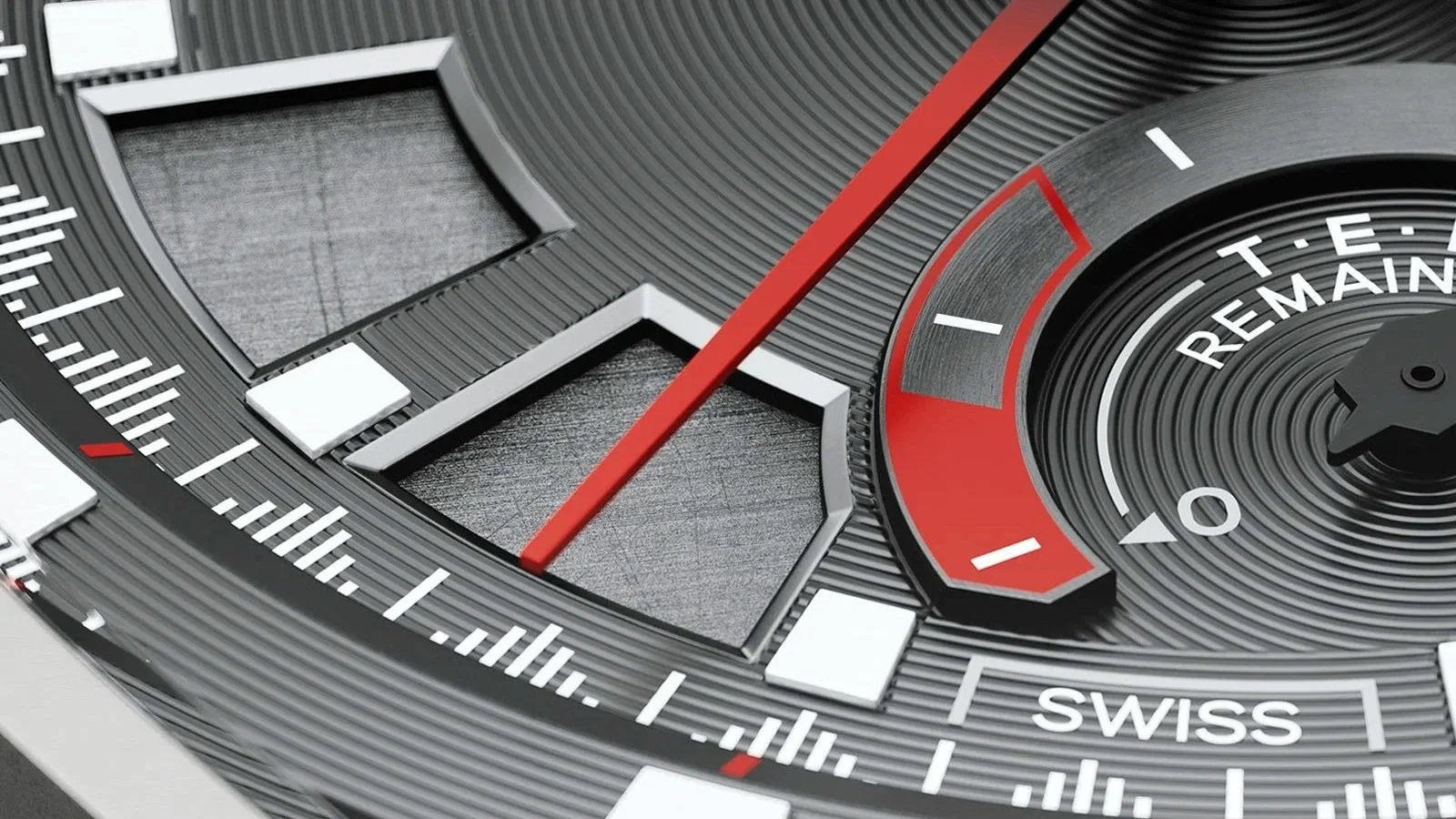
That matters, because the SR-71 Blackbird is not just another aircraft. It is one of the most astonishing machines ever made. A plane built to fly beyond Mach 3, at altitudes where most aircraft would have packed up, gone home and asked for a nice cup of tea. The piece used in the Habu still shows the scratches, marks and scars from that previous life, which gives the watch a level of character you simply cannot fake.
And you do keep looking at it.
The way the material sits behind the main dial gives the watch depth, without turning it into a novelty. It feels industrial, mechanical and purposeful, which suits the whole idea of the Habu perfectly. There is something brilliant about knowing that part of the watch on your wrist once belonged to a machine that travelled faster than a rifle bullet. That is the kind of detail that makes you pause for a moment, even if you are only checking the time while standing in the kitchen, wondering why you walked in there.
REC Watches
The real surprise is how well the Habu wears.
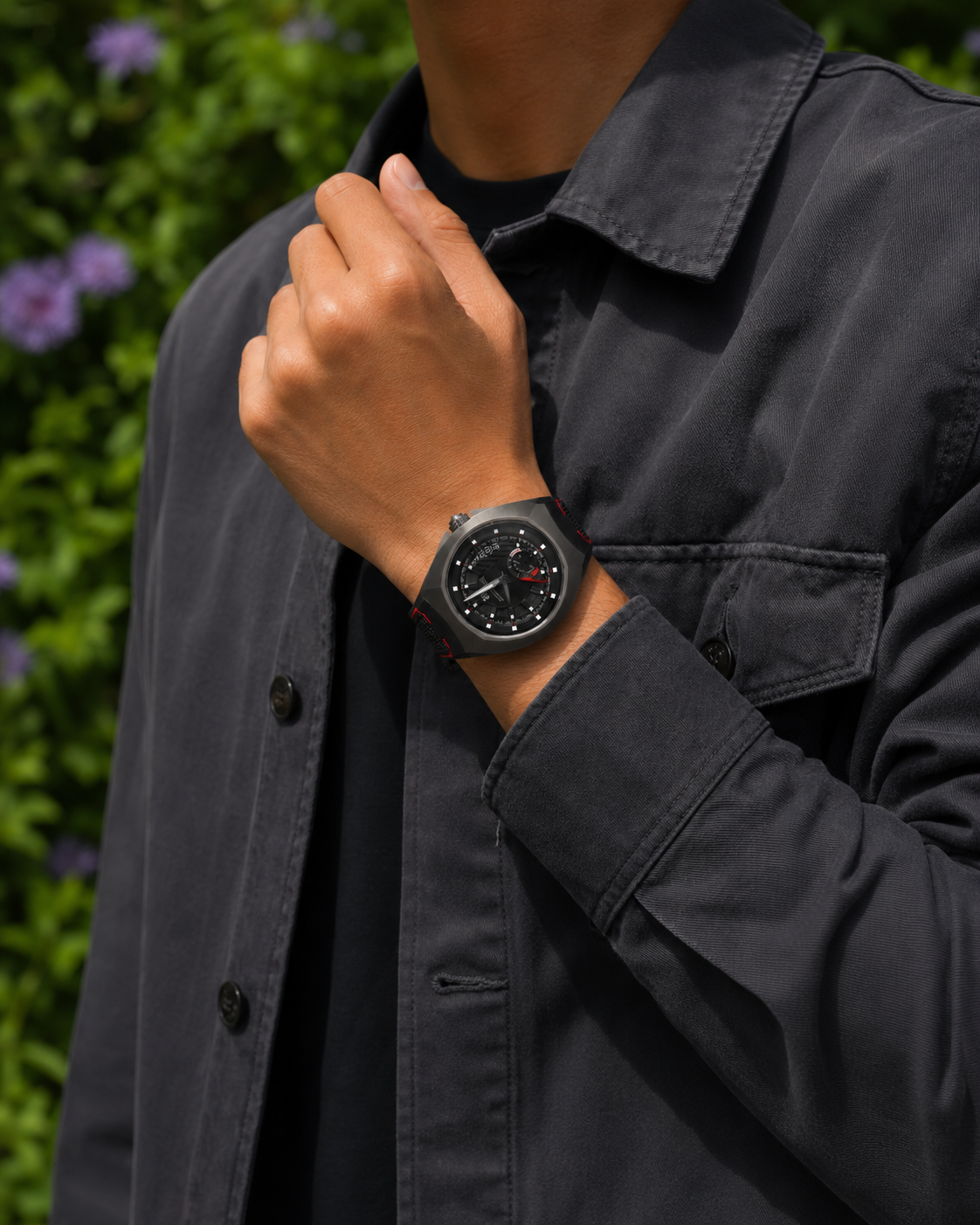
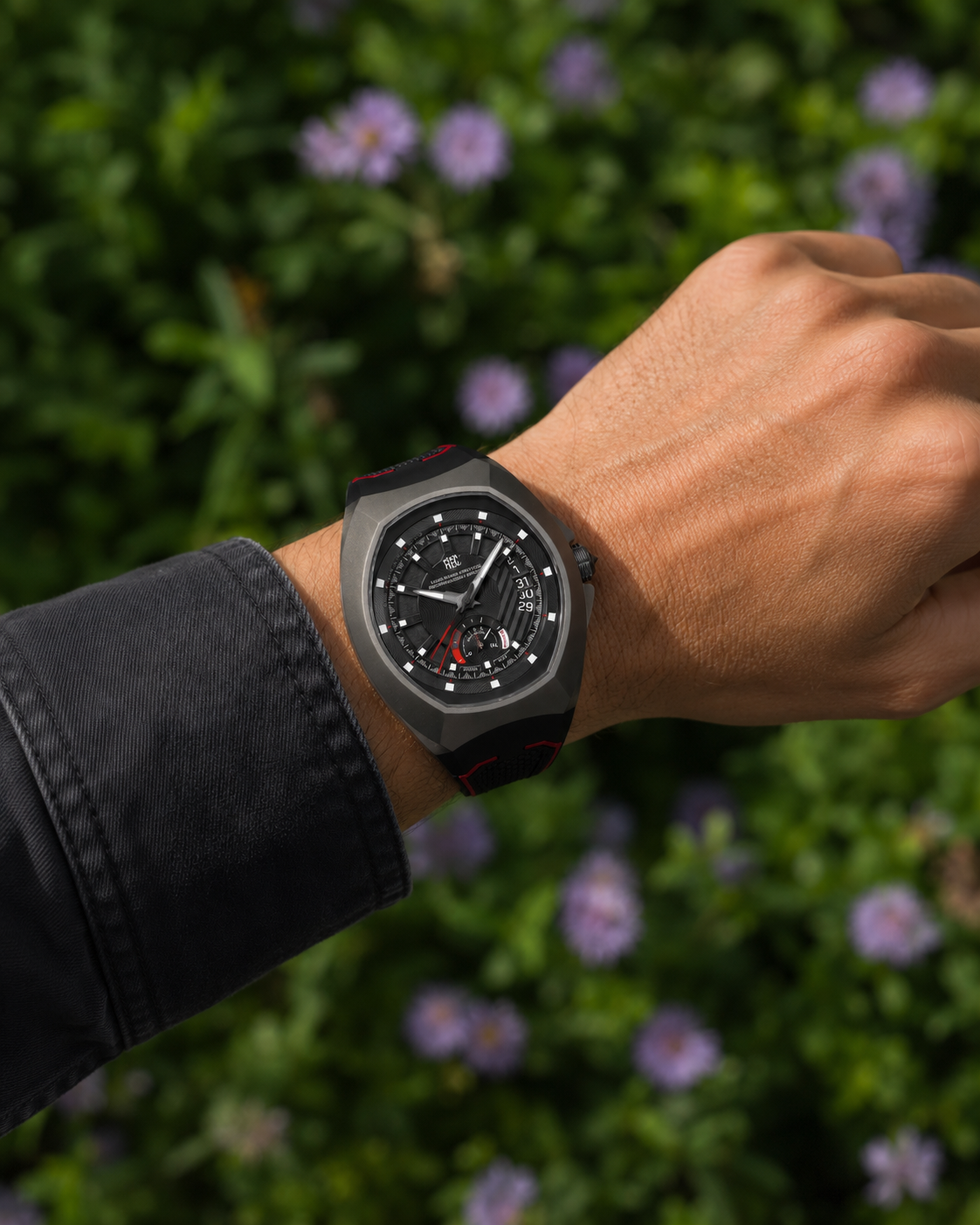
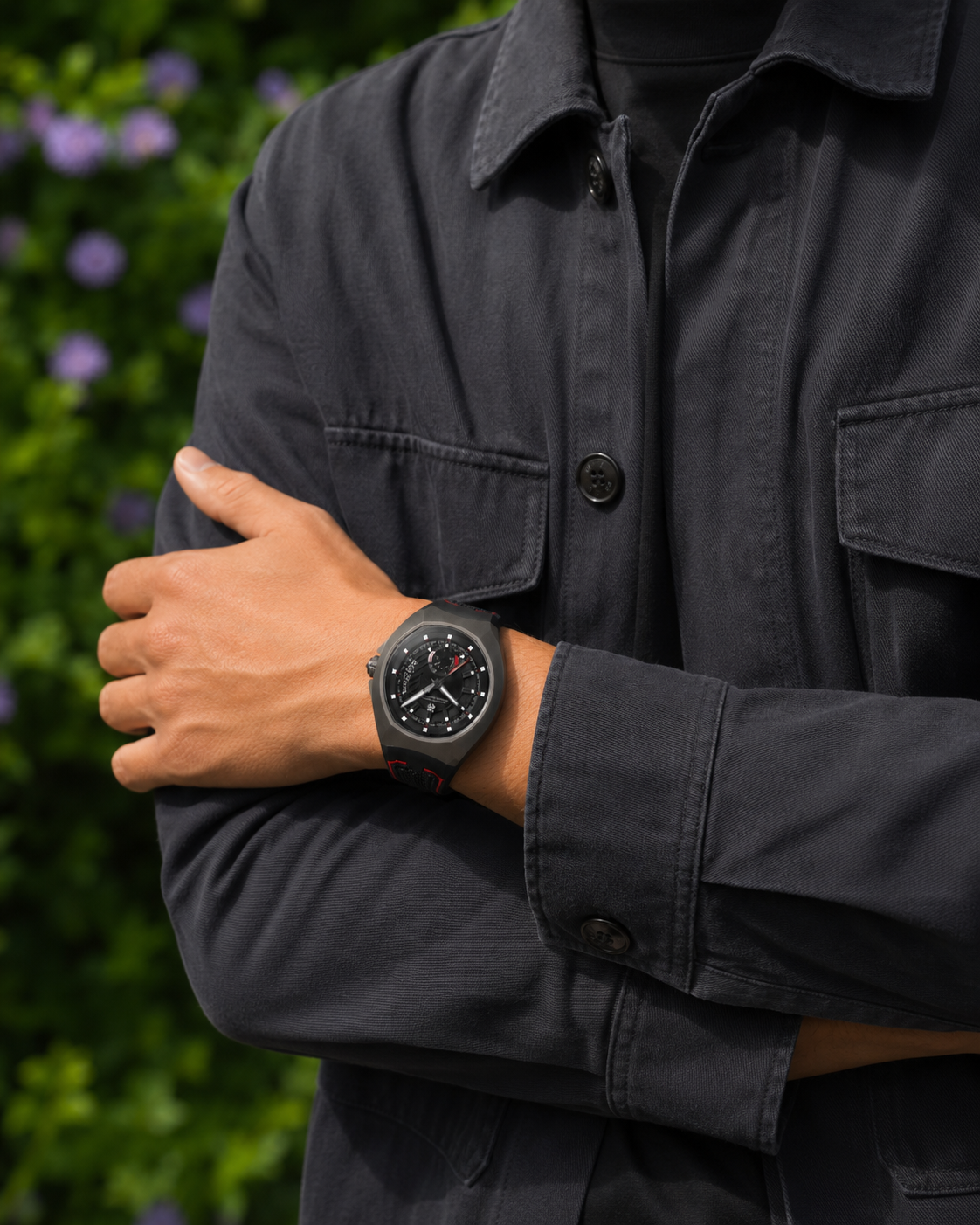
On the wrist, it feels far more considered than I expected. The case shape has clearly had proper thought put into it. This is not a round watch forced into an aviation costume. The shape feels intentional, and more importantly, it works. It follows the wrist nicely, sits comfortably, and has enough presence without becoming awkward.
That is important because a watch like this could easily become too much. With the SR-71 story, the case shape, the layered dial and the manual movement, a lot is going on. But REC has managed to keep it balanced. It feels distinctive rather than overdesigned.
The comfort is helped massively by the strap. I really like it. The strap feels secure, flexible and genuinely comfortable, but the clasp is what makes it feel properly finished. A good clasp can make a big difference to how a watch feels day to day, and here it gives the Habu a more premium, complete feel than it would have had on a basic buckle.
It also suits the watch. This is not the sort of piece that needs a dainty leather strap and a gentle pat on the back. It needs something that feels technical, durable and in keeping with the story. The strap does that, while still being easy to live with.
The only real critique I have is with the hands themselves. There is clearly a clever nod to the silhouette of the iconic SR-71 nose cone, which is a lovely detail and exactly the sort of thing you want from a watch like this. However, I do think the hands would have benefited from a more legible finish or material.
As it is, legibility can sometimes suffer. When wearing the Habu, the fairly important business of actually telling the time is not always as easy as it should be. Minor detail, I know. Only the whole point of a watch.
That said, if my biggest criticism of the REC Habu is that I occasionally have to look at it for half a second longer, then I think it is fair to say this one rates pretty highly.
REC Watches
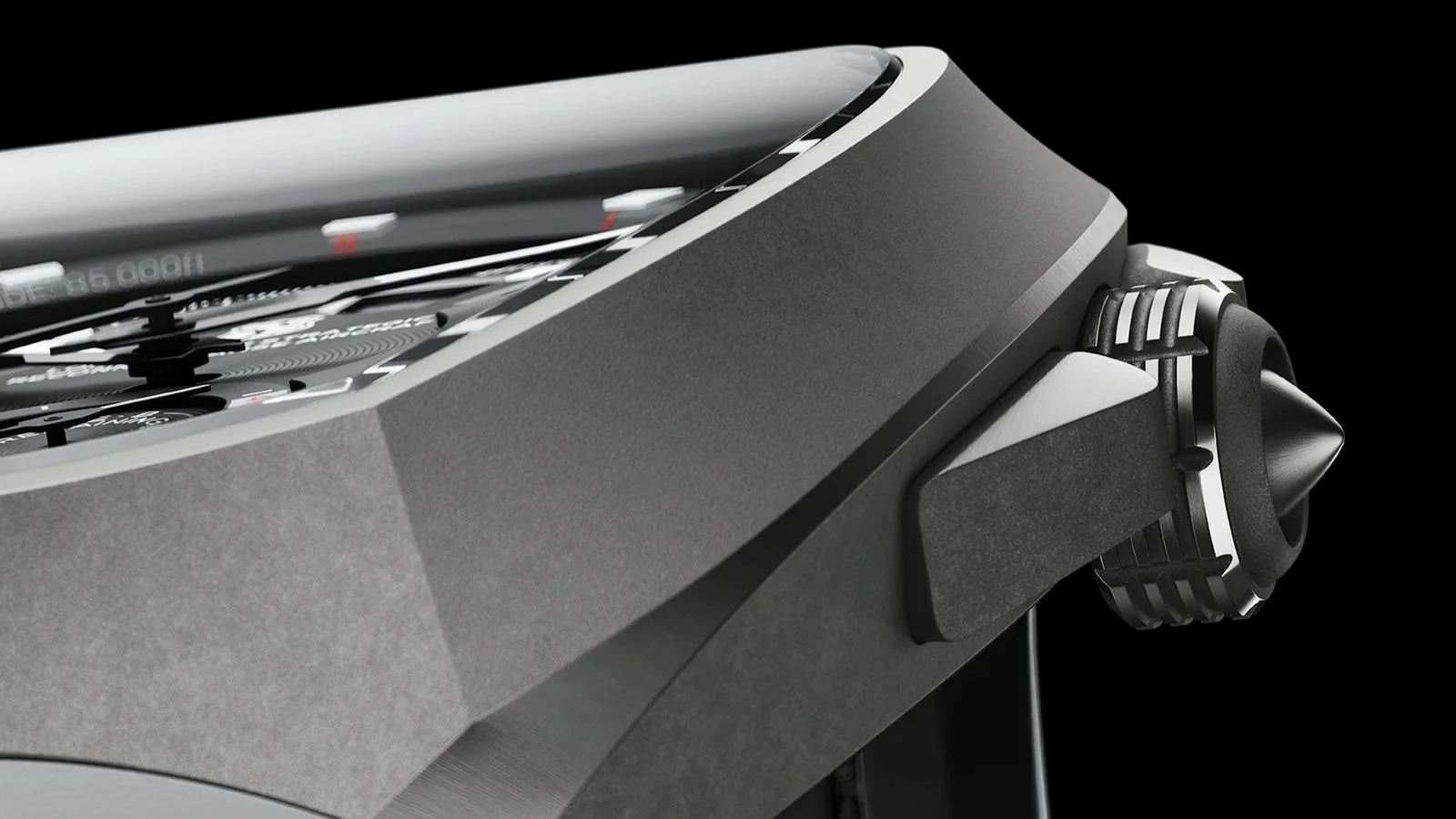
One thing that really impressed me was the winding experience.
I am not usually a massive fan of manual winding mechanisms. I understand the romance of them. I understand the connection between owner and watch. I understand why some people enjoy turning the crown each morning as part of the ritual. But in reality, I tend to prefer the convenience of an automatic. Sometimes I just want the watch to get on with it.
However, the Habu makes a strong case for itself. REC has made the winding feel easy, simple and satisfying, without it becoming a chore. The crown is easy to use, and the whole process feels more natural than I expected.
The power reserve indicator at the 6 o’clock position is the key to it all. For me, that completes the watch. It turns the manual winding movement from something you have to remember into something you can understand at a glance. You know exactly where you stand. You know when it needs attention. You know when it is fully wound and ready to go.
It also works visually. Positioned at 6 o’clock, the power reserve indicator gives the dial balance and purpose. It is practical, but it also feels right for the watch. On a piece inspired by one of the most engineered objects ever created, having a visible measure of stored energy feels completely appropriate.
The Habu is full of those little details. It is easy to talk about the aircraft material, because of course it is, but the watch itself deserves credit beyond the headline feature. The case shape, the strap, the clasp, the dial layout and the manual winding setup all feel like parts of the same idea.
That is what stops it from being a gimmick.
A gimmick would be a watch with a tiny bit of aircraft metal thrown in and not much else to talk about. The Habu is different. The history gets your attention, but the wearing experience backs it up. It is comfortable, interesting and surprisingly easy to live with.
It also has that rare thing where the more you wear it, the more it makes sense. At first, you are drawn to the SR-71 connection. Then you start noticing the shape. Then the comfort. Then the ease of winding. Then the fact that the power reserve indicator is exactly where it should be. It slowly becomes less about one standout feature and more about the whole watch coming together.
That is when a watch review becomes more than just listing the specifications. The real question is not whether the REC Habu has a good story. I mean, it obviously does. The question is whether you would still want to wear it once the novelty has worn off.
For me, the answer is yes.
It has enough theatre to feel special, but not so much that it becomes unwearable. It has genuine history built into it, but it does not rely on nostalgia alone. It is bold without being ridiculous, technical without being cold, and detailed without feeling cluttered.
REC Watches
Winding Things Up
The REC Habu could have been a watch that simply pointed at the SR-71 Blackbird and expected applause. To be fair, it probably would have got some. A genuine piece of a Mach 3 aircraft behind the dial is not exactly a weak opening line.
But the real achievement is that REC has built a watch around that story that actually works on the wrist. The comfortable strap and clasp make it easy to wear, the case shape shows real thought, and the manual winding mechanism is far easier to live with than I expected. Add the power reserve indicator at 6 o’clock and the whole thing feels complete.
Then you turn it over.
The visible case back shows off the mechanics in all their glory, which feels like the perfect final touch. You get the piece of aviation history on the front, and the mechanical theatre on the back. For a watch built around speed, engineering and storytelling, that feels exactly right.