
British watchmaking has a habit of looking backwards while trying to find its way forwards. From revived military designs to heritage inspired divers, the industry has spent years proving that a little nostalgia can go a long way. Few names make that story more interesting than Smiths, a historic British watch name now being brought to a new generation of enthusiasts through Timefactors.
Rather than chasing luxury pricing or loading its watches with unnecessary complications, the modern Smiths collection focuses on something considerably more appealing: well thought out designs, mechanical movements and specifications that make sense for the money. It is the sort of approach that has earned the brand a dedicated following among enthusiasts who would rather spend their cash on a good watch than a particularly expensive name on the dial.
A Name With British Watchmaking History
The Smiths story stretches back to 1851, when Samuel Smith established a watch and clock business in London. Over the following decades, the wider Smiths business developed into an important name in British engineering, producing everything from clocks and watches to precision instruments for the automotive and aviation industries.
During the twentieth century, Smiths became associated with British made mechanical watches, including military timepieces and practical everyday designs. Its history also includes the Smiths Deluxe, the company's celebrated Everest association and watches produced during a period when Britain still had a substantial domestic watchmaking industry.
However, the original business eventually moved away from mechanical watch production, with manufacturing coming to an end in the early 1970s. The name remained part of British industrial history, but the days of Smiths as a major domestic watchmaker were over.
The modern collection is a revival of that name rather than a continuation of the original manufacturing operation. Timefactors has made clear that its Smiths watches are not connected with the historical Smiths Group watch business. That distinction matters, but it does not make the contemporary collection any less interesting for enthusiasts who appreciate the designs and traditions associated with the name.

Timefactors And The Modern Revival
Timefactors has been selling watches online since 1996 and became an early player in the direct to consumer watch market, launching its PRS 1 Speedbird in 2001. Its approach has long centred on offering carefully specified watches without the hefty mark ups often associated with more established luxury brands.
Smiths sits alongside other Timefactors labels, including Precista, Dreadnought and Sewills. The modern Smiths range draws heavily on classic tool watches, military designs and mid century styling, but updates them with contemporary materials, movements and manufacturing techniques.
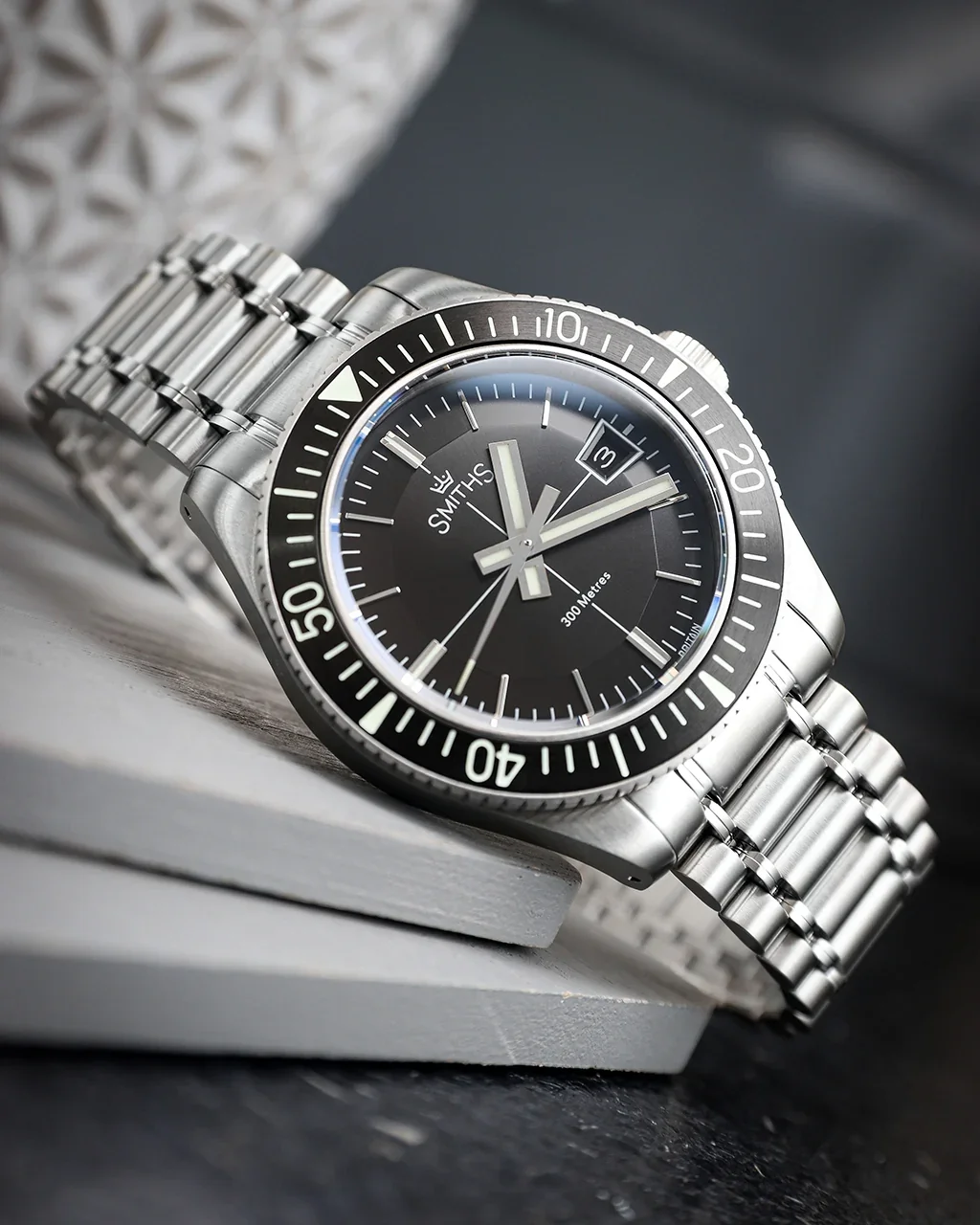
One of the most appealing aspects of the collection is its relative restraint. These are watches designed to be worn rather than admired from a safe distance. Depending on the model, buyers can find compact cases, sapphire crystals, automatic movements, practical water resistance and straightforward displays that prioritise legibility.
The result is a collection that feels familiar without being entirely trapped in the past. And in a market where vintage inspiration can sometimes mean little more than beige lume and a distressed leather strap, that is no bad thing.
The Smiths Everest: A Classic Reimagined
The Everest is arguably one of the best known watches in the current Smiths collection. Its name draws on the brand's historical association with mountaineering and the enduring appeal of expedition watches, while the modern design keeps things clean and versatile.
The Everest PRS 25 is offered in several dial variations, including black, gilt and honeycomb designs. With its restrained case, traditional markers and emphasis on everyday wearability, it sits comfortably between a dress watch and a straightforward sports watch.
The honeycomb dial is particularly interesting for collectors who want something a little different from the usual black or white options. It introduces texture without overwhelming the design, while the gilt version adds a warmer vintage character.
The range has also included a 36mm Everest, offering a more compact alternative for those who prefer traditional proportions. It is a welcome reminder that not every watch needs to occupy half the wrist to make an impression.

From Military Watches To Modern Divers
The Smiths collection extends well beyond expedition styling. The range has included military inspired models, vintage cushion cases and divers, each drawing on a different part of the traditional tool watch catalogue.
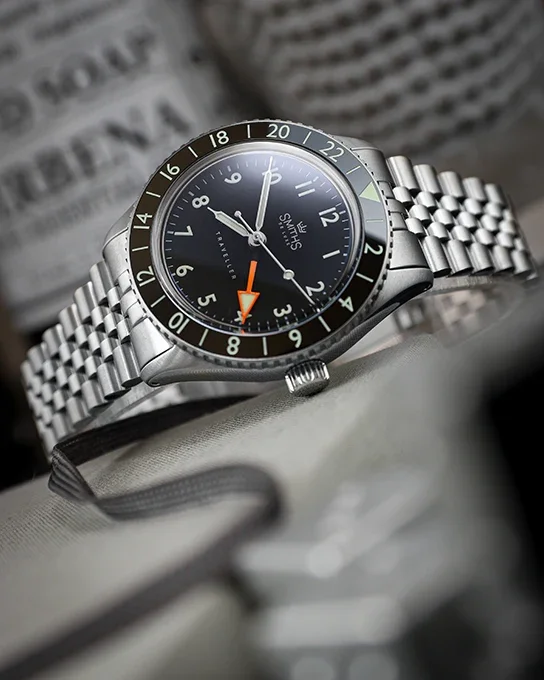
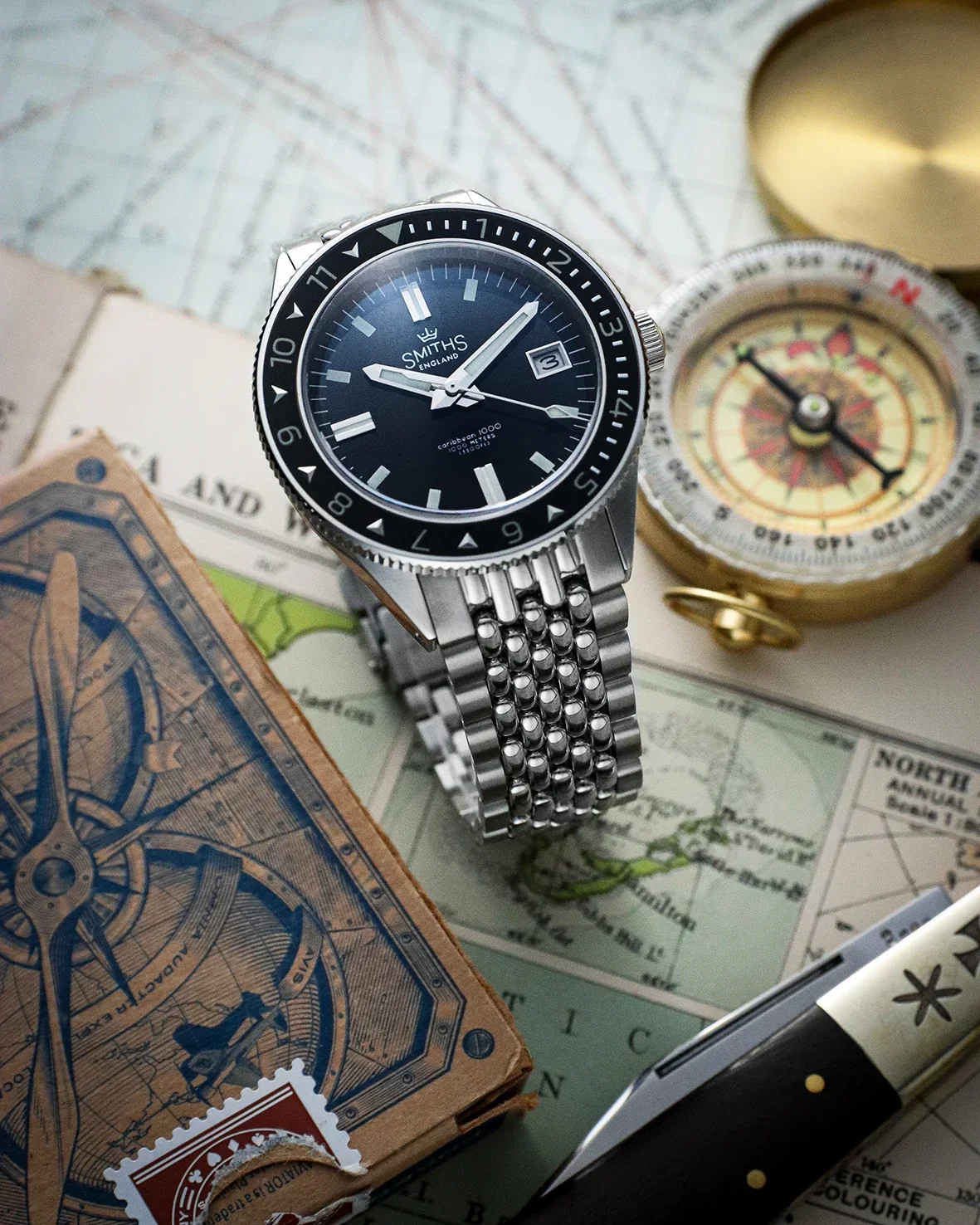
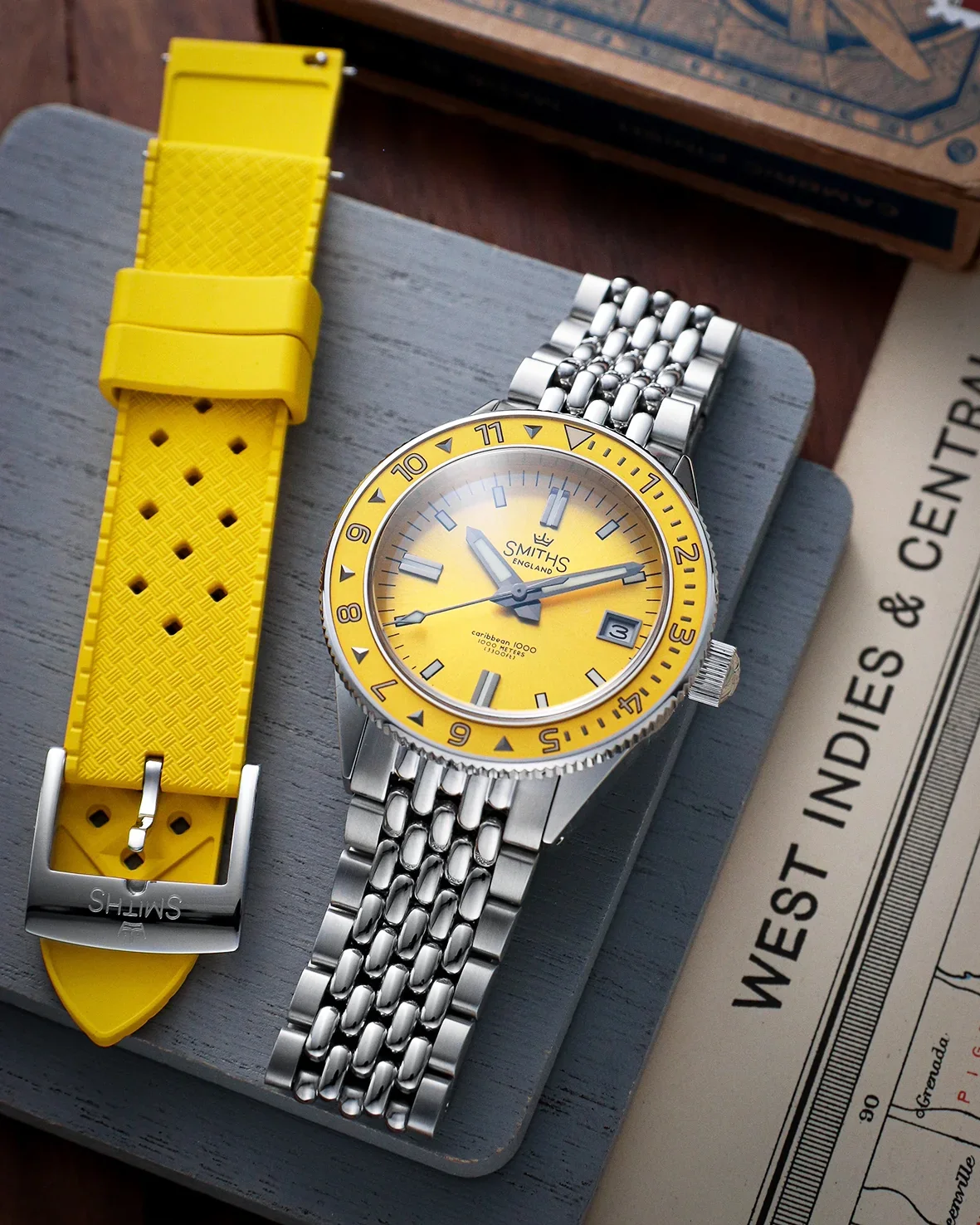
The Caribbean 1000, for example, takes its inspiration from the world of dive watches, while the Baby Willard offers a compact interpretation of a familiar cushion case design. The Commander models bring a more overtly retro diving aesthetic, while the Traveller PRS 58 adds genuine GMT functionality for those who regularly cross time zones.
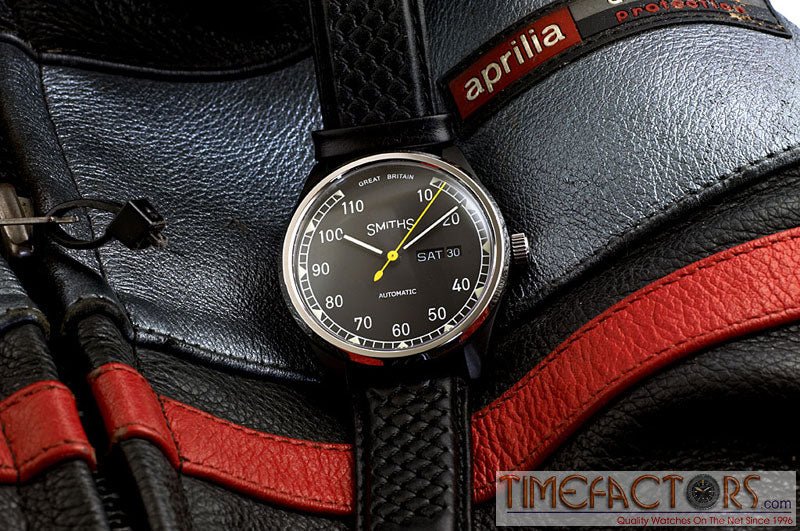
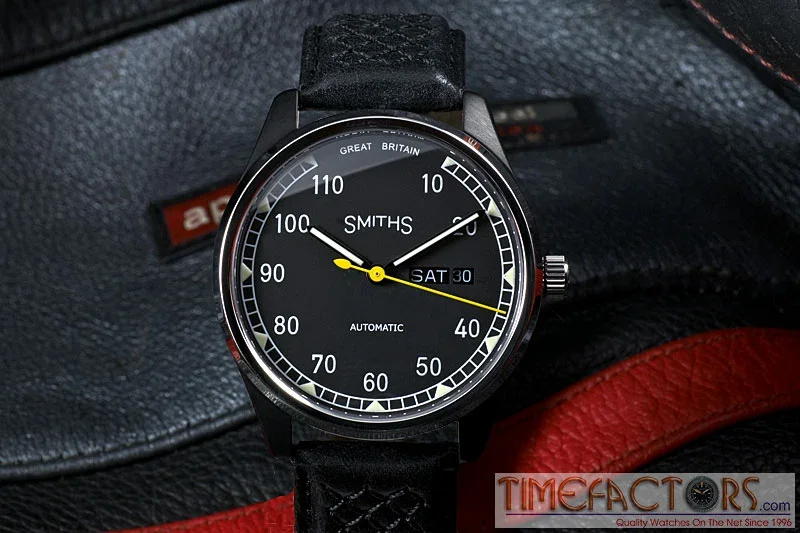
There is also the Black Shadow PRS 38, a watch inspired by vintage motorcycle instruments. Its black case and contrasting polished bezel give it the appearance of a miniature speedometer strapped to the wrist, which is a considerably more interesting proposition than another generic black sports watch.
What links these different models is their practical focus. Rather than trying to establish a single visual identity across the entire collection, Smiths uses its historical influences as a starting point for watches with distinct personalities.
The Appeal Of Specification Without The Premium
One of the strongest arguments for the modern Smiths range is the balance between specification and price. Listed prices across the collection have included models around £335 to £445, although availability varies and many models are frequently shown as sold out on the Timefactors website.
At this level, buyers can find automatic movements, sapphire crystals and thoughtfully designed cases without stepping into the price territory of many mainstream Swiss brands. The Traveller PRS 58 is a particularly useful example, combining a Miyota 9075 true GMT movement with 200 metres of water resistance and an anti magnetic rating of 20,000 A/m.
That does not mean every Smiths watch offers identical specifications, of course. Movement, dimensions, water resistance and materials differ between models, so it is worth checking the individual product listing rather than assuming the entire range shares the same technical package.
The more important point is that the brand understands what its audience values. Enthusiasts want attractive designs, dependable mechanical movements and useful features, but they do not necessarily want to pay extra for an elaborate retail experience or a famous advertising campaign.
The Catch: Getting Hold Of One
There is one rather significant obstacle to owning a modern Smiths watch: availability. Timefactors operates with limited quantities and scheduled releases, and popular models can sell out quickly.
For collectors accustomed to browsing a conventional retailer, this can be frustrating. You cannot always decide that you want an Everest on Tuesday and expect it to arrive by Friday. Instead, buyers may need to follow release announcements and wait for the next opportunity.
That scarcity has helped give the collection a dedicated following, although it also means prospective buyers should avoid assuming that every model shown on the website is currently available to order. Some listings represent sold out or discontinued watches, and prices can change as the range evolves.
For anyone interested in buying, the official Timefactors website remains the best place to check current models, specifications and release information.
A Growing Place In British Watch Culture
The modern Smiths revival also reflects a broader interest in British watchmaking, where heritage, independent design and value for money are increasingly important to enthusiasts. Timefactors has continued to develop the collection while maintaining its focus on direct sales and specifications that appeal to people who enjoy the details as much as the finished product.
Smiths has also joined the Alliance of British Watch and Clock Makers, placing the brand within a wider community representing the watch and clock industry across the British Isles. It is an interesting development for a name with such a long history, although the modern watches should not be confused with watches manufactured by the original Smiths business.
For collectors, that combination of historical inspiration and contemporary engineering is part of the appeal. You get a recognisable British name, designs rooted in the world of traditional tool watches and a modern product that does not require a luxury sized budget.
Winding Things Up
Smiths Revival Watches UK is an interesting proposition for anyone who appreciates traditional watch design without wanting to spend a fortune on a familiar luxury logo. Through Timefactors, the name has found a new audience with a collection that ranges from understated expedition watches to retro divers and practical GMT models.
The Everest remains a particularly appealing option for fans of clean, versatile designs, while the Traveller offers a more technical alternative for those who need genuine travel functionality. Elsewhere, the Commander, Caribbean 1000 and Baby Willard demonstrate that there is more to the collection than one successful vintage inspired formula.
Availability remains the biggest challenge, and the limited release approach will not suit everyone. But for enthusiasts prepared to keep an eye on upcoming releases, Smiths offers a compelling mix of character, useful specifications and accessible pricing.
It may not be the same Smiths that once made watches in Britain, but the modern revival has carved out its own identity. And in a market where heritage can sometimes cost more than the watch itself, that is something worth celebrating.
