
What Does GMT Mean on a Watch? Everything You Actually Need to Know
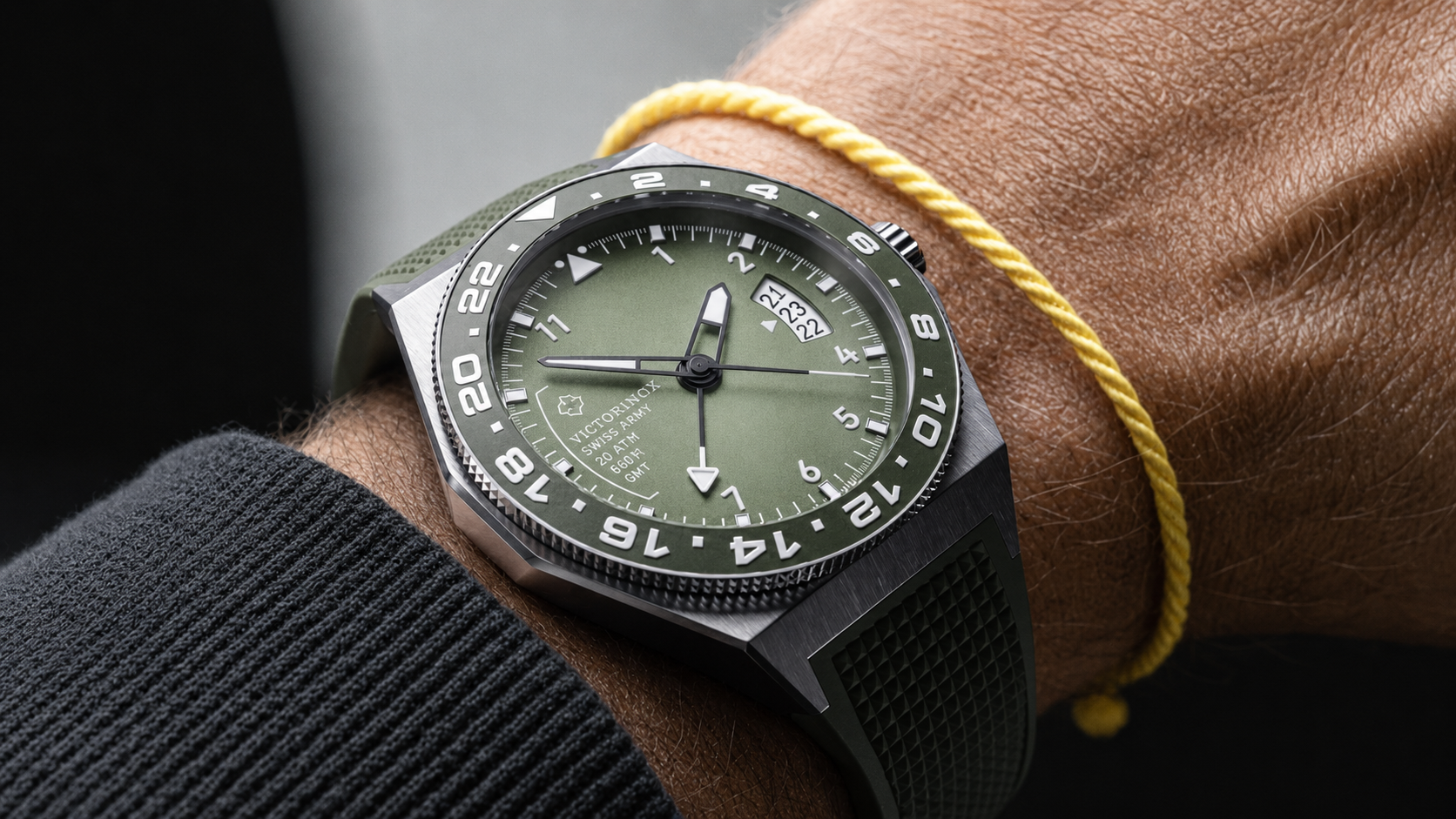
Credit - Victorinox GMT
If you have spent any meaningful amount of time looking at watches, you will eventually come across the letters GMT.
They appear in the catalogue of most well known brands, usually alongside an extra hand and a bezel covered in numbers that look slightly more complicated than they really are.
So, what does GMT actually mean on a watch?
The short answer is simple: A GMT watch allows you to track more than one time zone at once.
The longer answer is much more interesting, because GMT watches have real aviation history, several different movement types and a few quirks that are worth understanding before you buy one, and no, you do not need to be a pilot.
What does GMT stand for?
GMT stands for Greenwich Mean Time.
Greenwich Mean Time is based on the mean solar time at the Royal Observatory in Greenwich, London. In 1884, the Greenwich Meridian was internationally adopted as the Prime Meridian at 0° longitude, effectively becoming the reference point from which global time zones were organised.
Today, Coordinated Universal Time, or UTC, is the modern international time standard, but GMT remains widely used and is still the civil time used in the UK during winter.
On a watch, though, GMT has become shorthand for something much simpler. The ability to display a second time zone.

Credit - The Wind Up
How does a GMT watch work?
A normal analogue watch uses an hour hand that travels around the dial once every 12 hours. A GMT watch adds another hand, usually in a different colour or with an arrow-shaped tip, that makes one full rotation every 24 hours.
Instead of reading that hand against the standard 12-hour markers, you read it against a 24-hour scale.
So imagine the GMT hand points at 25 minutes past. That means the second time zone is showing 10 o clock in the morning.
That 24-hour system is useful because it instantly tells you whether it is morning or evening in the second location. Which is preferable to confidently phoning somebody in Australia and discovering that you have accidentally become their 3am alarm clock.
Why does a GMT watch have an extra hand?
The additional GMT hand is what allows the watch to display another time zone.
On a typical traveller GMT, the arrow-tipped hand makes one rotation every 24 hours, while the regular hour hand displays your local time.
Imagine you live in London and fly to New York.
You could set:
Normal hour hand: New York time
GMT hand: London time
You then have both available at a glance.
No phone. No calculator. No trying to remember whether New York is five hours behind or whether daylight-saving time has decided to make things unnecessarily complicated again.
Why do GMT watches have a 24-hour bezel?
Many GMT watches have a bezel numbered from 2 to 24. That bezel works with the GMT hand. With the bezel in its normal position, the GMT hand displays your second time zone.
But if the bezel rotates, you can offset it forwards or backwards and use the GMT hand to calculate a third time zone.
That means a properly equipped GMT can display:
Local time
Home time
A third reference time
Useful if you have family in one country, business in another and absolutely no intention of simplifying your life.
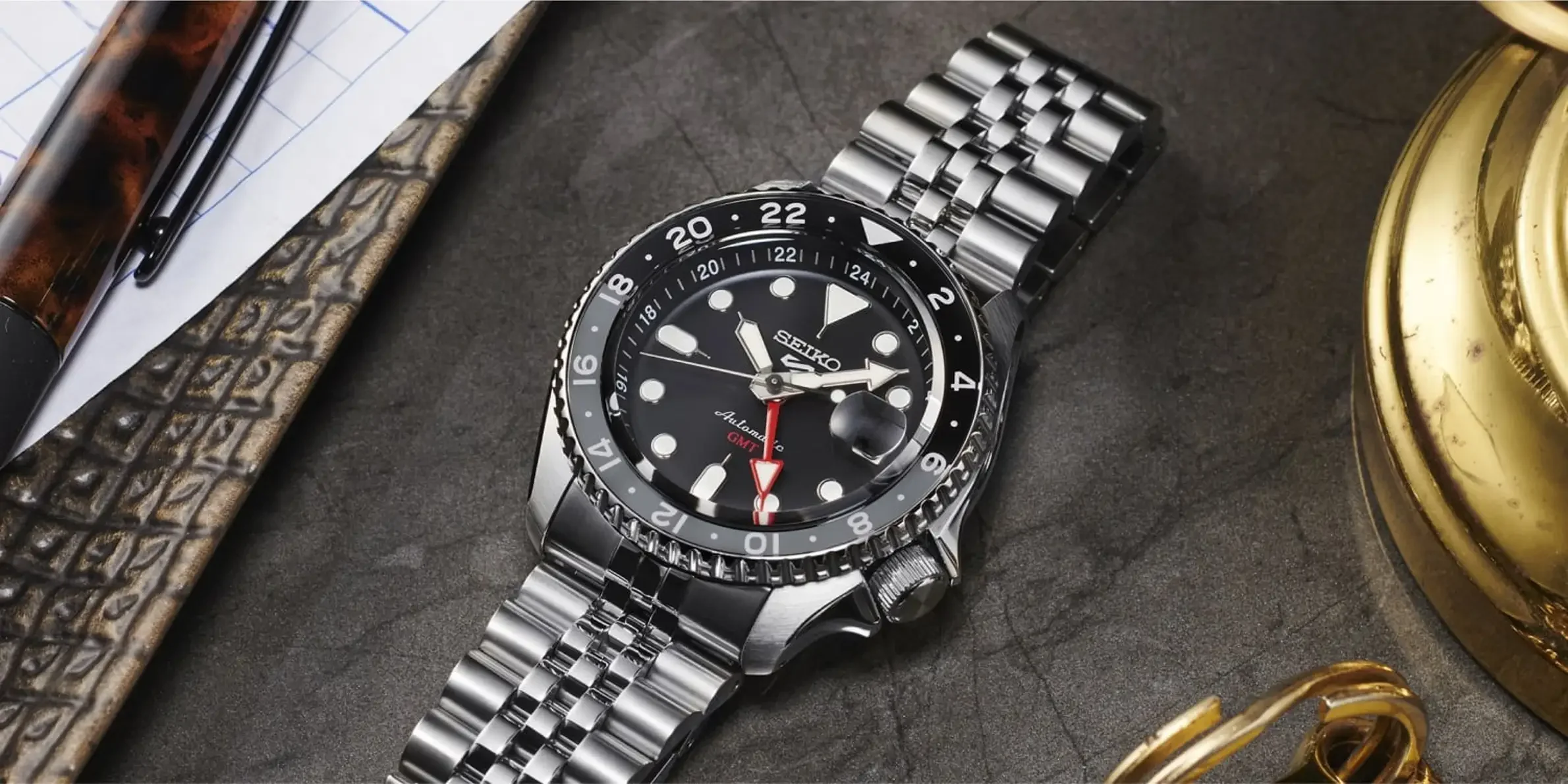
Credit - Seiko
Why are GMT bezels often two colours?
The two-colour bezel is not just there because watch manufacturers discovered collectors are powerless against colourful ceramic.
Traditionally, the two colours help distinguish day from night across the 24-hour scale. One half represents daytime hours and the other nighttime hours.
Rolex made this concept popular and where the famous nicknames come from. Red and blue became the Pepsi. Black and red became the Coke. Blue and black became Batman. Brown and black became Root Beer.
Apparently, at some point the watch industry quietly outsourced its naming department to the drinks aisle.
Where did the GMT watch come from?
The GMT watch is closely associated with the rapid growth of international aviation during the 1950s. As aircraft began crossing several time zones in a single journey, pilots needed a convenient way of keeping track of both local time and a home or reference time.
The Rolex GMT-Master appeared in 1955 and became closely associated with Pan American World Airways. This is important because the GMT complication was not originally created simply to give watch collectors another hand to stare at.
It solved a genuine problem. That is part of its enduring appeal.
What is a “true GMT” or “flyer GMT”?
This is where things become slightly more technical and where watch forums become considerably less peaceful.
There are broadly two common types of mechanical GMT.
Flyer GMT
A flyer GMT, sometimes called a traveller's GMT or true GMT, allows the normal local hour hand to move independently.
When you land somewhere new, you simply jump the local hour hand forwards or backwards by the appropriate number of hours.
The minutes, seconds and GMT hand keep running normally.
If you travel regularly, this is the most convenient system.
Caller GMT
A caller GMT normally works the other way around.
Instead of independently adjusting the local hour hand, you independently adjust the GMT hand.
That makes it useful for someone who usually remains in one location but frequently needs to track another time zone.
Perhaps you work with New York.
Perhaps your family lives overseas.
Perhaps you just enjoy knowing the time in Tokyo despite having absolutely nobody to call there.
All valid uses.
Flyer GMT vs caller GMT: which is better?
Neither is universally better.
A flyer GMT is generally better for people who travel because you can quickly change the local hour without disrupting everything else.
A caller GMT works extremely well for people who remain at home but regularly follow another time zone.
The term “true GMT” therefore causes more confusion than it solves.
A caller GMT is still a genuine GMT watch.
It just moves a different hand.
What is the difference between GMT and UTC?
GMT and UTC are not technically identical, although for normal watch use the difference is largely academic. GMT is historically based on astronomical observations and the mean solar time at Greenwich. UTC is the modern global time standard based primarily on atomic clocks.
For everyday purposes: GMT+0 and UTC+0 correspond to the same clock time.
Your mechanical GMT watch does not care which terminology you prefer. There are enough arguments in watch collecting already.
Is GMT the same as UK time?
Only during part of the year.
The UK uses GMT during winter.
During British Summer Time, the clocks move one hour forward to BST, which is GMT+1.
That matters if you keep your GMT hand permanently set to UK time while travelling. It also highlights one limitation of mechanical GMT watches: they do not automatically account for daylight-saving changes.
Your watch can keep track of up to three countries simultaneously. It still expects you to remember when the clocks change.
GMT vs world timer
A GMT usually tracks two or three chosen time zones. A world timer is designed to display the time across many global time zones simultaneously, normally through a combination of a rotating 24-hour ring and named cities.
The easiest way to think about it is:
A GMT answers:
“What time is it at home?”
A world timer answers:
“What time is it everywhere?”
One is a useful travel complication.
The other makes you feel briefly responsible for international diplomacy.
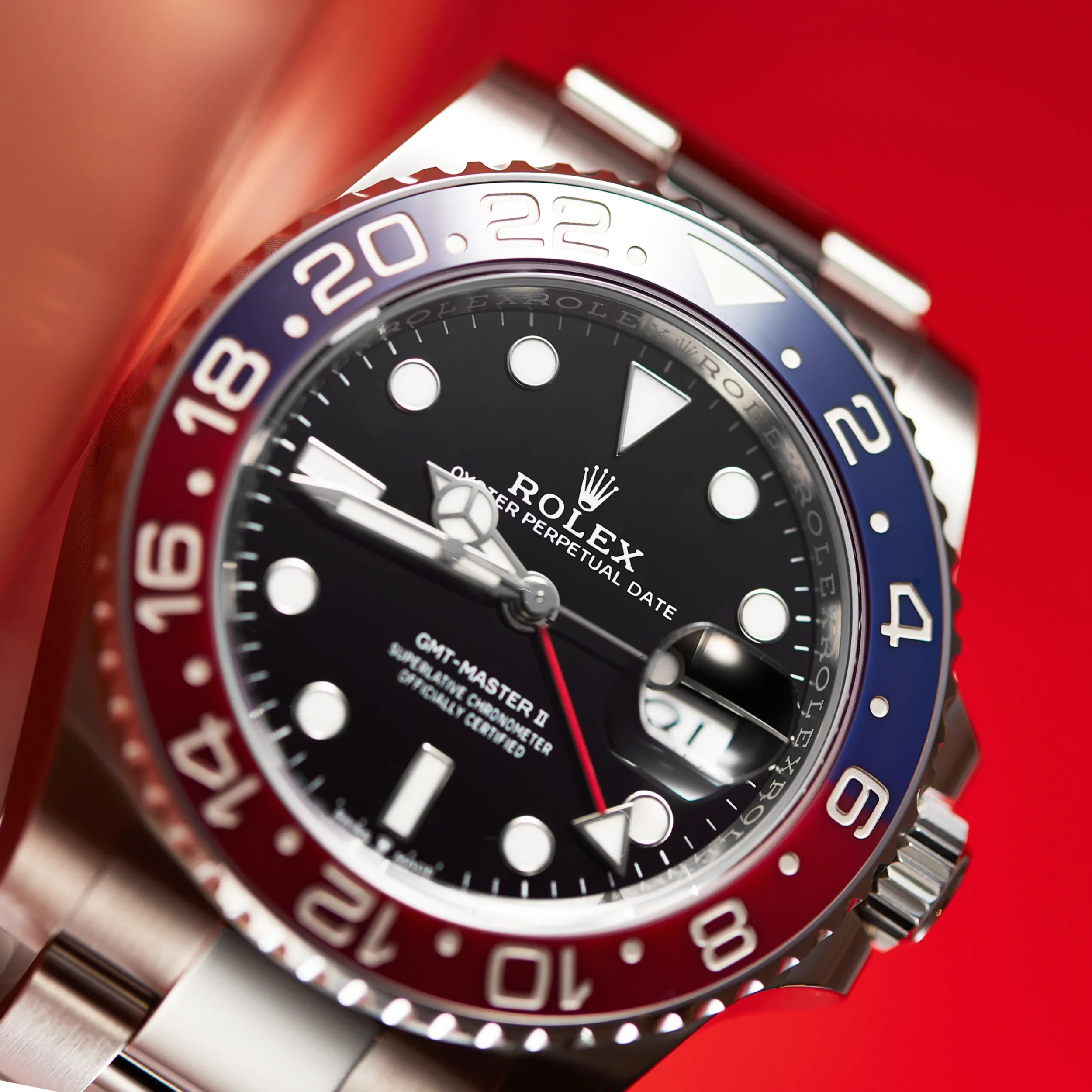
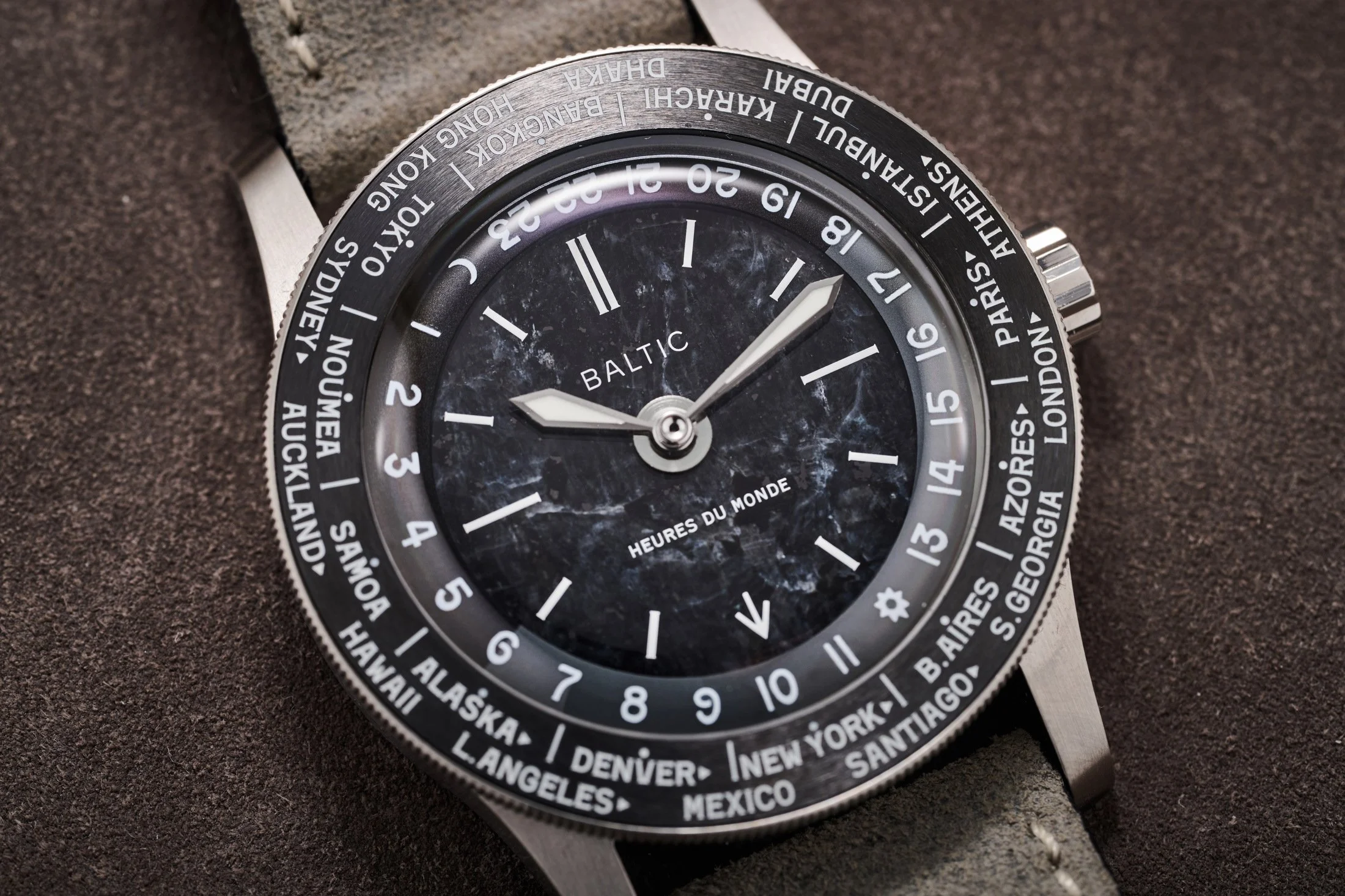
Some famous GMT watches
The most obvious starting point is the Rolex GMT-Master II.
It remains the watch most people picture when they think about the complication, with its dedicated 24-hour hand, independently adjustable local hour hand and rotating two-colour bezel.
A clean Rolex GMT-Master II product image works well here, especially a Pepsi model, because by this point the reader understands exactly what the bezel and extra hand are doing.
The Tudor Black Bay GMT is another obvious choice, bringing the same fundamental traveller-GMT idea into the Tudor range with the familiar snowflake hand and red-and-blue 24-hour bezel.
Other brands worth exploring include Grand Seiko, Longines, Breitling, Omega, TAG Heuer, Christopher Ward and Seiko.
You can now find GMT complications everywhere from relatively affordable mechanical watches to very serious high-end pieces.
Is a GMT watch worth buying?
If you travel regularly, yes. A flyer GMT is genuinely one of the most practical complications available on a mechanical watch.
But you do not have to be travelling every week to enjoy one. They offer a visually interesting extra hand, colourful bezel options, a genuine mechanical function and actual historical relevance.
And, unlike a tourbillon, something you can explain without diagrams.
For many collectors, that combination makes a GMT one of the most satisfying additions to a collection.
What should you look for when buying a GMT watch?
If you are considering one, there are a few questions worth asking.
First, decide whether you need a flyer or caller GMT. Frequent travellers will probably benefit from an independently adjustable local hour hand.
Next, check whether the bezel rotates. A fixed 24-hour bezel is fine for tracking two zones, while a rotating one provides additional flexibility.
Then think about legibility. The GMT hand should be clearly distinguishable from the regular hour hand. A GMT that requires ten seconds of concentrated staring rather defeats the purpose.
Finally, consider size. GMT movements and bezels can result in thicker watches, so trying one on is particularly worthwhile. Because no complication is useful if the watch spends its life in the box because it feels like a small satellite strapped to your wrist.
Winding Things Up
So, what does GMT mean on a watch? GMT stands for Greenwich Mean Time, but in modern watchmaking it essentially tells you that the watch can display another time zone.
The standard hour and minute hands show your local time. A dedicated GMT hand travels around a 24-hour scale and displays another time. Add a rotating bezel and you may be able to follow a third.
A flyer GMT lets travellers independently adjust local time, while a caller GMT allows the reference hand to be changed instead.
It sounds complicated when written down. On your wrist, it takes about thirty seconds to understand. That is probably why the GMT has endured for more than 70 years. It is useful, mechanically interesting, historically relevant and gives manufacturers an entirely legitimate excuse to put red, blue, green and black all over a bezel.
Your phone may know the time everywhere on Earth. But it still does not have a Pepsi bezel.