
The Rotor: The Secret Reason Your Watch Doesn’t Die
Automatic watches are brilliant, but they also hide one of the most satisfying little pieces of engineering you will ever own. The rotor.
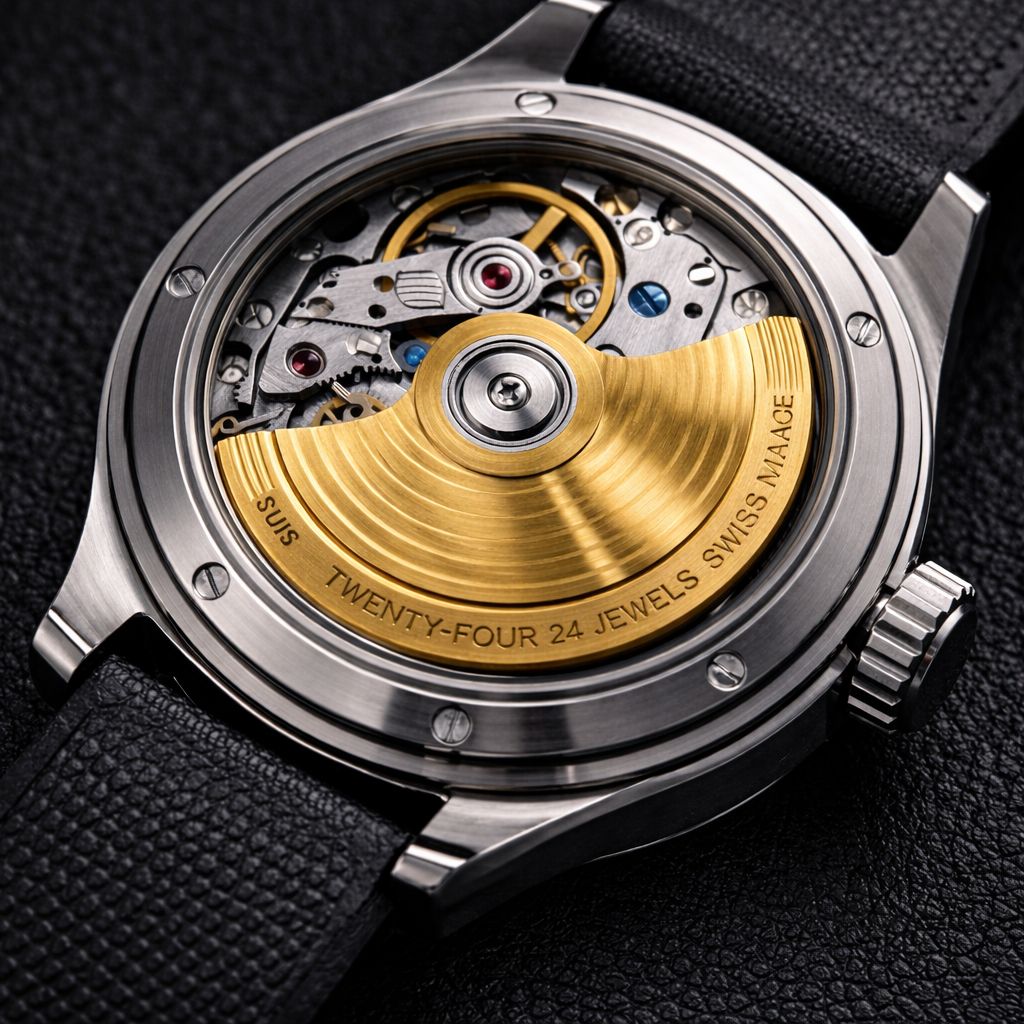
If you have ever looked through a display caseback and seen a semi-circular weight swinging around, that is it. It can feel like a gimmick at first. In reality, it is the whole reason an automatic watch can feel effortless to live with.
Here is why it exists, what it does, and what it means for your watch in the real world.
What a rotor actually is
A rotor is a weighted piece of metal that pivots around a central point inside the movement. It is deliberately heavier on one side so gravity and motion make it swing.
When you move your wrist, the rotor turns. That rotation is converted into winding energy and fed into the mainspring, which is the part of a mechanical watch that stores power.
So the rotor is not there to make the watch look interesting through the back. It is there to turn everyday movement into stored energy.
Why automatic watches have a rotor
Before automatic watches were common, a mechanical watch needed to be wound by hand. You did that by turning the crown to tighten the mainspring.
The rotor was developed to solve a simple problem: most people forget to wind a watch, or they cannot be bothered. A rotor means the watch can keep itself topped up while you wear it.
It does not create energy out of nowhere. It just harvests motion you are already making and uses it to keep the mainspring tensioned within a healthy operating range.
That is why automatics are often described as self-winding. They are not magically powered. They are motion-wound.
What the rotor does inside the movement
The rotor’s job is to spin, but the clever bit is what happens next.
As it rotates, it drives a set of gears that lead to the winding mechanism. That mechanism usually includes a reverser system so winding can happen efficiently no matter which way the rotor spins.
Some watches wind in both directions. Some wind primarily in one direction and freewheel a bit in the other. Both approaches can work well.
The end result is the same: rotor movement becomes mainspring tension, and mainspring tension becomes power for the gear train and escapement, which keeps time.
What it means for your watch day to day
1) Why your automatic keeps running when you wear it
If your watch is sized right and you wear it regularly, the rotor is constantly doing small top-ups. That is why many people can go weeks without needing to wind or reset, apart from when they rotate watches.
If you work at a desk, drive a lot, or wear the watch loosely, it may not wind as much as you expect. That does not mean anything is wrong. It just means your day is not as “windy” as a marketing photo suggests.
2) Why it still stops when you take it off
Most modern automatics have a power reserve of roughly 38 to 80 hours, depending on the movement. Once you stop wearing it, the rotor stops moving, and the watch starts living off whatever power is stored.
When that power is gone, the watch stops. That is normal.
If you rotate watches, this is why you either accept the reset routine or you use a watch winder. Neither option is morally superior. It is just lifestyle.
3) Why some watches feel louder or more “alive”
Rotors make a watch feel physical. You might hear a faint whirr, feel a gentle spin, or in some cases feel a proper wobble. That sensation depends on the movement design, the case construction, and how the rotor is mounted.
A few watches are famous for letting you feel the rotor. Some enthusiasts love that because it feels mechanical and playful. Others find it distracting.
Either way, a rotor you can feel is not automatically a problem. It is usually just character.
4) Why thickness is often the trade-off
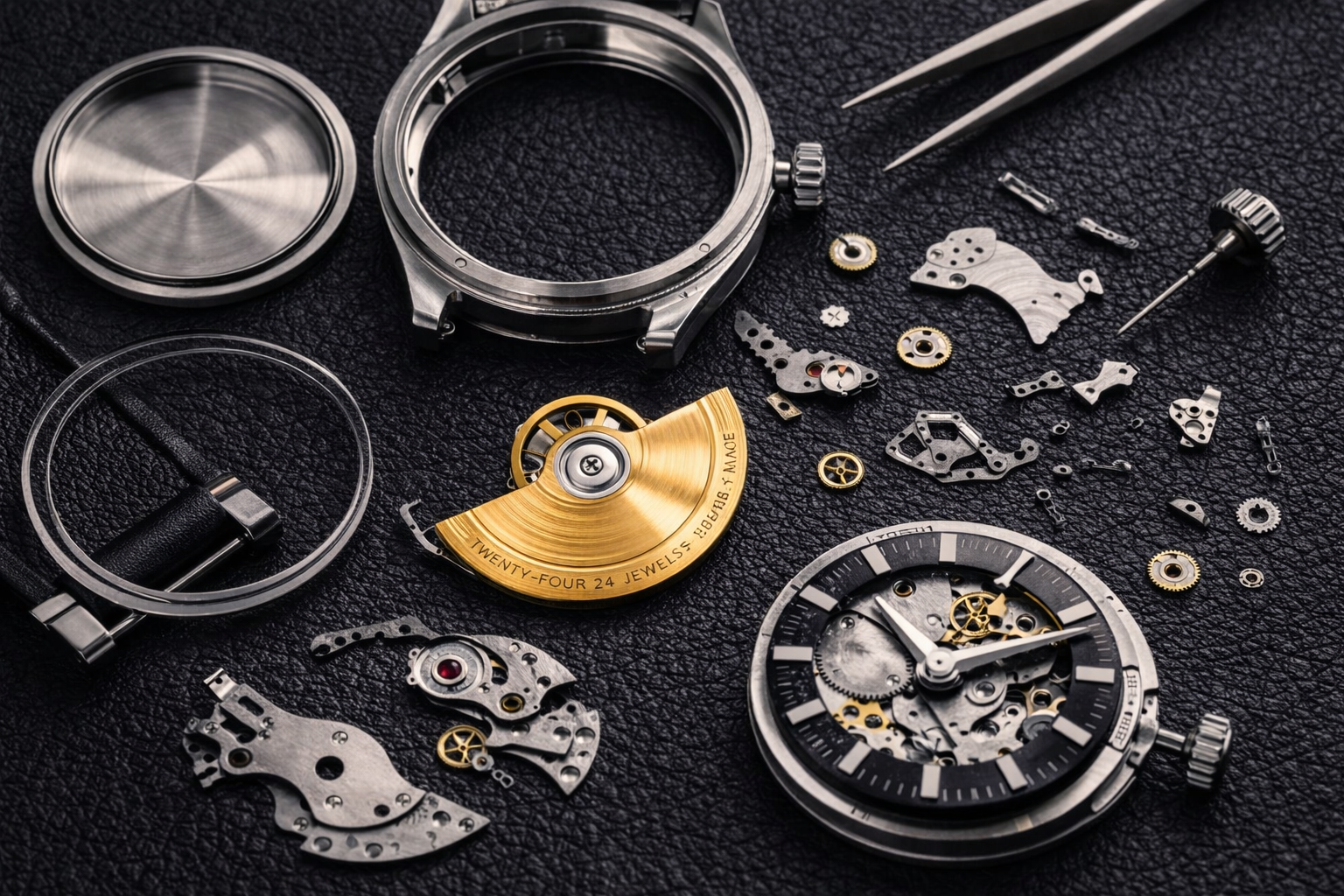
A rotor needs vertical space. It sits above the movement architecture, and that usually makes an automatic thicker than an equivalent hand-wound watch.
That is one of the big reasons slim dress watches are often manual wind, micro-rotor, or use clever architecture to keep height down.
So yes, the rotor brings convenience. It also often brings a few extra millimetres.
What it means for accuracy and wear
A rotor does not directly make a watch more accurate. Timekeeping is controlled by the balance and escapement, not by how the mainspring is topped up.
But indirectly, consistent winding can help stability. Mechanical movements often perform best when they are running in a normal power range rather than near empty. If you wear your automatic regularly, the rotor helps keep it in that sweet spot more often.
That said, a watch can be fully wound and still run fast or slow if it needs regulation. The rotor is not a magic accuracy button.
Can a rotor damage your watch
In normal use, no. The movement is designed for this.
Automatic watches have a slipping bridle on the mainspring so once the watch is effectively fully wound, extra winding does not over-tighten the spring. It just slips to prevent damage.
The main real-world risks are more boring:
A hard knock can damage a rotor bearing or loosen the rotor screw, like any mechanical part.
A dry bearing over time can make the rotor noisier and less efficient.
A loose rotor can scrape, which you would usually hear and feel.
If you ever notice sudden grinding, scraping, or a dramatic drop in winding efficiency, that is a service issue, not a rotor concept issue.
Rotor variations you will hear watch people talk about
Full rotor
The classic semi-circle weight. Most common, usually robust, usually efficient.
Micro-rotor
A smaller rotor integrated into the movement rather than stacked on top. It can reduce thickness and look gorgeous, but it is more complex and often less efficient than a full rotor, depending on execution.
Peripheral rotor
A ring-shaped rotor around the edge of the movement. It can be very elegant and keeps the view of the movement open, but it is also more complex and less common.
None of these are automatically “better”. They are choices, and they tend to show up in different price tiers for different reasons.
Winding Things Up
A rotor is there so your movement can wind itself as you live your life.
It means your watch is more convenient, more likely to be running when you pick it up, and more likely to stay in a healthy power range when you wear it often. The trade-offs are typically thickness, a little extra mechanical noise or sensation, and more moving parts that eventually need servicing like any other mechanical system.