
Best Watches for Men Who Don't Normally Wear Watches
Buying your first watch should be exciting.
Instead, it often feels like you've accidentally wandered into a world with its own language. Quartz or automatic? Dive watch or field watch? What on earth is "lug-to-lug", and why does everyone seem to care about it?
The truth is much simpler than it first appears.
If you don't normally wear a watch, you don't need to understand every movement ever made or memorise the history of Swiss watchmaking. You simply need a watch that fits well, feels comfortable and suits the way you live.
That's exactly what this guide is here to help you find.
By the end, you'll understand what really matters, what doesn't, and which types of watches make the best first purchase.
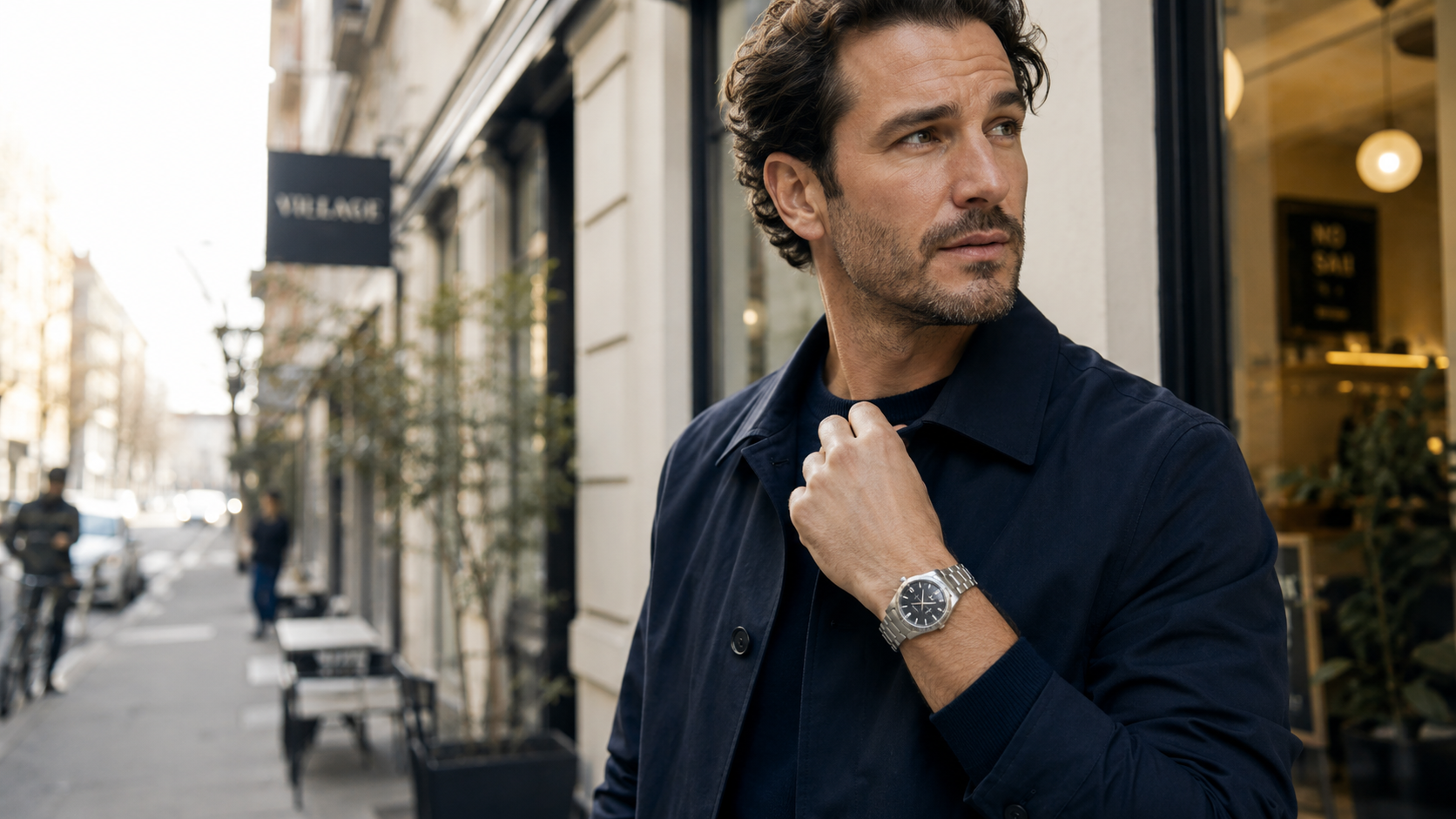
What Makes a Great First Watch?
The best first watch isn't necessarily the most expensive or the most technically impressive.
It's the one you'll actually wear.
That might sound obvious, but it's surprising how many people buy a watch because they feel they should own it, rather than because it suits their lifestyle.
A good first watch should be comfortable enough to wear all day, simple enough to use without thinking, durable enough for everyday life and versatile enough to look just as good with jeans as it does with a shirt.
If it does all of those things, you've already made a good choice.
Start With Comfort
If you've never worn a watch regularly before, comfort is everything.
A watch that's too heavy or too large quickly becomes something you're aware of all day. Before long, it ends up sitting on a bedside table instead of your wrist.
The ideal watch is one you forget you're wearing until you glance down to check the time.
That doesn't mean it has to be tiny or lightweight, but it should feel balanced and natural. Try it on if you can, move your wrist around and imagine wearing it for an entire working day rather than just five minutes in a showroom.
Choosing the Right Size
One of the most common mistakes first-time buyers make is choosing a watch that's too large.
Many everyday watches fall between 38mm and 42mm, which is a sensible starting point for most wrists. However, the case diameter is only part of the story.
The length of the watch, known as the lug-to-lug measurement, often has a greater impact on how it wears. Ideally, the lugs should sit neatly within the width of your wrist rather than hanging over the edges.
Case thickness also makes a difference. Slimmer watches tend to feel more comfortable and slide more easily under shirt cuffs, making them easier to wear every day.
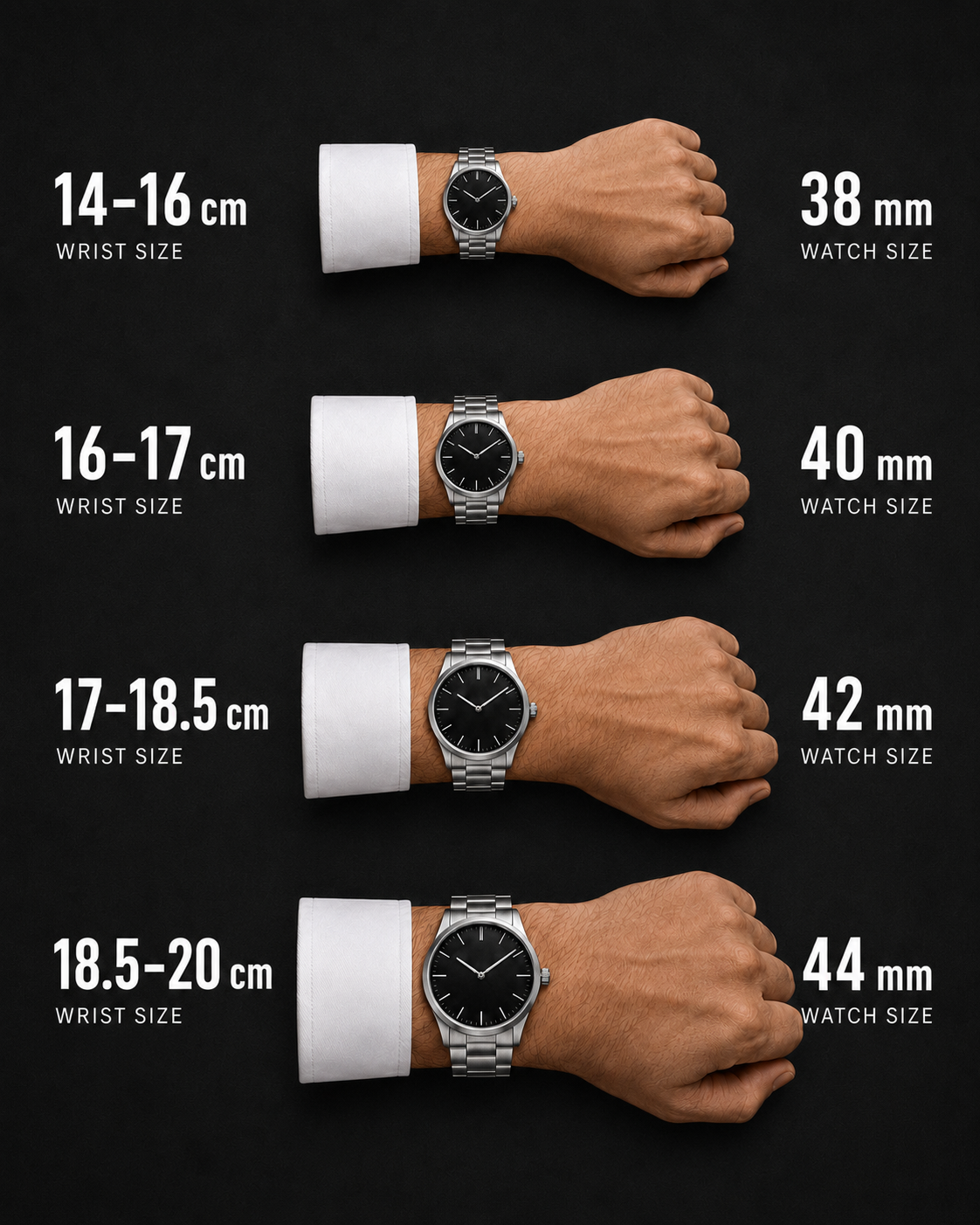
Choosing the Right Size
Quartz or Automatic?
Sooner or later you'll come across one of the biggest decisions in watch buying.
Should you choose a quartz watch or an automatic watch?
A quartz watch uses a battery to keep time. They're exceptionally accurate, require very little maintenance and are perfect if you don't plan on wearing your watch every day.
An automatic watch is powered by a mechanical movement. As you move your wrist, a small rotor winds the mainspring inside the watch, keeping it running.
There's something undeniably satisfying about knowing a tiny mechanical machine is working away beneath the dial. For many people, that's part of the magic of traditional watchmaking.
However, if you leave an automatic watch unworn for several days, it will usually stop and need resetting before you wear it again.
Neither option is better.
If convenience matters most, choose quartz.
If you're drawn to craftsmanship and traditional engineering, an automatic watch may be the better fit.
Which Style Should You Choose?
There are hundreds of different watches available, but most fall into a handful of familiar categories.
Everyday Sports Watch
If you're only planning to own one watch, this is probably where you should begin.
A steel sports watch is versatile, durable and works with almost every type of clothing. Whether you're at work, out for dinner or away on holiday, it rarely looks out of place.
Field Watch
Field watches focus on simplicity.
They're usually compact, highly legible and understated, making them an excellent choice for someone who prefers a practical watch that doesn't attract too much attention.
Dive Watch
Despite the name, you don't need to be a diver to own one.
Dive watches are popular because they're robust, easy to read and generally offer excellent water resistance. They're just as likely to be found in an office as they are by the sea.
Dress Watch
Dress watches are slimmer, cleaner and more elegant.
If you regularly wear suits or formal clothing, they're a fantastic choice. If you're looking for one watch to wear absolutely everywhere, though, a sports watch is often the more versatile option.
Our Favourite Watches for First-Time Buyers
Rather than chasing trends, we'd recommend watches that have earned their reputation over many years.
Tissot PRX
Stylish, versatile and available in both quartz and automatic versions, the PRX is one of the easiest watches to recommend to someone buying their first quality timepiece.
Hamilton Khaki Field
Simple, practical and wonderfully understated. If you like clean design with plenty of history behind it, the Khaki Field deserves a place on your shortlist.
Seiko 5 Sports
One of the best introductions to mechanical watches. Reliable, approachable and available in countless variations.
Citizen Eco-Drive
If convenience is your priority, it's hard to overlook Eco-Drive technology. Powered by light rather than a conventional battery, these watches are wonderfully easy to live with.
Tudor Black Bay
A superb first luxury watch. Inspired by classic dive watches, it offers quality, versatility and timeless design without feeling overly complicated.
Omega Aqua Terra
If you're searching for one luxury watch that genuinely works almost everywhere, the Aqua Terra is one of the strongest contenders.
It feels equally at home with a suit, jeans or swim shorts, making it an exceptional everyday watch.
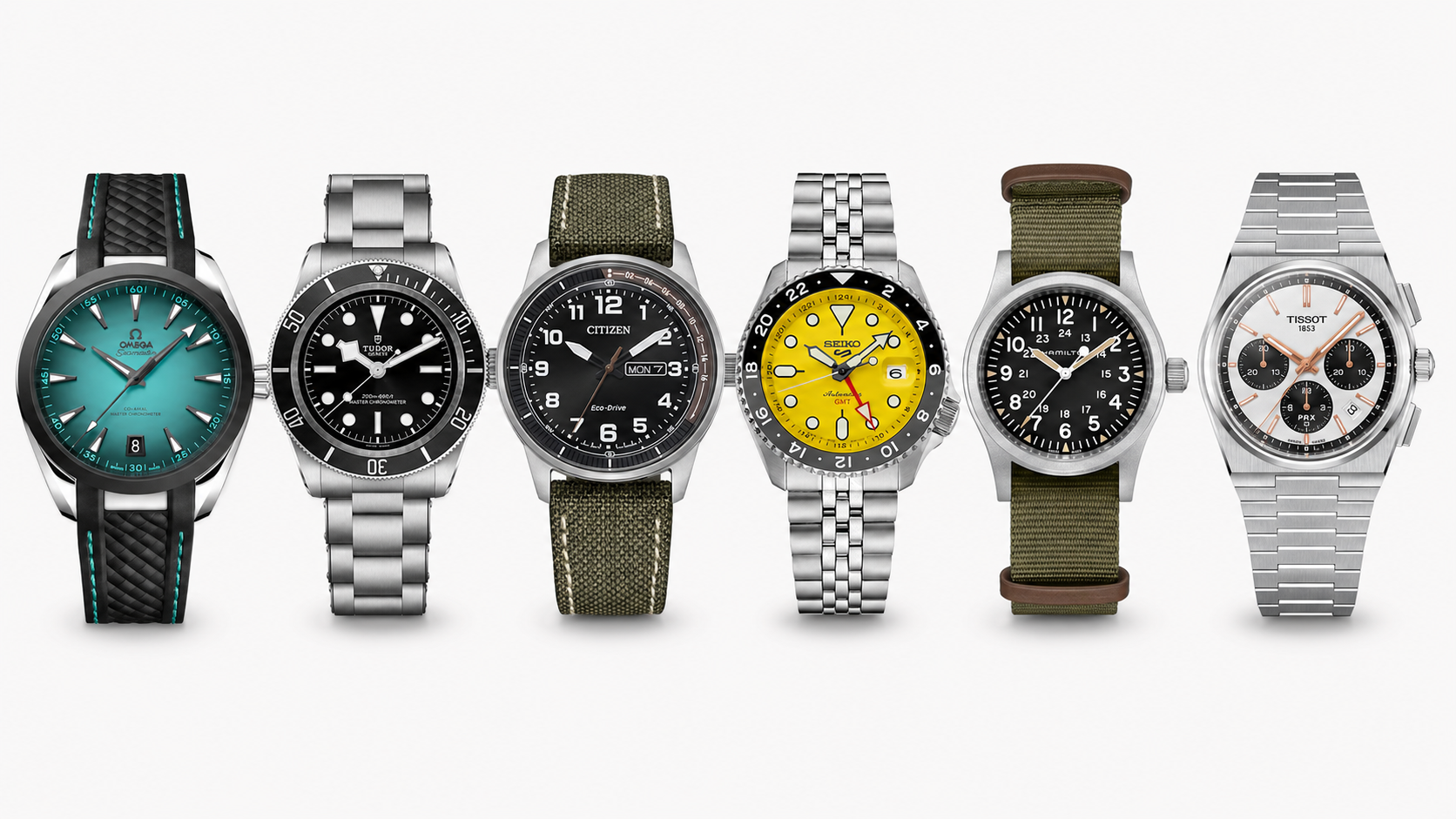
Our Favourite Watches for First-Time Buyers
How Much Should You Spend?
One of the biggest misconceptions in watch buying is that you need to spend thousands of pounds to own something worthwhile.
You don't.
There are excellent watches available at almost every budget.
Under £200, you'll find dependable quartz and solar-powered watches from respected brands.
Between £200 and £1,000 is where many people discover the sweet spot, with a huge choice of quality quartz and automatic models.
Above that, you're paying for improved finishing, craftsmanship, heritage and more sophisticated movements.
Those things absolutely have value, but they aren't essential for enjoying your first watch.
Buy the watch that feels right for you, not the one you think you're expected to own.
Buying a Watch as a Gift
If you're buying for someone else, think about how they actually live.
Do they wear suits or casual clothes?
Do they work in an office or outdoors?
Would they appreciate the engineering of an automatic watch, or would they simply want something reliable that always works?
The best gifts are the ones that suit the person wearing them.
Choosing with their lifestyle in mind will almost always lead to a better decision than choosing purely by brand.
Frequently Asked Questions
What is the best first watch for a man?
A comfortable, versatile everyday watch with a simple dial and sensible proportions is usually the safest place to start.
What size watch should I buy?
For most men, somewhere between 38mm and 42mm works well, although wrist size and lug-to-lug measurement are equally important.
Is quartz or automatic better?
Neither is objectively better.
Quartz offers convenience and accuracy, while automatic watches offer traditional craftsmanship and mechanical charm.
Can I wear the same watch every day?
Absolutely.
In fact, that's exactly what many watches are designed for.
A good everyday watch should comfortably move between work, weekends and special occasions.
Winding Things Up
Your first watch doesn't need to be complicated. It doesn't need dozens of functions, an eye-watering price tag or a movement that only seasoned collectors can appreciate.
It simply needs to feel right when you put it on. If it's comfortable, easy to read, suits your lifestyle and makes you look forward to wearing it tomorrow, you've found exactly what a first watch should be.
Everything else can come later.
You don't need an enormous budget, an encyclopaedic knowledge of movements or a collection of watches.
You just need one that feels right.
Because ultimately, the best watch for a man who doesn't normally wear watches is the one that makes him want to start.