
Christopher Ward Introduces the New C60 Trident Biscay Collection
Christopher Ward has added another intriguing chapter to its Trident story with the launch of the new C60 Trident Biscay collection. Taking inspiration from the rugged Bay of Biscay and the classic dive watches of the 1960s, the new range combines vintage-inspired design with the modern engineering that has become synonymous with Christopher Ward.
Rather than creating another oversized, ultra-technical dive watch, the Biscay takes a noticeably more restrained approach. The collection is built around slimmer cases, box-domed sapphire crystals, aluminium bezels and heavily vintage-influenced dials, while retaining a serious 200m water-resistance rating and COSC-certified Swiss automatic movements.
The result is a Trident that feels considerably more at home on a summer holiday or paired with a casual outfit than some of the more overtly professional models in the Christopher Ward catalogue.
Inspired by the Bay of Biscay
The Bay of Biscay is a notoriously challenging stretch of the Atlantic Ocean, running along the western coast of France and the northern coast of Spain. It provides an appropriately nautical backdrop for a collection designed around the idea of exploration, diving and life around the water.
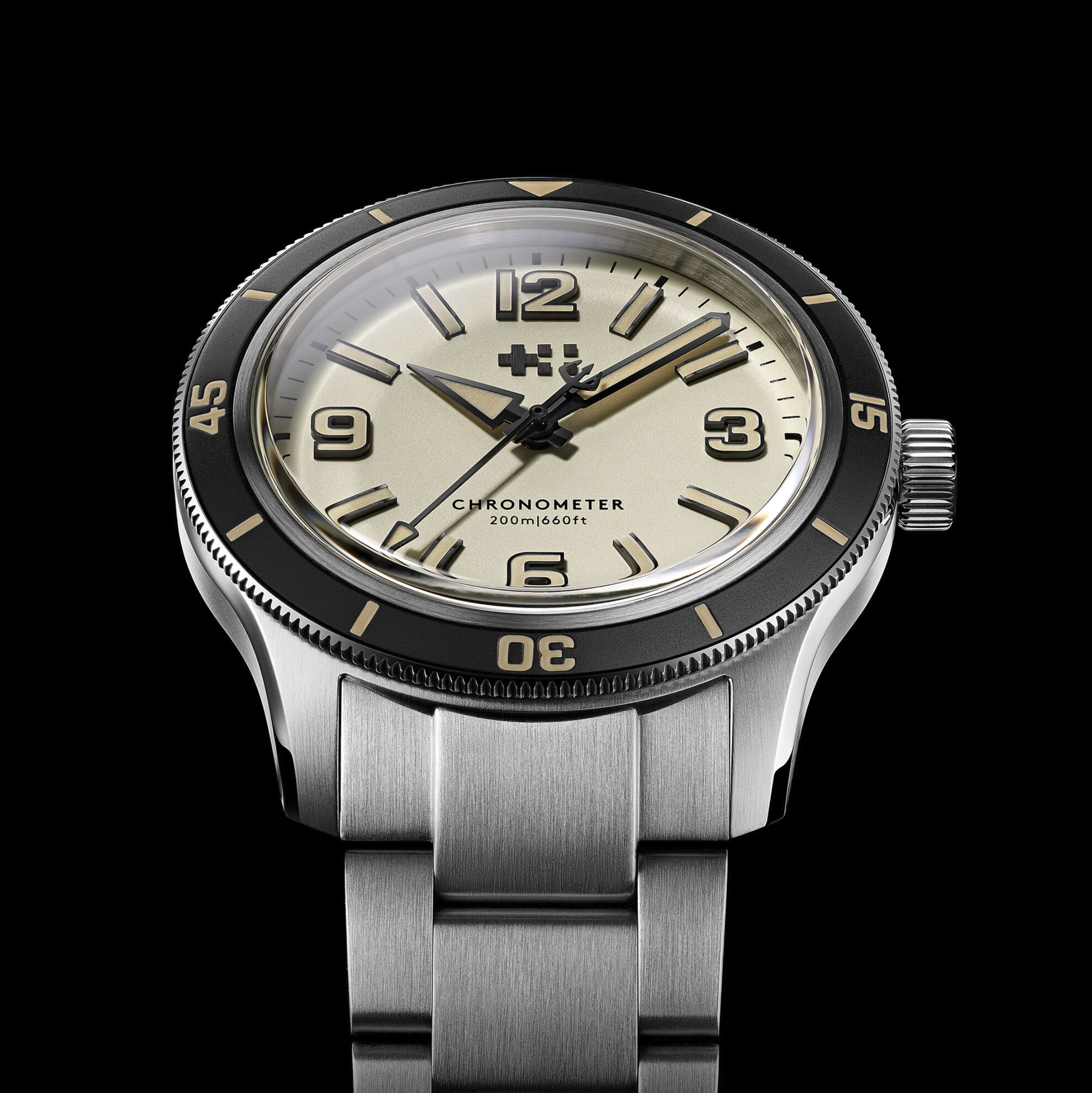
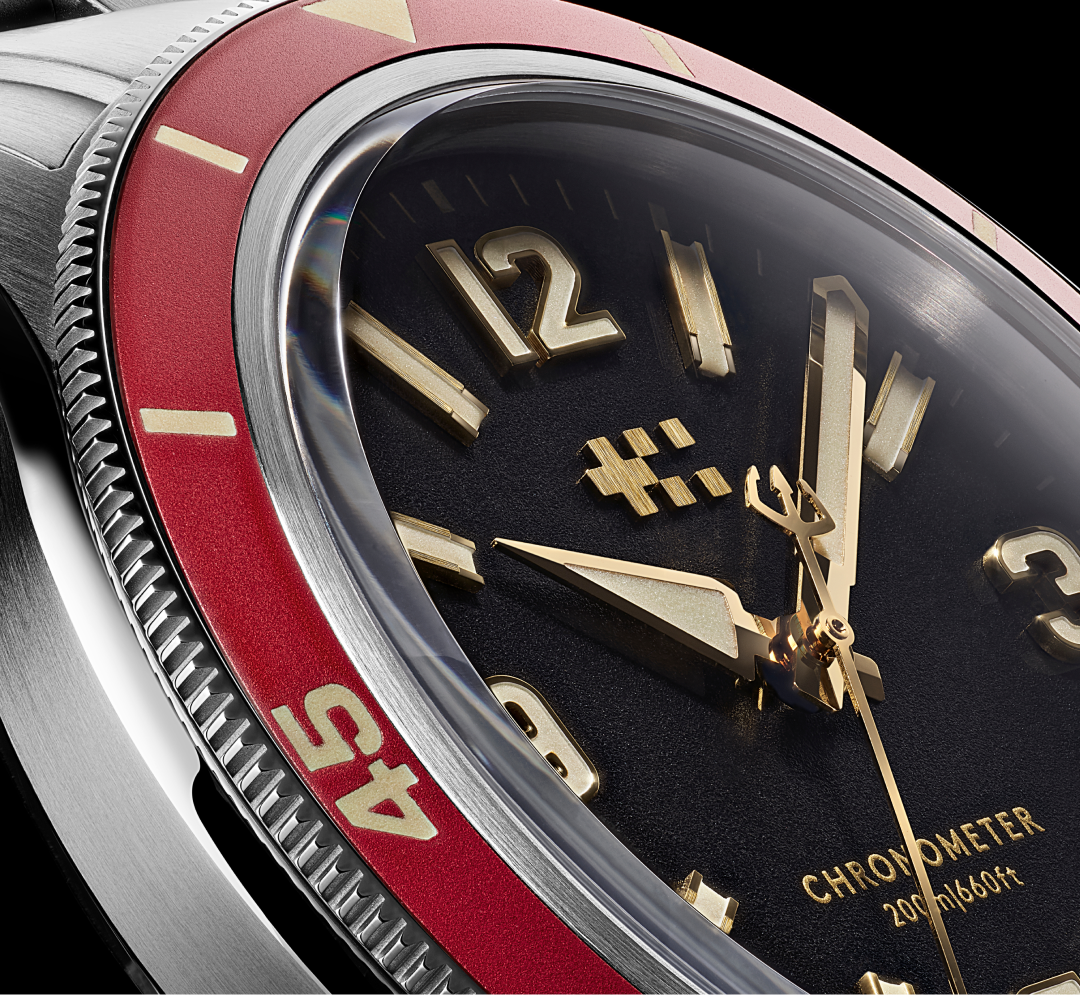
Visually, Christopher Ward has leaned heavily into the golden age of diving. The watches feature box-domed sapphire crystals, sandblasted dials, applied Arabic numerals and aluminium bezel inserts rather than the more contemporary ceramic bezels increasingly found across the luxury dive-watch market.
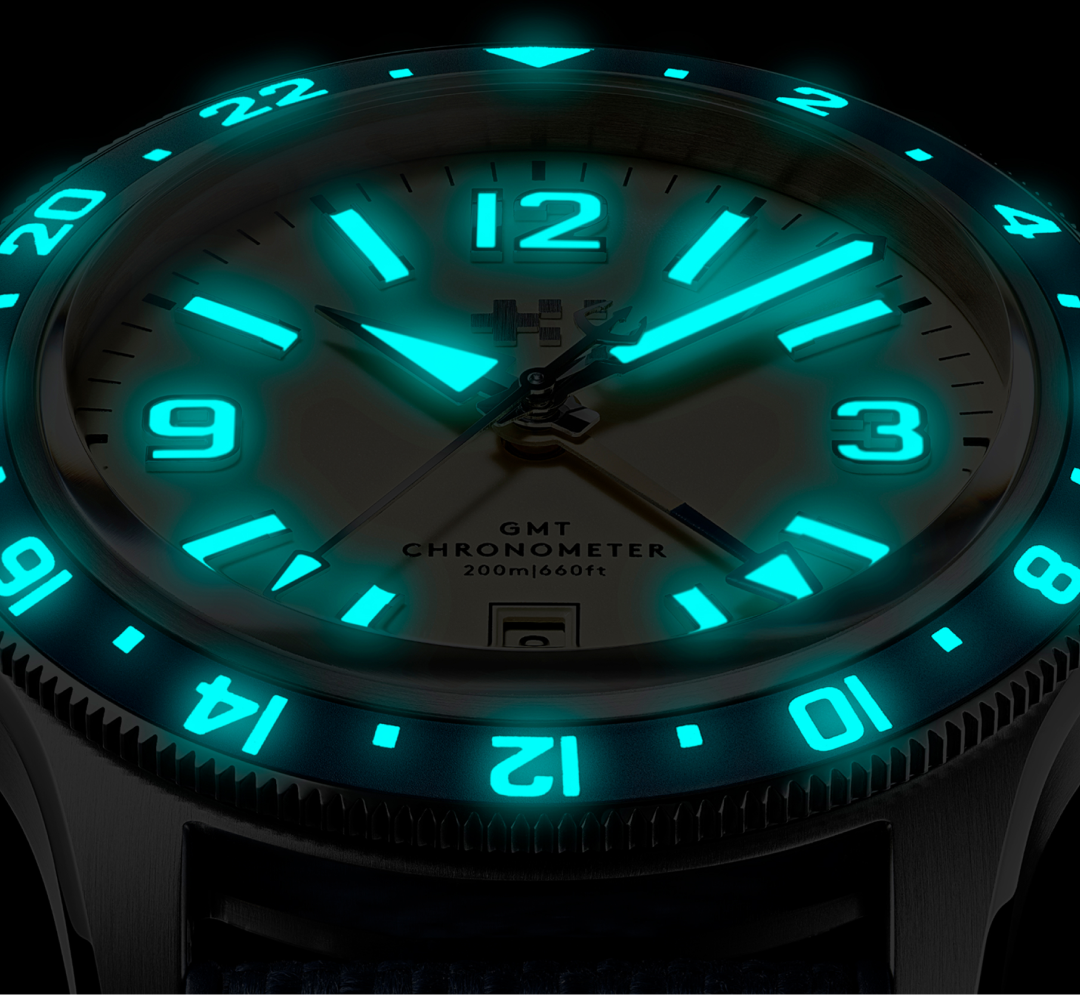
There is also a deliberate warmth to the presentation. The lume has been designed to evoke the appearance of aged vintage lume, while the combination of polished and brushed surfaces gives the case plenty of visual definition without making it feel overly modern.
It is still unmistakably a C60 Trident, particularly thanks to the signature Trident counterbalance on the seconds hand, but the Biscay has a personality of its own.
A Slimmer Trident
One of the most appealing aspects of the new collection is the case architecture. Christopher Ward has developed a slimmer version of its Light-catcher™ case for Biscay, with the Automatic and Bronze models measuring around 11mm thick.
The Automatic is available in both 39mm and 42mm, giving buyers the choice between a compact, vintage-inspired presence and something with a little more wrist presence. The GMT is also offered in both sizes, although its additional complication brings the thickness up to approximately 12mm.
That relatively restrained profile could make the Biscay one of the more wearable Tridents in the collection. Modern dive watches can often become quite substantial once crown guards, thick crystals, rotating bezels and high water resistance are taken into account. Biscay manages to retain the 200m rating while keeping the overall proportions relatively elegant.
Credit - Christopher Ward
Credit - Christopher Ward
The C60 Trident Biscay Automatic
At the heart of the collection is the C60 Trident Biscay Automatic, available in 39mm and 42mm.
The design is quintessentially vintage diver, with a sandblasted dial, applied Arabic numerals at 3, 6, 9 and 12 o'clock and a clean three-hand layout. The absence of a date window is particularly welcome, preserving the symmetry of the dial and giving the watch a much more authentic retro character.
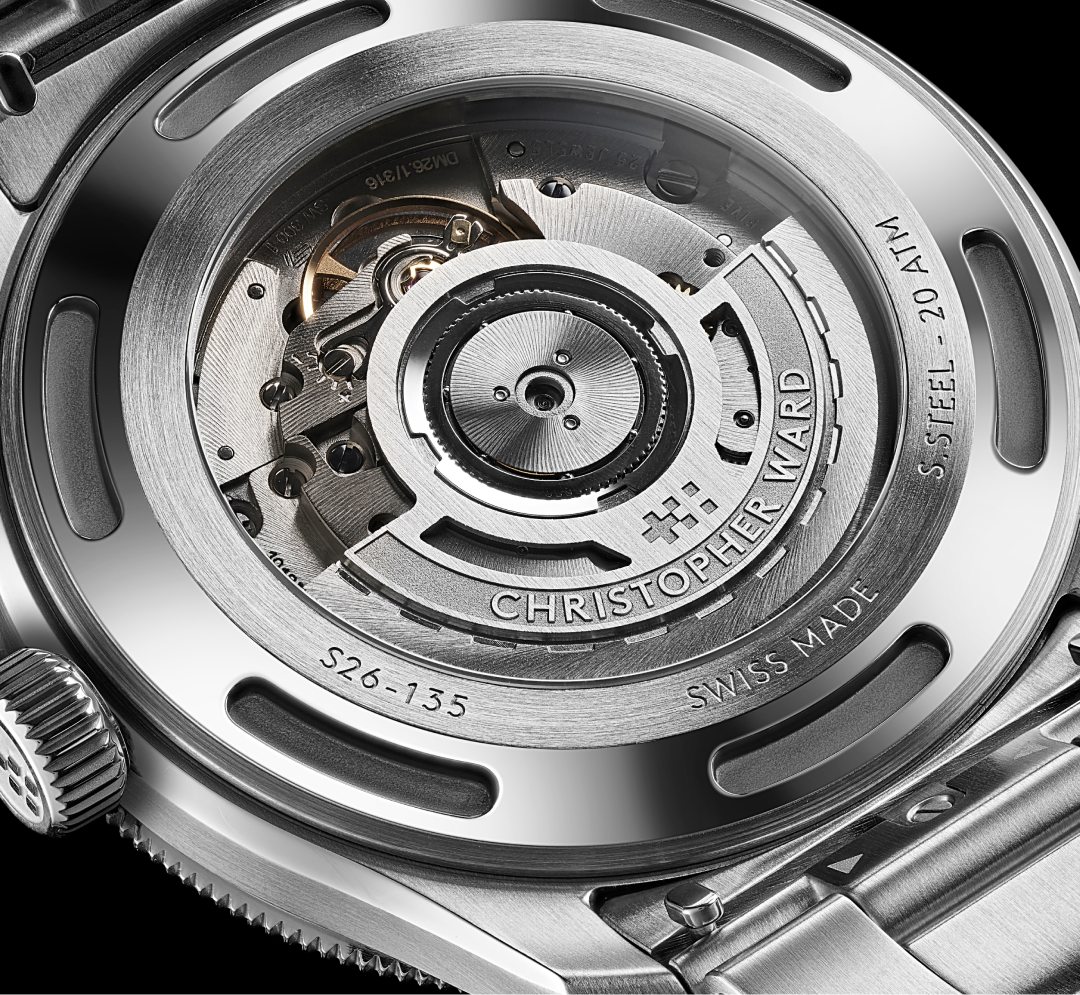
Underneath the box-domed sapphire crystal is a Swiss Sellita SW300-1 COSC movement. With chronometer certification and approximately 56 hours of power reserve, it gives the Biscay considerably more technical credibility than its vintage appearance might suggest.
The bezel is also worth highlighting. Rather than using ceramic, Christopher Ward has selected anodised aluminium, helping recreate the aesthetic of vintage diving watches. The insert is hardened to 250HV on the Vickers scale, while the bezel features 120 clicks and a redesigned grip.
Specifications:
Case sizes: 39mm and 42mm
Case thickness: approximately 11mm
Case: Stainless steel
Water resistance: 200m / 20 ATM
Crystal: Box-domed sapphire with anti-reflective coating
Bezel: Unidirectional anodised aluminium
Bezel hardness: 250HV
Movement: Sellita SW300-1 COSC
Power reserve: approximately 56 hours
Frequency: 28,800 vph / 4Hz
Accuracy: -4/+6 seconds per day
Lume: Super-LumiNova® Grade X1 BL
Dial: Sandblasted
Bracelet options: Bader and Consort
Strap options: Hybrid rubber
Price: From £1330
Credit - Christopher Ward
Credit - Christopher Ward
Enter the Biscay GMT
For those wanting something a little more complicated, Christopher Ward has also introduced the C60 Trident Biscay GMT.
The GMT takes the same basic design language and introduces a second-time-zone complication, with a fourth hand and a bidirectional 24-hour bezel. Unlike the Automatic, the GMT also incorporates a date window at 6 o'clock, neatly integrated into the dial without disrupting the overall symmetry.
The GMT is powered by the Sellita SW330-2 COSC, giving buyers the same chronometer-certified performance and approximately 56-hour power reserve found in the Automatic.
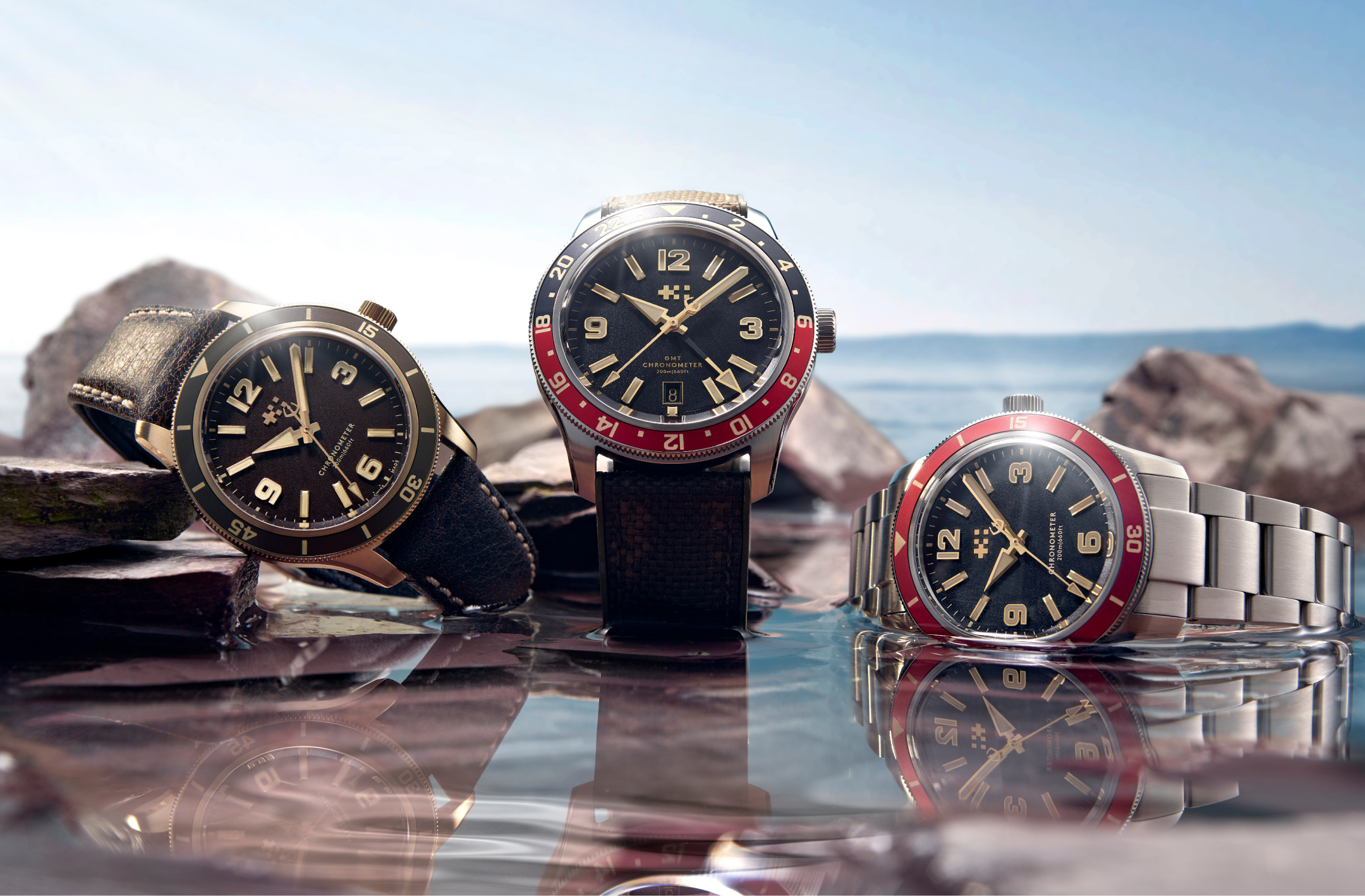
The colour combinations are particularly effective here. The GMT is available with either a sand-coloured dial and blue accents or a black dial with red details, both of which emphasise the retro travel-watch character without making the design feel overly busy.
Specifications:
Case sizes: 39mm and 42mm
Case thickness: approximately 12mm
Case: Stainless steel
Water resistance: 200m / 20 ATM
Crystal: Box-domed sapphire with anti-reflective coating
Bezel: Bidirectional anodised aluminium 24-hour bezel
Bezel hardness: 250HV
Movement: Sellita SW330-2 COSC
Function: GMT / second time zone
Date: 6 o'clock
Power reserve: approximately 56 hours
Frequency: 28,800 vph / 4Hz
Accuracy: -4/+6 seconds per day
Lume: Super-LumiNova® Grade X1 BL
Bracelet options: Bader and Consort
Strap options: Hybrid rubber
Price: From £1430
Credit - Christopher Ward
Credit - Christopher Ward
And Then There's the Bronze
The standout model of the collection could well be the C60 Trident Biscay Bronze.
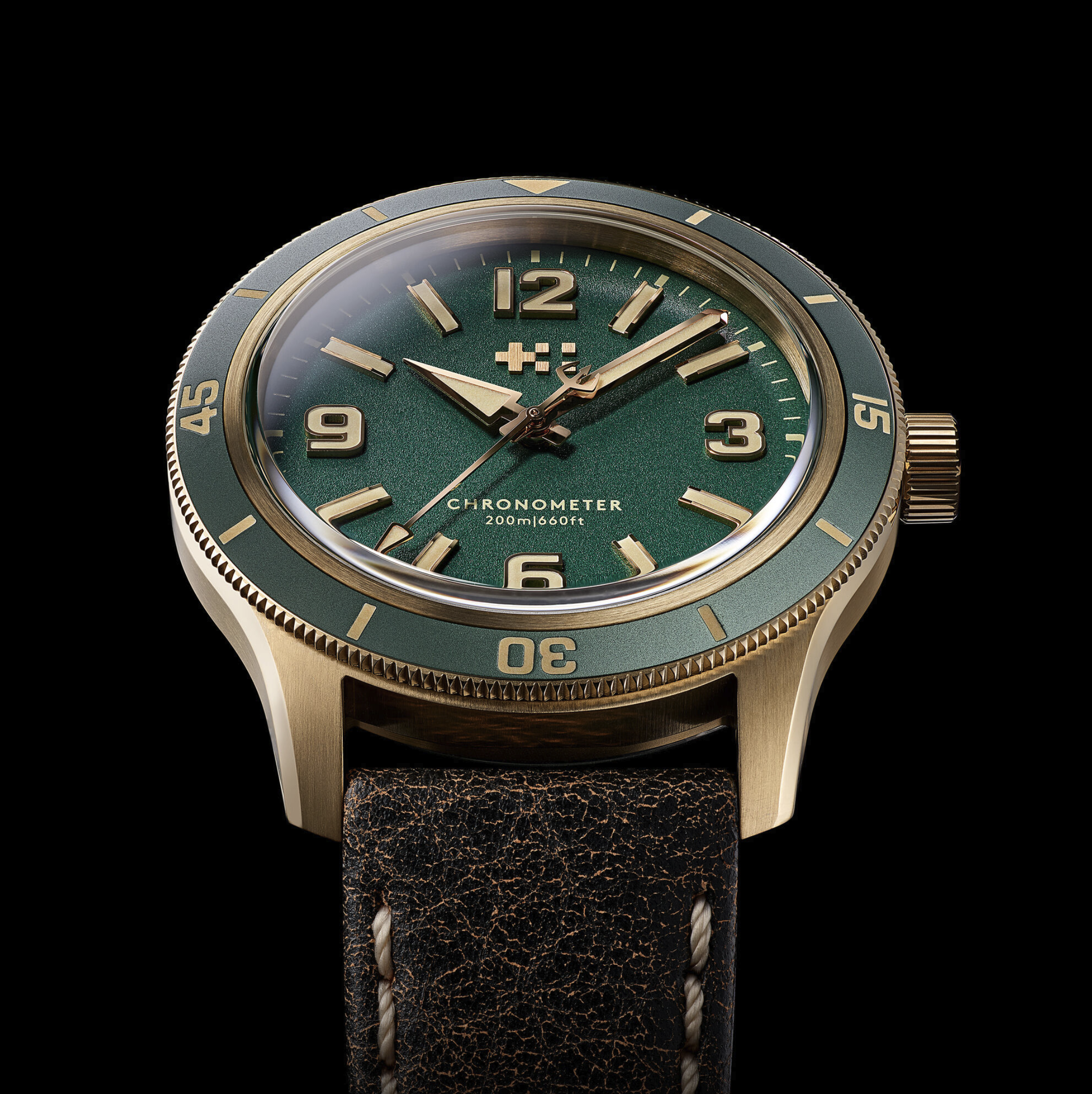
Limited to the 39mm format, the Bronze takes the same vintage-inspired formula but swaps the stainless-steel case for a marine-grade aluminium bronze alloy. This gives the watch a naturally warmer appearance and creates a particularly attractive combination with the green and brown dial options.
Bronze watches have become something of a modern enthusiast favourite because the material changes over time, allowing each watch to develop a patina that is unique to its owner. Christopher Ward has taken an interesting approach here by using a CuAl10Ni5Fe4 aluminium bronze alloy, designed to offer improved resistance to seawater corrosion while still allowing the material to develop character.
The result looks fantastic against the vintage styling of the Biscay. The bronze case, aged-looking lume, box sapphire and warm dial colours all reinforce the feeling that this could have come straight out of a 1960s dive shop, despite the considerably more sophisticated engineering underneath.
Specifications:
Case size: 39mm
Case thickness: approximately 11mm
Case: Marine-grade aluminium bronze CuAl10Ni5Fe4
Water resistance: 200m / 20 ATM
Crystal: Box-domed sapphire with anti-reflective coating
Bezel: Unidirectional anodised aluminium
Bezel hardness: 250HV
Movement: Sellita SW300-1 COSC
Power reserve: approximately 56 hours
Frequency: 28,800 vph / 4Hz
Accuracy: -4/+6 seconds per day
Lume: Super-LumiNova® Grade X1 BL
Dial options: Green and brown
Hands: Rose-gold plated
Strap options: Hybrid rubber and Vintage Oak leather
Price: From £1495
Vintage Looks, Modern Engineering
While Christopher Ward has clearly prioritised vintage aesthetics with Biscay, it hasn't compromised on the practical side of the watches.
All three versions offer 200m of water resistance, sapphire crystals and screw-down construction, making them perfectly capable of being used as genuine dive watches rather than simply looking like them.
The use of COSC-certified movements is another significant selling point. The Sellita SW300-1 and SW330-2 are proven Swiss movements, but having them supplied to chronometer standards adds an extra layer of precision to what is otherwise a deliberately nostalgic package.
Christopher Ward has also equipped the collection with its iLink™ bracelet adjustment system, allowing tool-free adjustment on the Bader and Consort bracelets. It's a modern feature that makes perfect sense here: the design may be inspired by the past, but there is little reason for the ownership experience to be.
The Grade X1 BL Super-LumiNova® is another nice touch. Rather than simply applying conventional bright white lume, Christopher Ward has created a warmer appearance intended to mimic the look of aged luminous material. It gives the Biscay an old-school personality while retaining the safety and practicality expected from a modern dive watch.
A Different Direction for the Trident
The C60 Trident Biscay is interesting because Christopher Ward hasn't attempted to make it the biggest, toughest or most technically extreme Trident yet.
Instead, it feels like a deliberate change of direction.
There is an increasing appetite for watches that offer vintage proportions without the compromises of genuinely vintage watches. Owners want the charm of a 1960s diver, but they also want sapphire crystal, reliable Swiss movements, strong water resistance and modern bracelet adjustment.
That is exactly the space Biscay occupies.
It also gives Christopher Ward another way of approaching the increasingly crowded dive-watch market. Rather than competing solely on specifications, the Biscay has a much stronger emotional and aesthetic proposition.
The aluminium bezel, box crystal, sandblasted dial and aged-looking lume may not appeal to everyone, but together they give the collection a cohesive identity.
And crucially, the smaller 39mm option should make the range particularly appealing to enthusiasts who have felt that modern Christopher Ward dive watches have become a little too large for their tastes.
Winding Things Up
The C60 Trident Biscay feels like a smart addition to the Christopher Ward range. It takes everything the Trident does well — Swiss movements, serious water resistance, sapphire crystals and strong build quality — and wraps it in a much more relaxed, vintage-inspired package.
The 39mm Automatic is arguably the purest expression of the concept, while the GMT adds genuine usefulness for frequent travellers. The Bronze, meanwhile, brings the most character and should become an especially attractive option for collectors who enjoy watching their watches evolve over time.
Most importantly, Biscay doesn't feel like Christopher Ward simply copying one of the many vintage-inspired divers already on the market. The combination of slimmer proportions, COSC movements, 200m water resistance and Christopher Ward's distinctive design language gives the collection enough substance to stand on its own.
It is another example of why Christopher Ward has become such an interesting British name in modern watchmaking: the brand continues to take familiar watchmaking ideas, reinterpret them and offer them at prices that make traditionally premium specifications considerably more accessible.
The C60 Trident Biscay may be inspired by the past, but this is very much a modern Christopher Ward watch — and arguably one of the most wearable and characterful Tridents yet.
