
The Farer World Timer Is Proof Practical Can Still Be Beautiful
Farer has always been good at making “useful” complications feel like they belong on a watch you would actually wear, rather than something that lives in a display box and only comes out when you are boarding a flight. Their World Timer collection is the clearest example of that idea. It is colourful, a bit playful, properly engineered, and it does the job it promises in one glance.
What is a world timer, really?
A world timer is a watch that lets you read the time across multiple time zones at once. The classic layout is a 24 hour scale paired with a city ring. You line up your reference city, then the watch shows you the corresponding time in the other listed cities around the dial.
It matters because it removes the mental maths. If you travel, work with overseas teams, or have friends and family spread out, you stop guessing and start checking. The best world timers feel like a quiet upgrade to daily life, not a gimmick. Farer’s approach is exactly that. Practical, legible, and genuinely quick to use.
The Farer way of doing it
Farer describes the World Timer as “the ultimate travel companion”, designed to show 24 key cities in a single glance. The set up is straightforward.
You set local time with the main crown.
You position your chosen second city using the offset crown to rotate the city bezel.
You then align the 24 hour disc so the second time zone reads correctly.
After that, the rest of the cities fall into place, giving you the full world view.
The important bit is that this is not a “look at me” complication. It is built to be used, with a rotating 24 hour disc and a bidirectional city bezel doing the heavy lifting.
Credit - Farer
Why this one matters in 2026
Lots of world timers lean into vintage aviation romance, which can be great, but can also feel like costume. Farer keeps the functionality, then adds what they do best: colour discipline, dial texture, and a case that wears like a normal watch.
Across the collection, Farer makes a big deal about dial execution. Guilloché patterns are varnished for depth, and they claim over 40 steps in dial manufacturing versus an industry standard of roughly 14. That is the kind of detail you may not “need”, but you absolutely notice when the light hits it.
The specs that make it wearable, not precious
This is where Farer quietly wins.
The case is 39mm and 11mm thick, with a 45mm lug to lug. On paper, that is exactly the sizing sweet spot for a complication watch that still wears like a daily.
You get 100m water resistance and a domed sapphire crystal with internal anti reflective treatment. In other words, you do not have to baby it just because it is “a travel watch”.
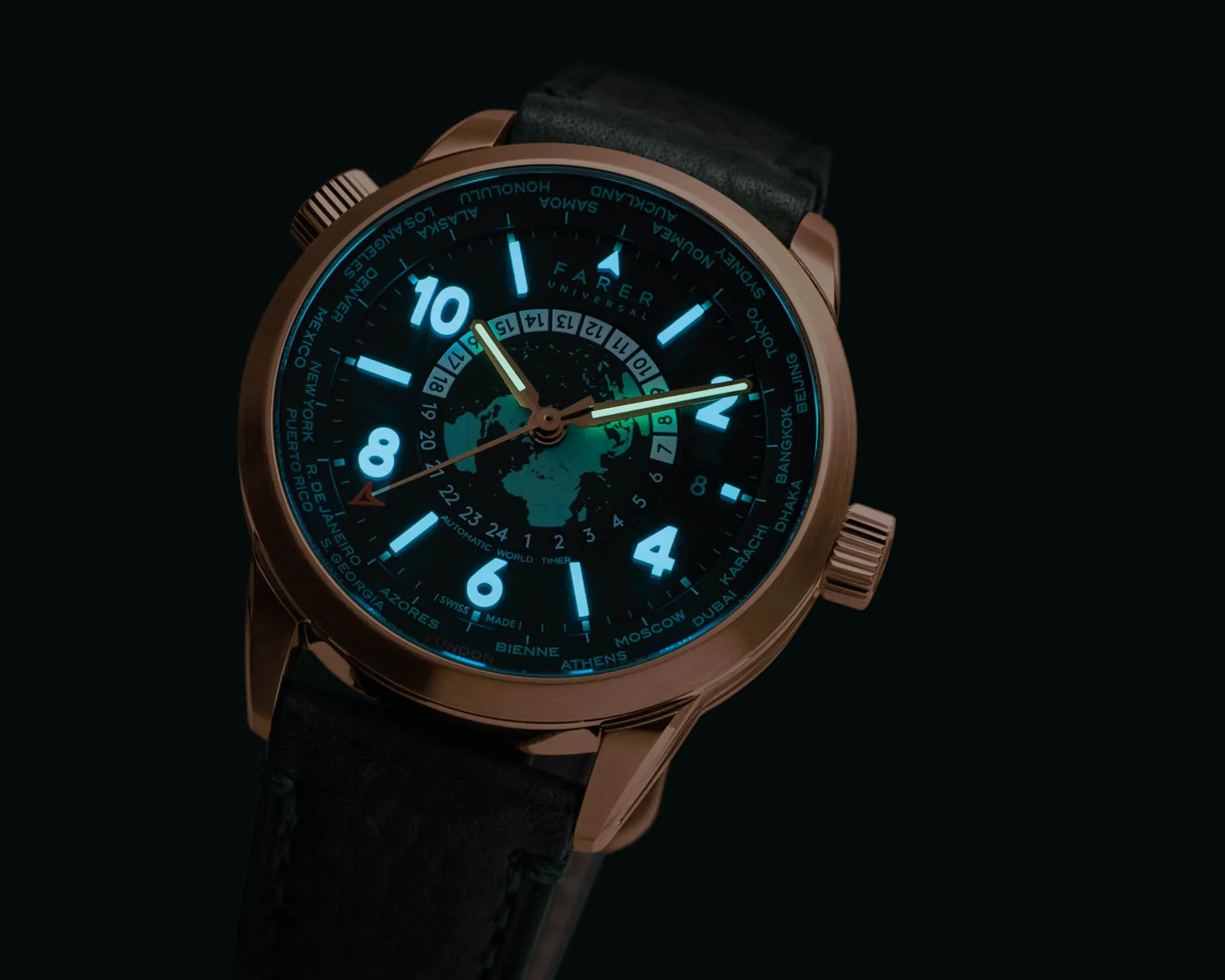
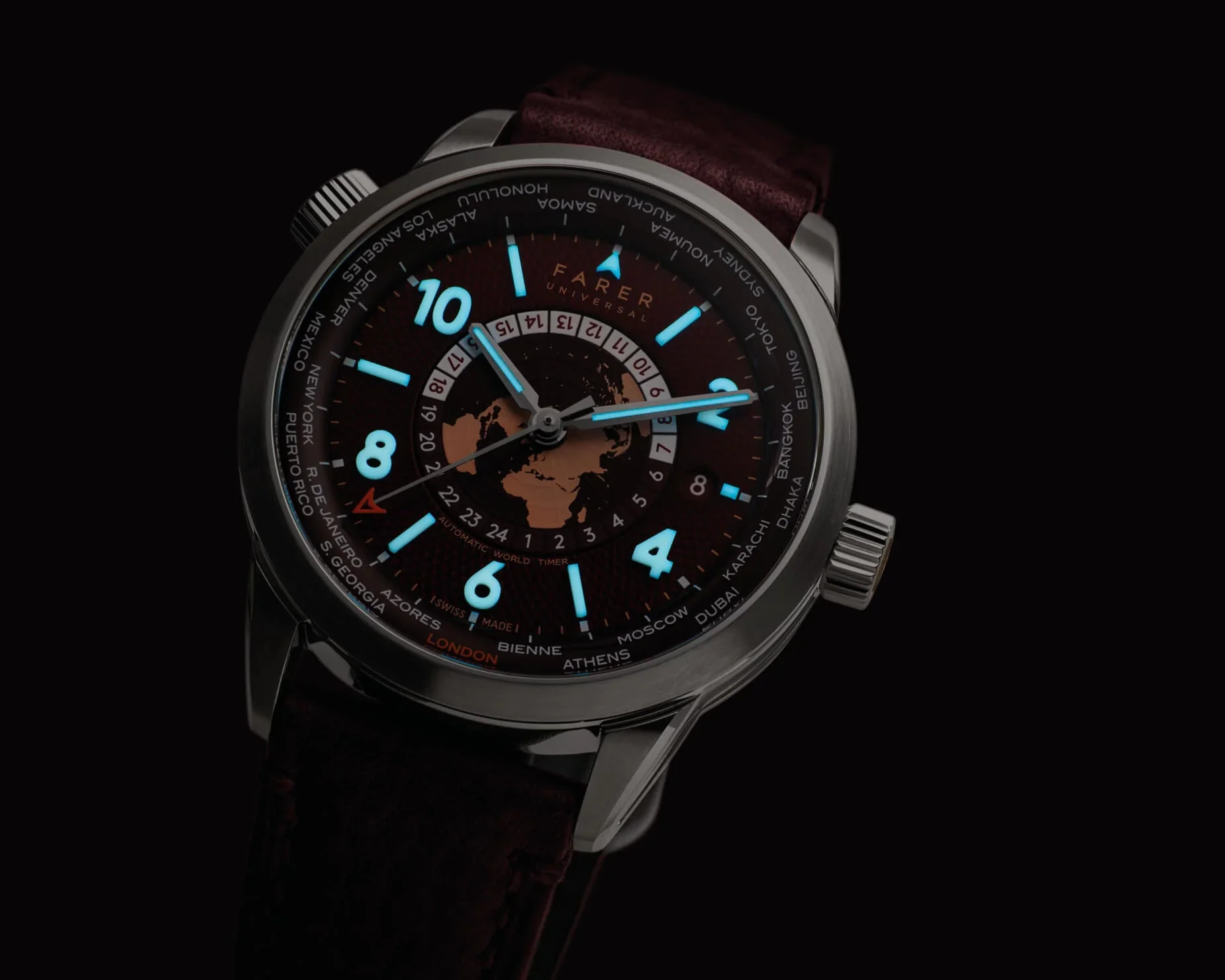
Then there is the legibility. Farer uses applied markers made from Lumicast, which they describe as solid blocks moulded from a blend of ceramic and Super Luminova, aimed at strong clarity in all conditions.
The movement choice is the smart part
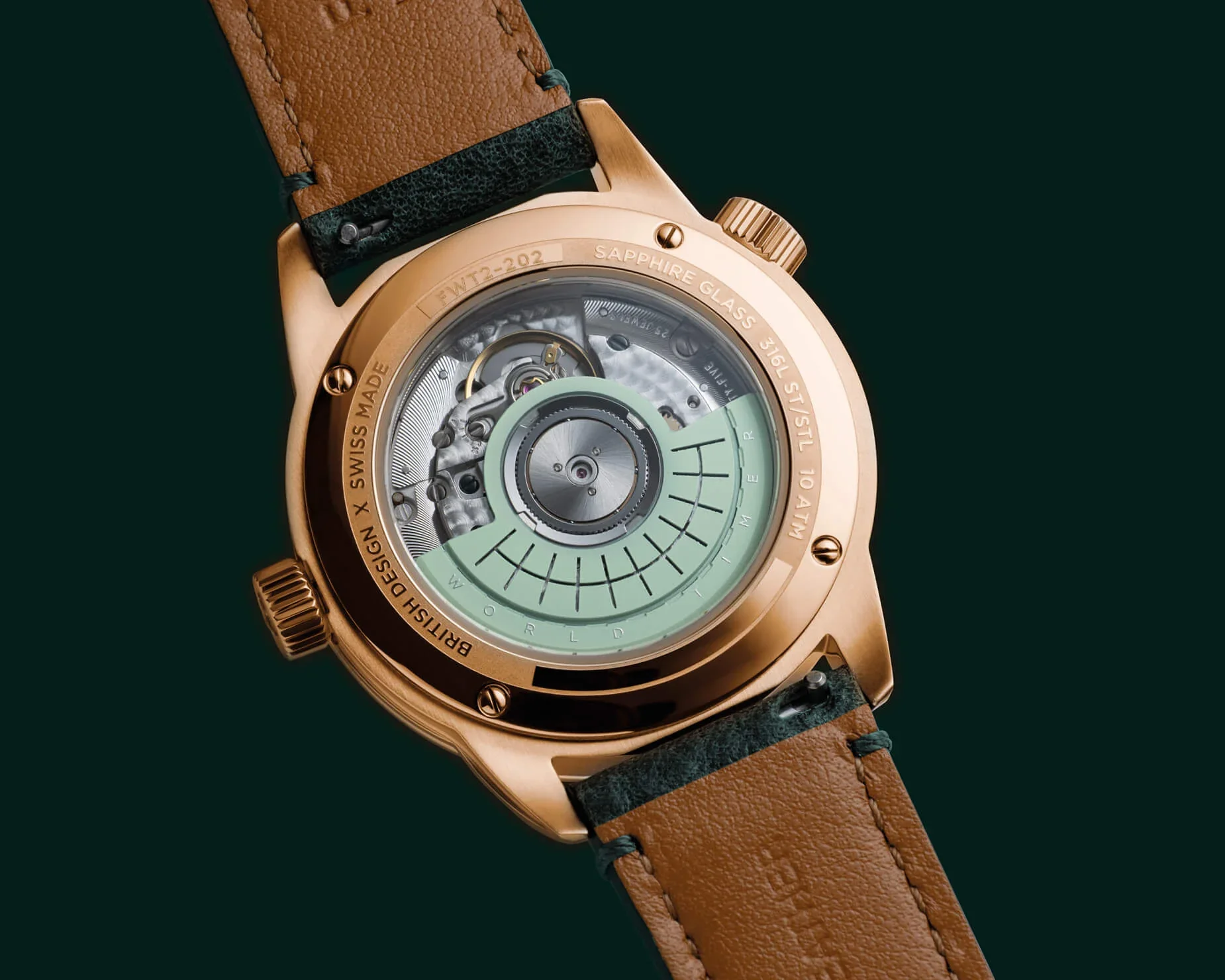
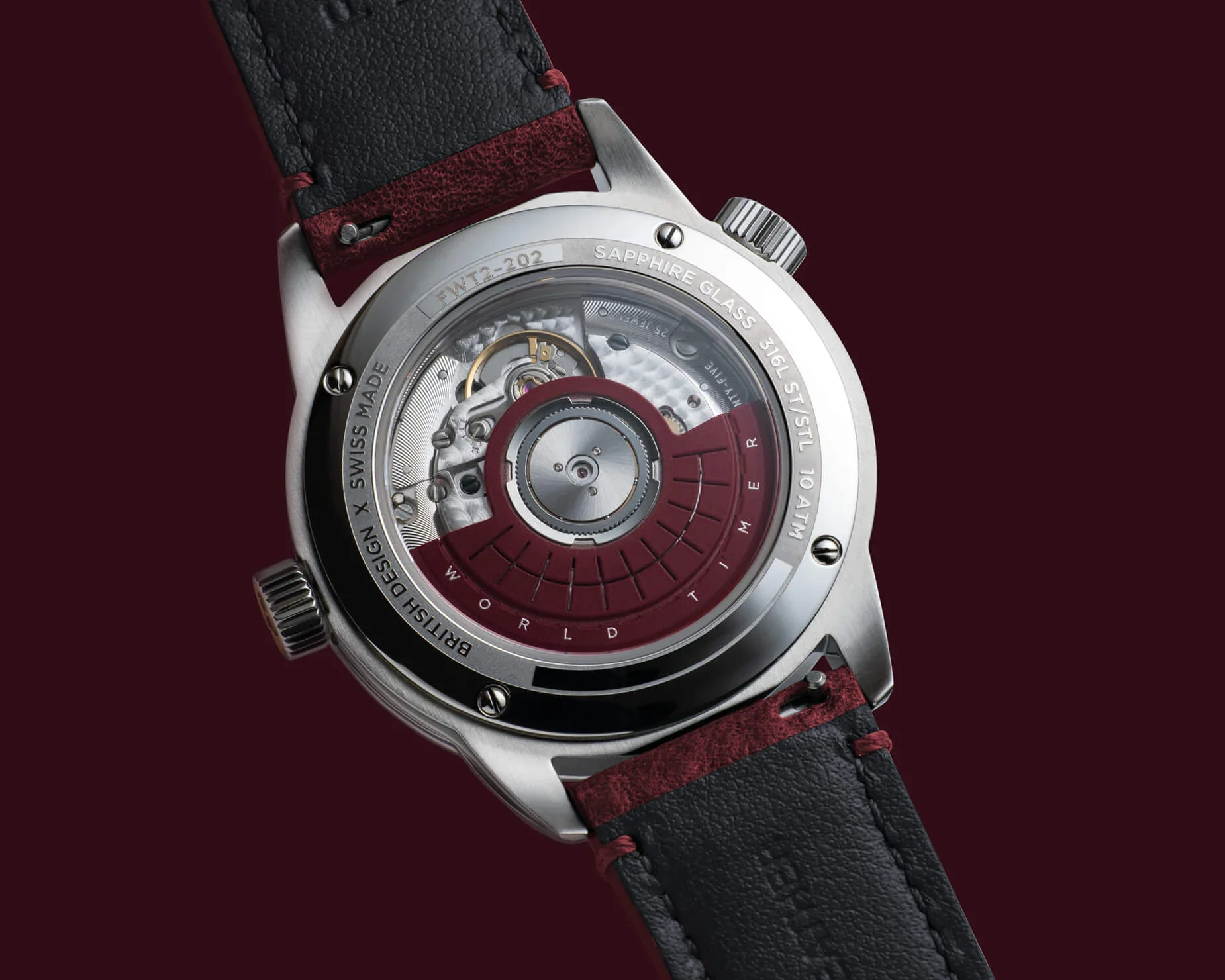
Inside is the Sellita SW331 2 in Elaboré spec, with Top Grade decoration and a bespoke Farer rotor colour matched to the 24 hour disc. Power reserve is quoted at around 56 hours.
What makes this relevant is the architecture. Rather than a typical GMT hand, Farer uses a rotating 24 hour disc. That suits the world timer concept better because it is always presenting a full global picture, not just “home plus one”.

The watches themselves, and why they stand out
The core appeal is that each variant feels designed around its palette rather than simply recoloured.
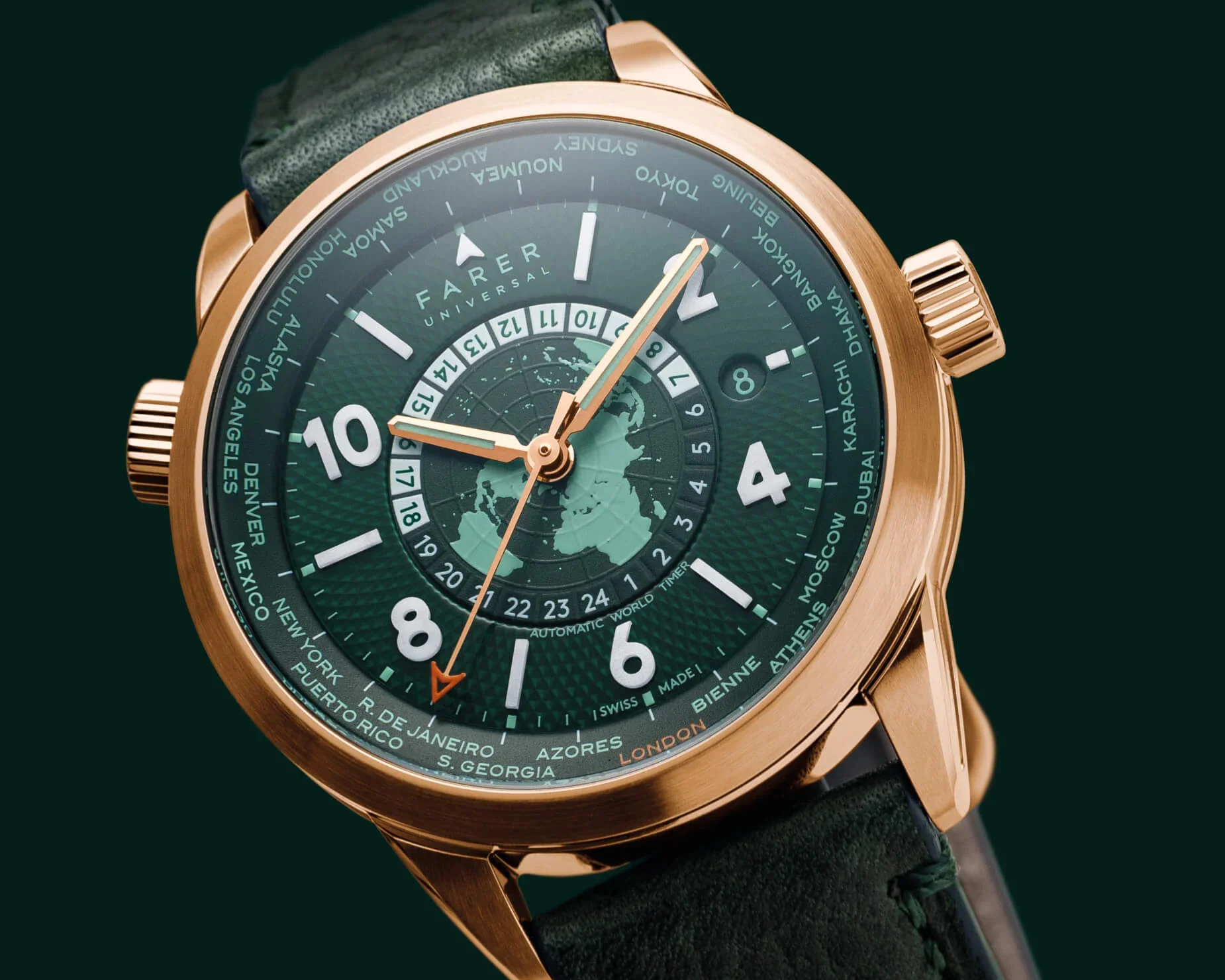
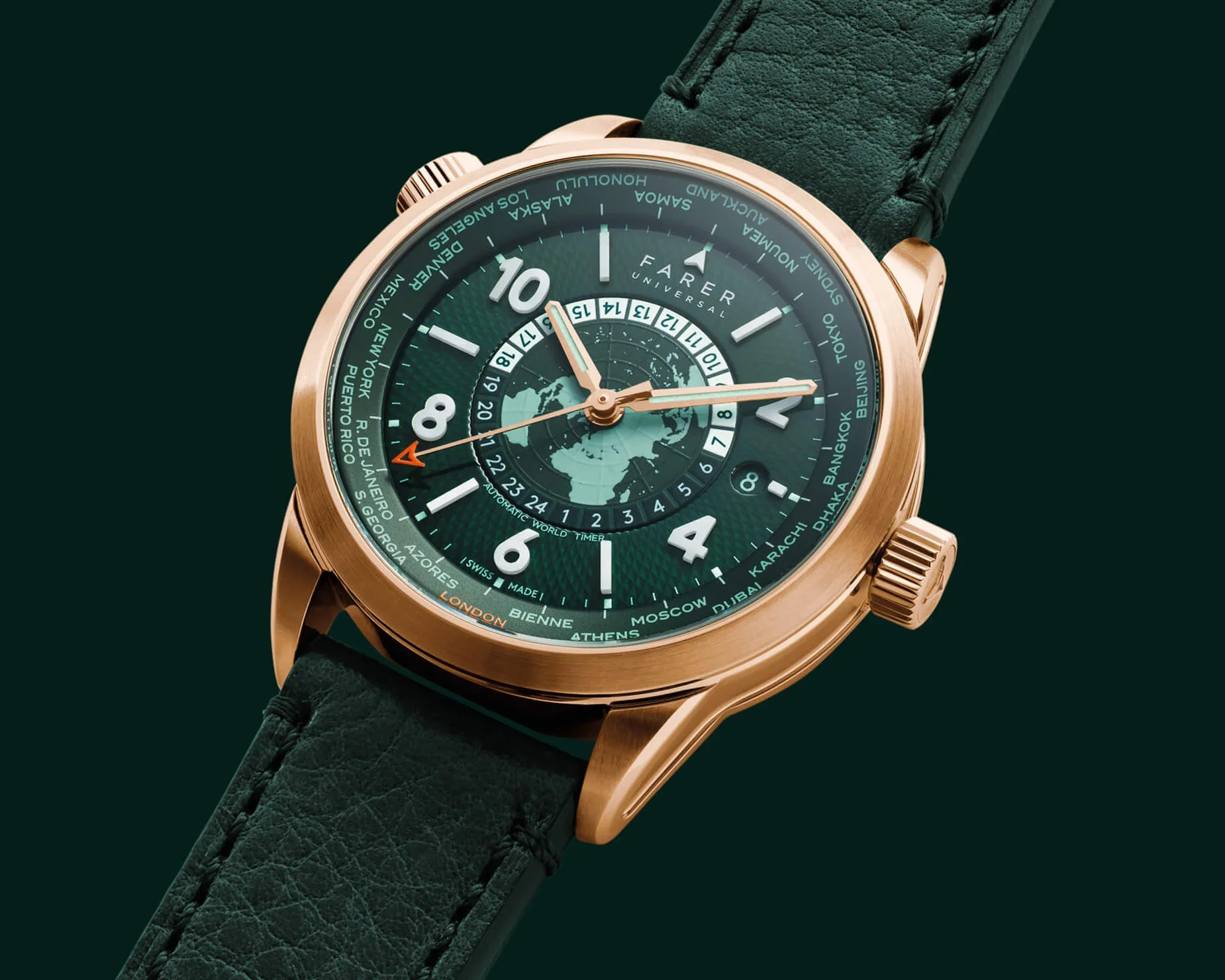
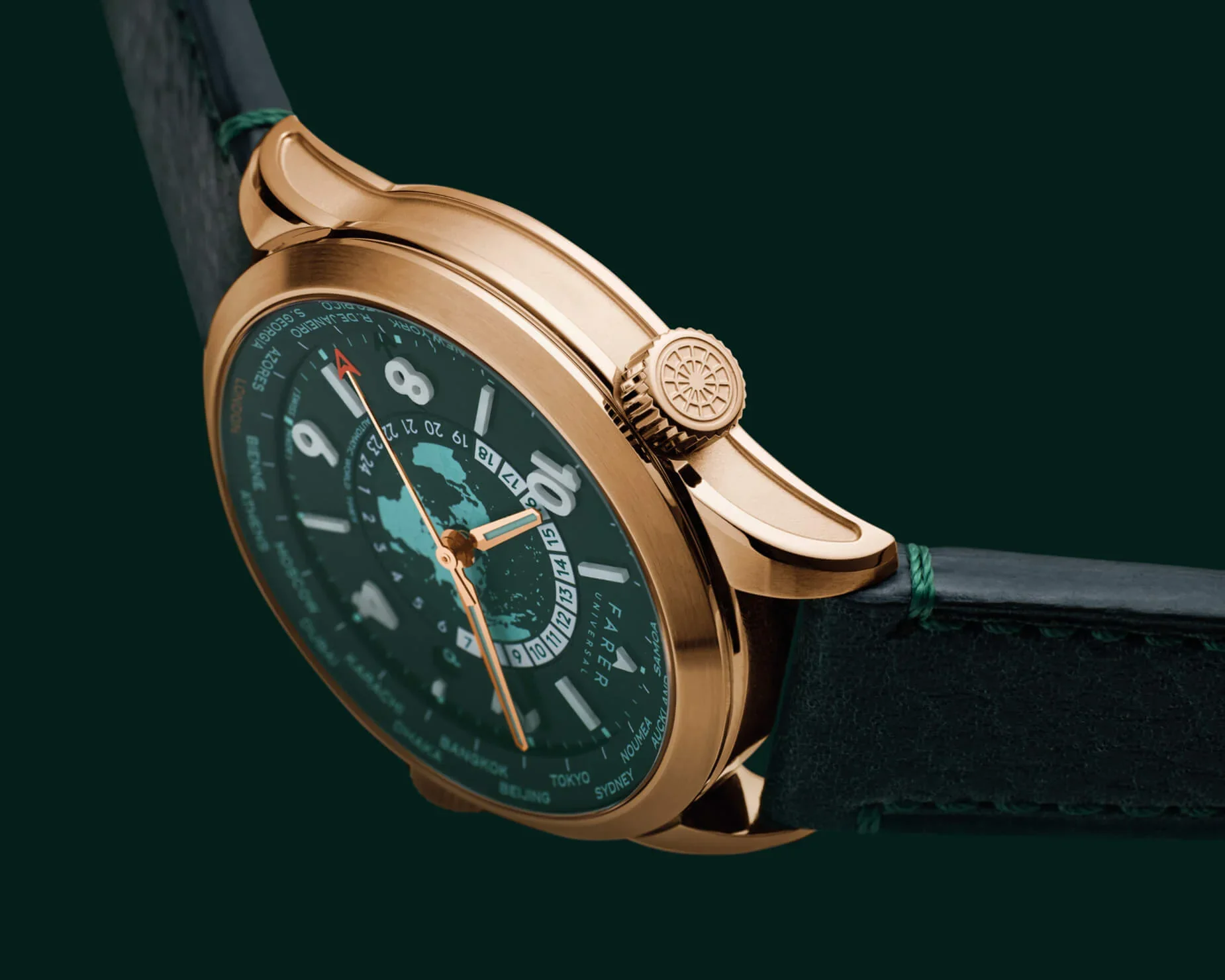
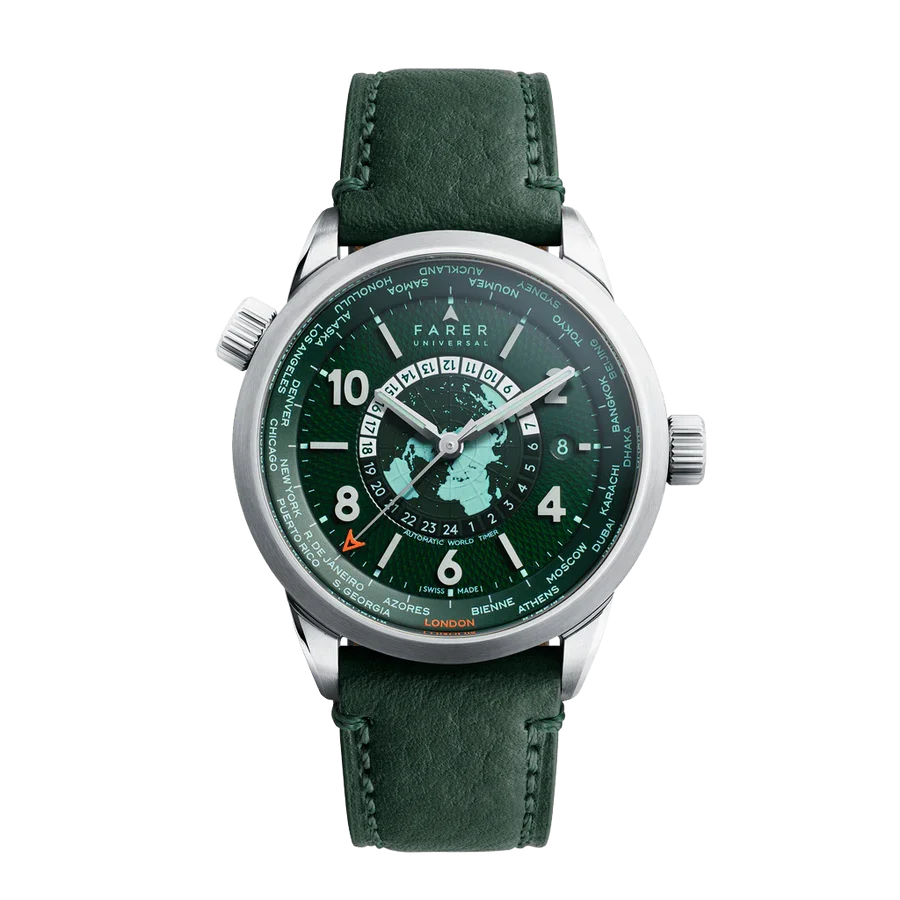
Foxe brings a deep green guilloché dial with a varnished finish, plus a 24-hour disc with a world map and a city bezel that is operated via the crown at 10 o’clock. Farer also notes some city updates on the bezel, including Chicago replacing Mexico City, Beijing replacing Hong Kong, and Bienne replacing Paris as a nod to where the watches are produced.
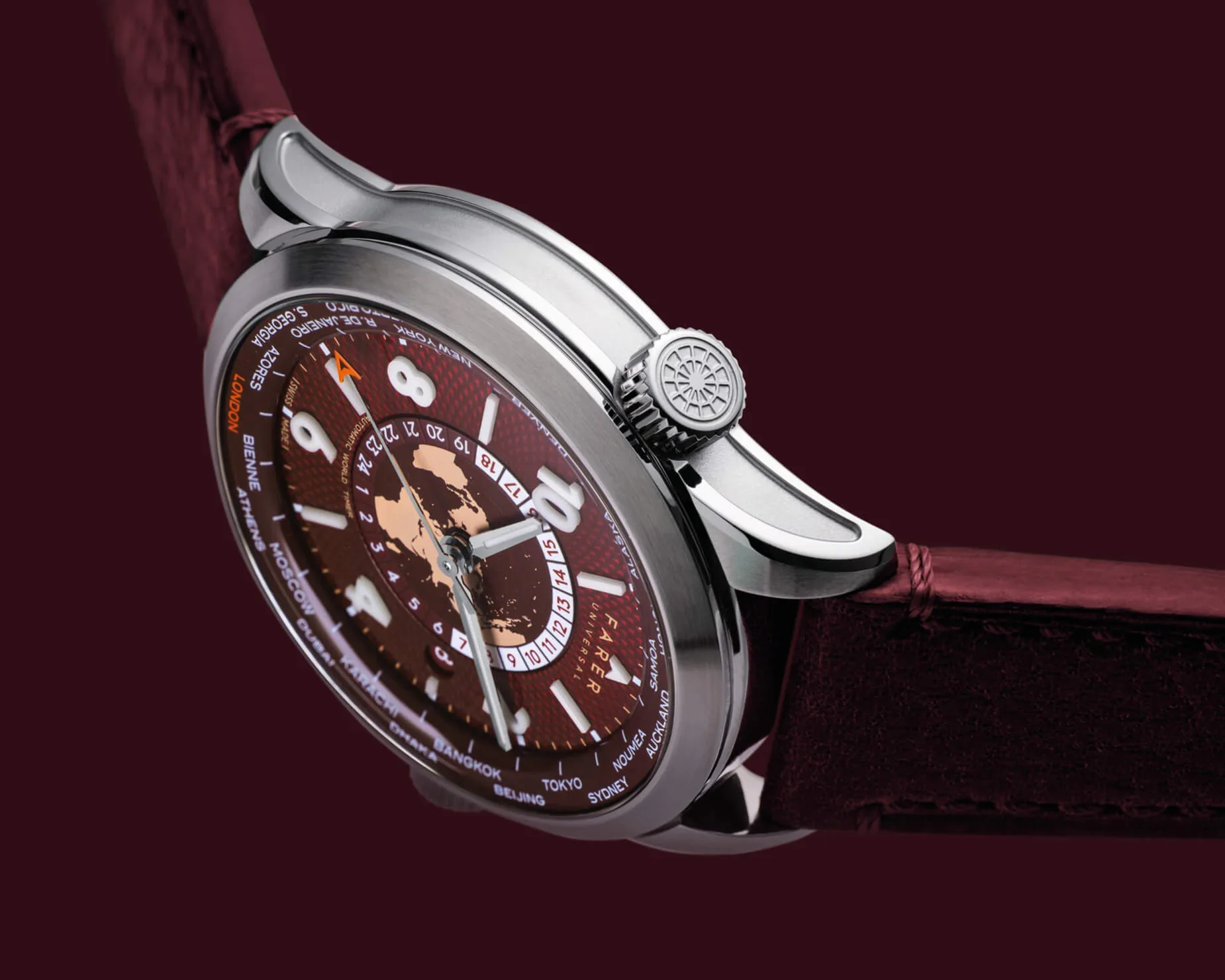
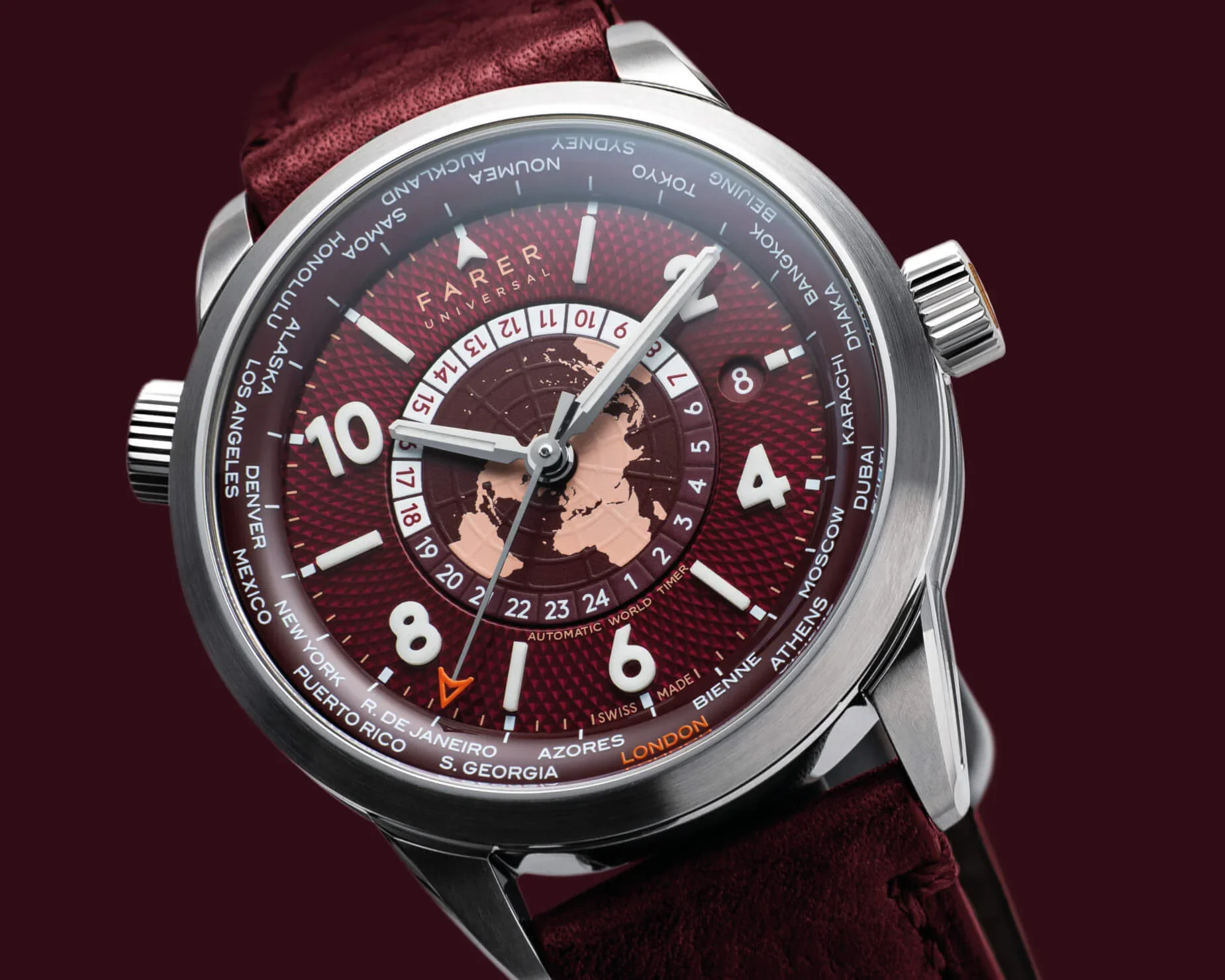
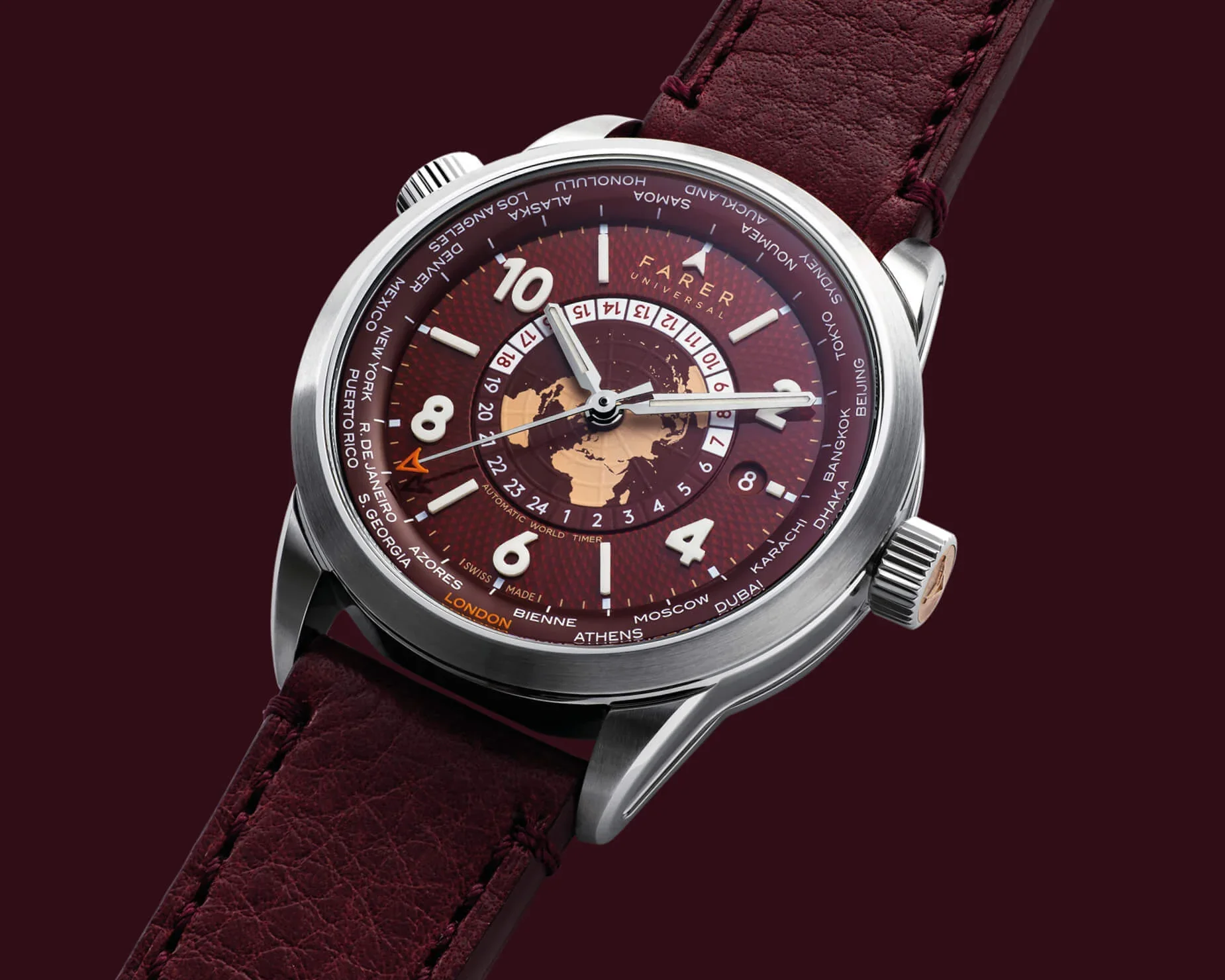
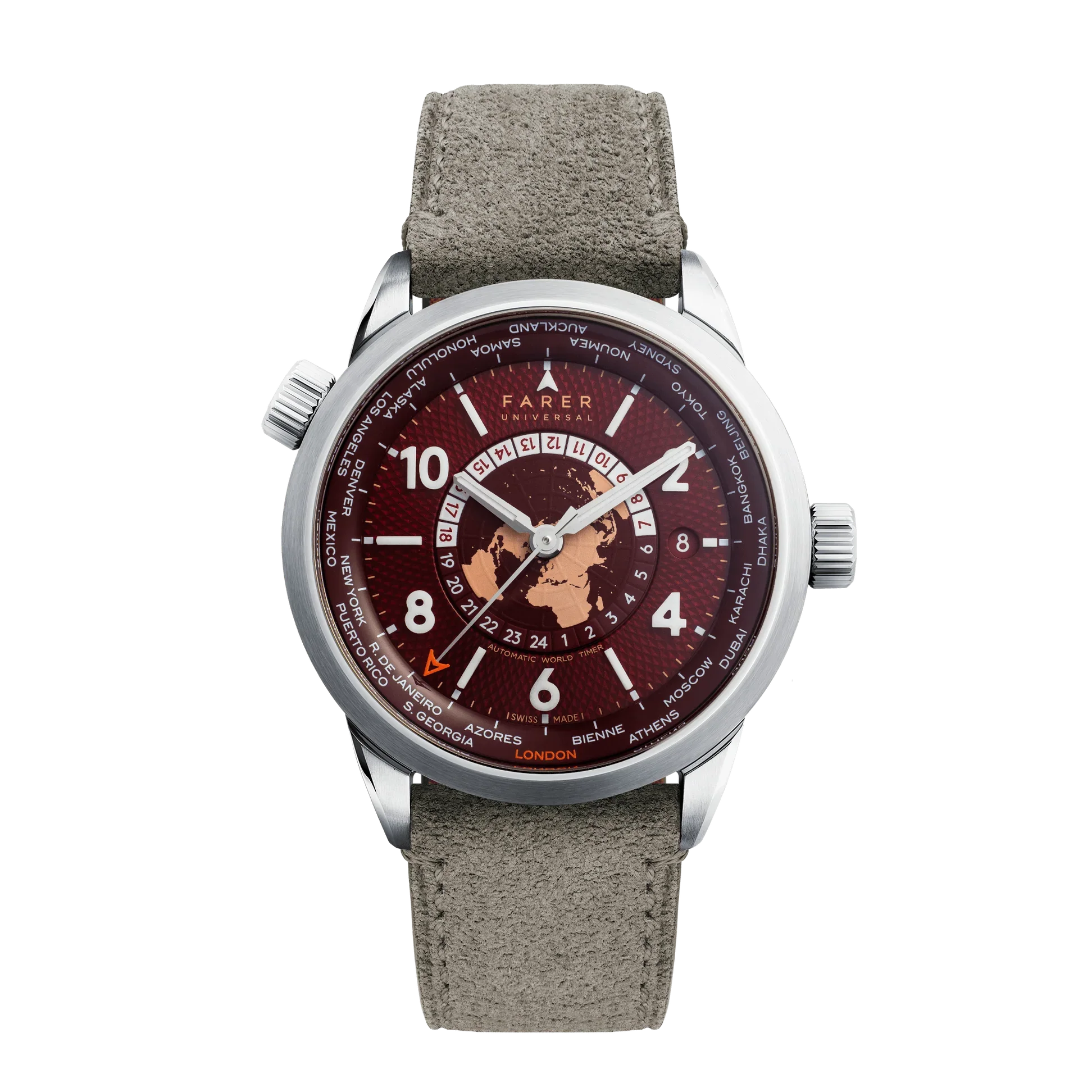
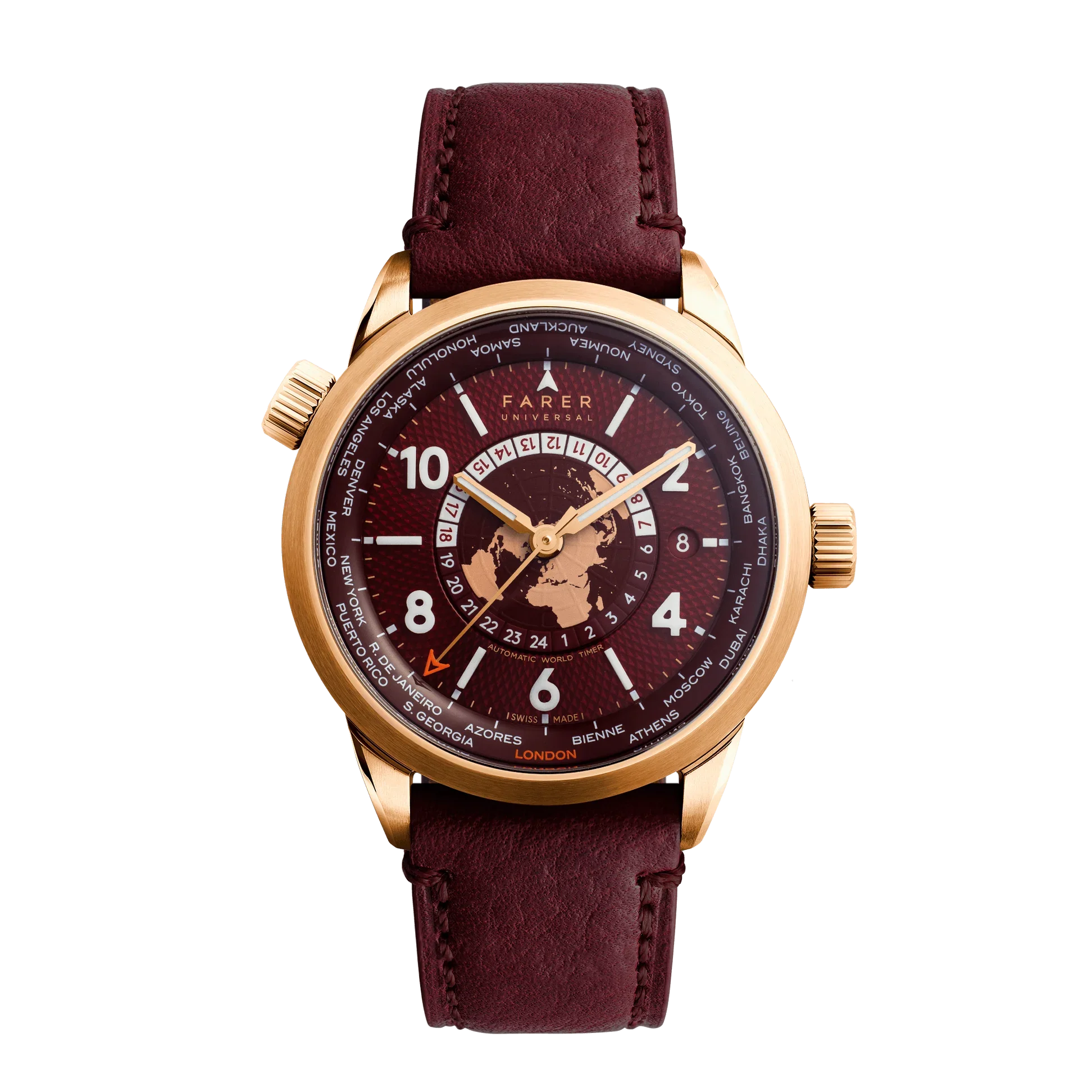
Thorne is the red dial option at £1,525, with the same 39mm case and SW331 2 platform.
Thorne and Foxe Gold is the same concept with a gold PVD-coated case and a textured burgundy or deep green dial under clear lacquer. The markers are Lumicast with Grade X1 Super Luminova, and the price sits at £1,575.
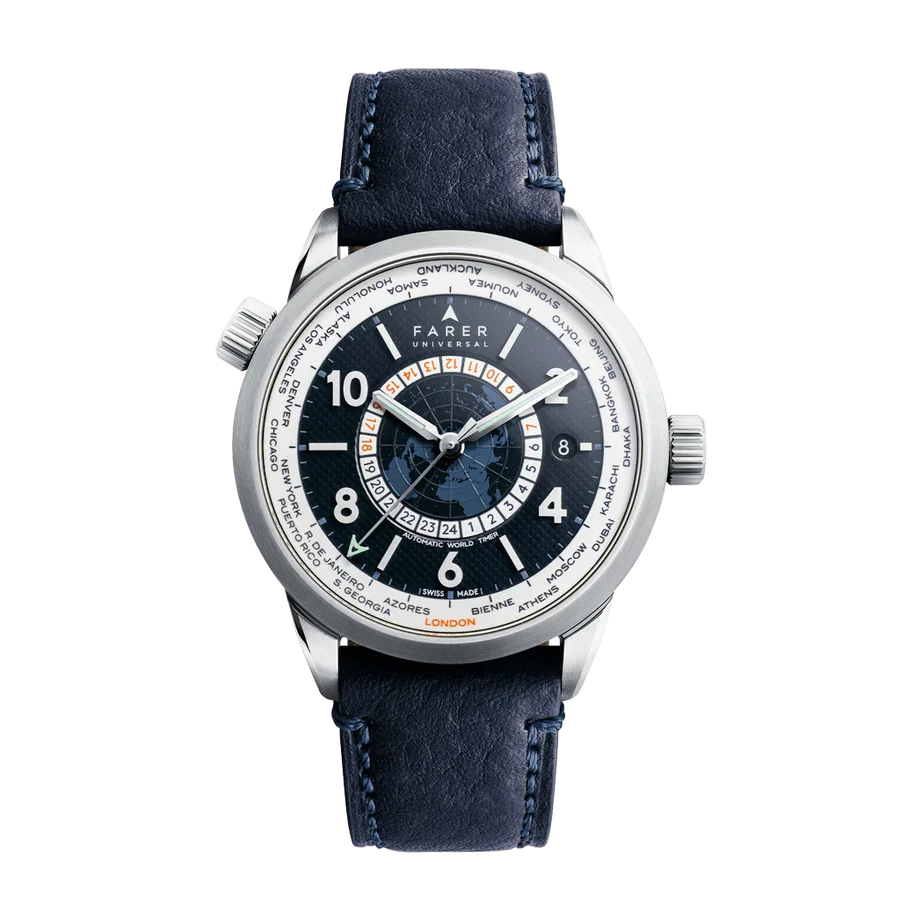
There is also a Roché II. It’s at the time of writing this, listed as sold out. With a midnight blue dial and a white 24-hour disc accented with orange and blue, plus a bi-directional internal bezel with highlighted time zones.
The takeaway
A world timer is only worth owning if you will actually use it. Farer’s World Timer gets that. It gives you the global readout, keeps the case wearable, backs it with sensible durability, and then makes the dial interesting enough that you want to look at it even when you are not travelling.