
Venezianico: Venetian Character, Modern Intent
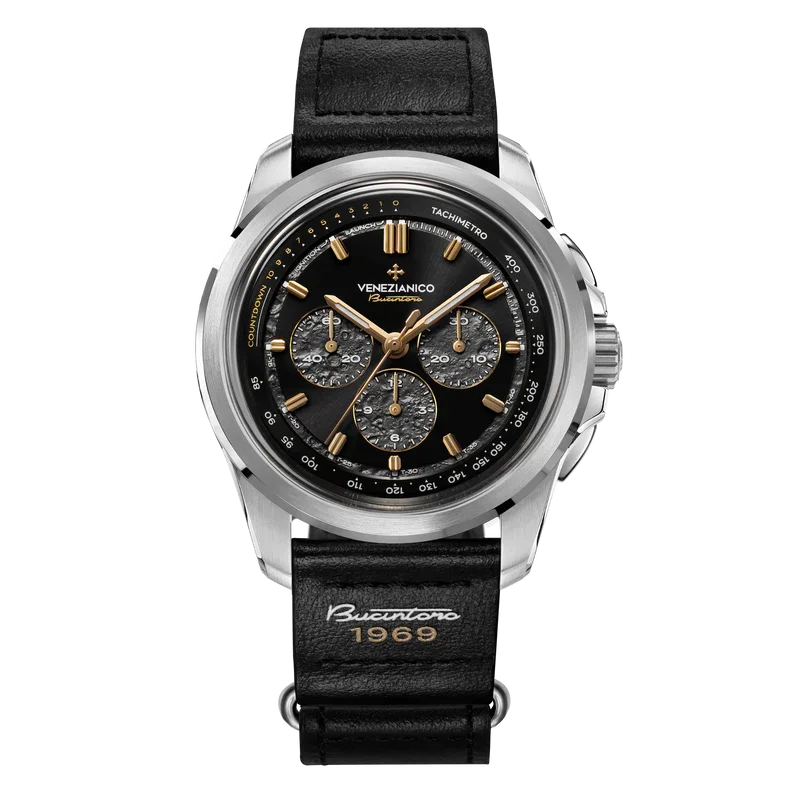
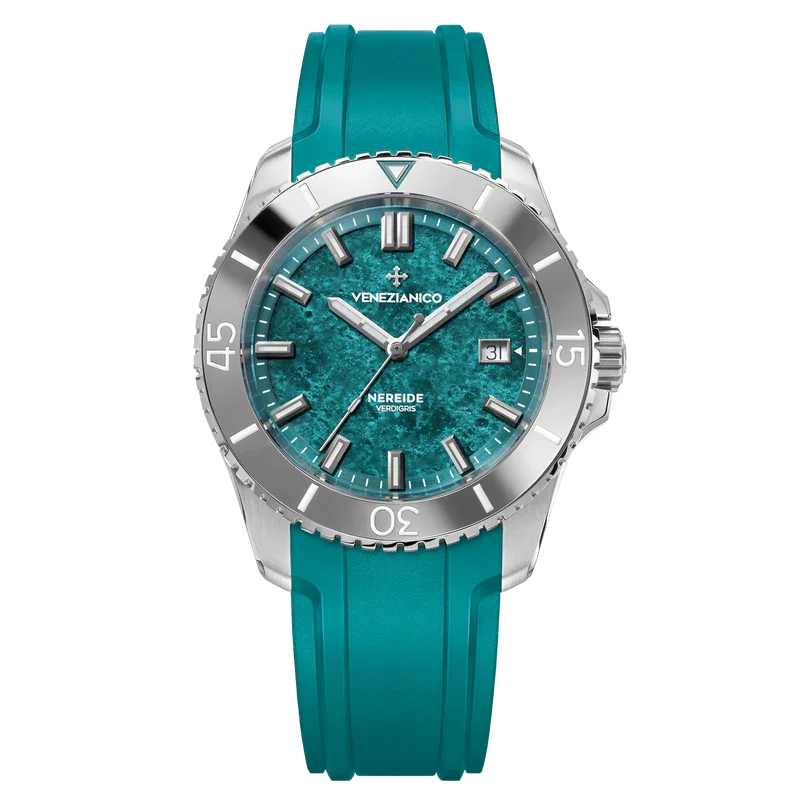
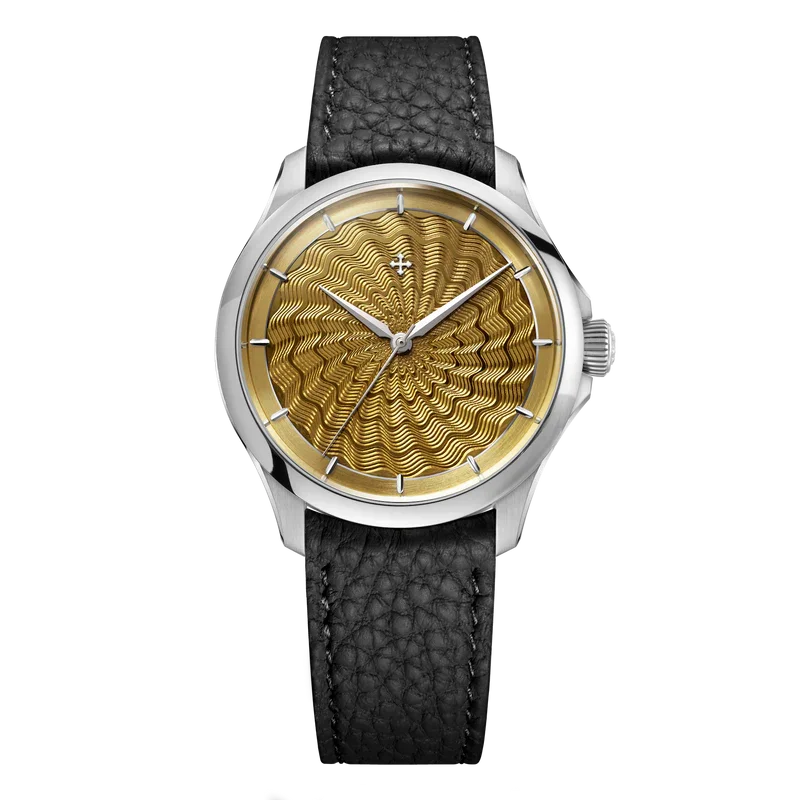
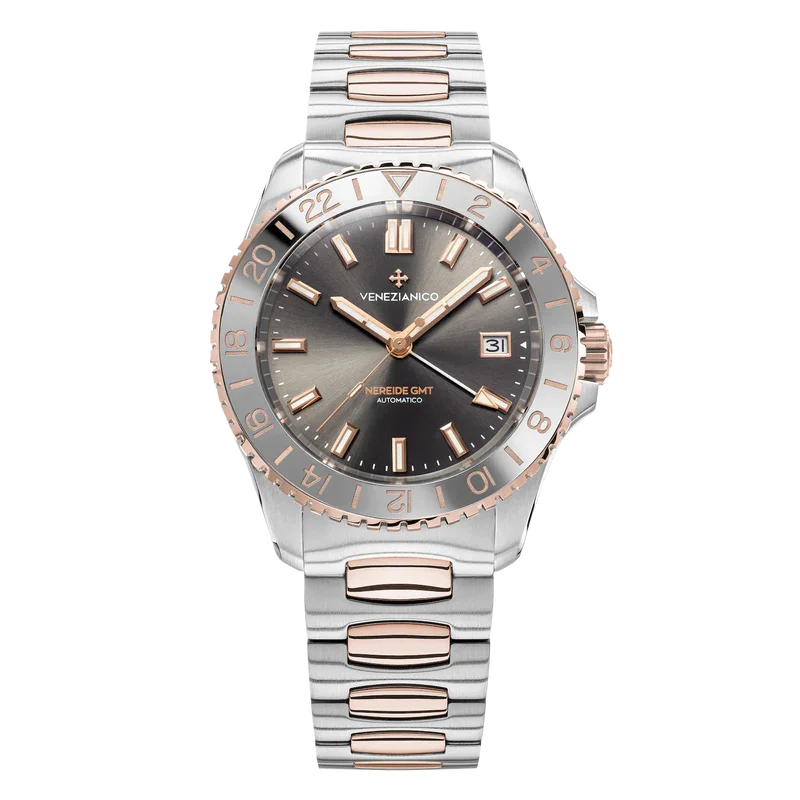
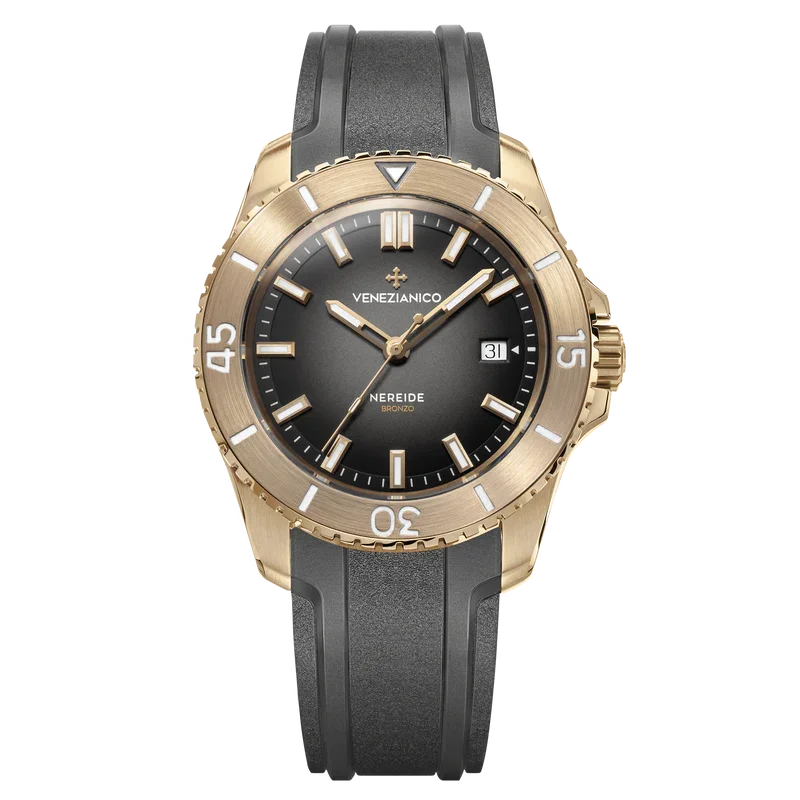
There is something refreshing about a brand that knows exactly where it comes from. We have written about Venezianico before, but these two watches feel like the point where the brand moves to another level. It does not try to sound Swiss, and it does not lean on borrowed heritage. Instead, it builds its identity around Venice itself, drawing from the city’s materials, architecture and decorative language to create watches that feel rooted in place rather than assembled from familiar industry clichés.
The brand was founded by brothers Alberto and Alessandro Morelli, and its own introduction frames that idea clearly: a passion for watchmaking tied closely to the lagoon city where they grew up. That sense of identity matters, because plenty of brands can produce a good-looking watch. Far fewer manage to produce a watch that feels like it belongs to a wider visual world. Venezianico’s collections are explicitly described as being inspired by Venetian heritage, blending elegance, functionality and artisanal tradition, and that comes through especially well in the two pieces featured here.
What also makes the brand worth watching is that it appears to be pushing forward rather than standing still. In 2025, Venezianico says it introduced its first proprietary mechanical movement, the V5000 calibre, designed and manufactured in Italy, which signals a brand trying to deepen its watchmaking credibility while keeping its Italian identity front and centre.
Venezianico Nereide Verdigris: A Dive Watch with Real Atmosphere
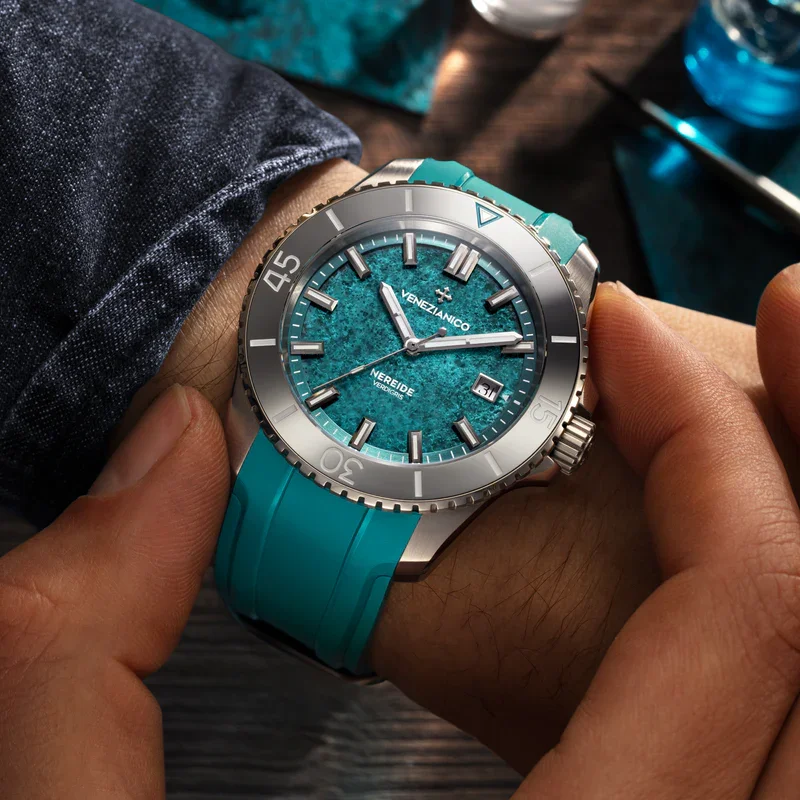

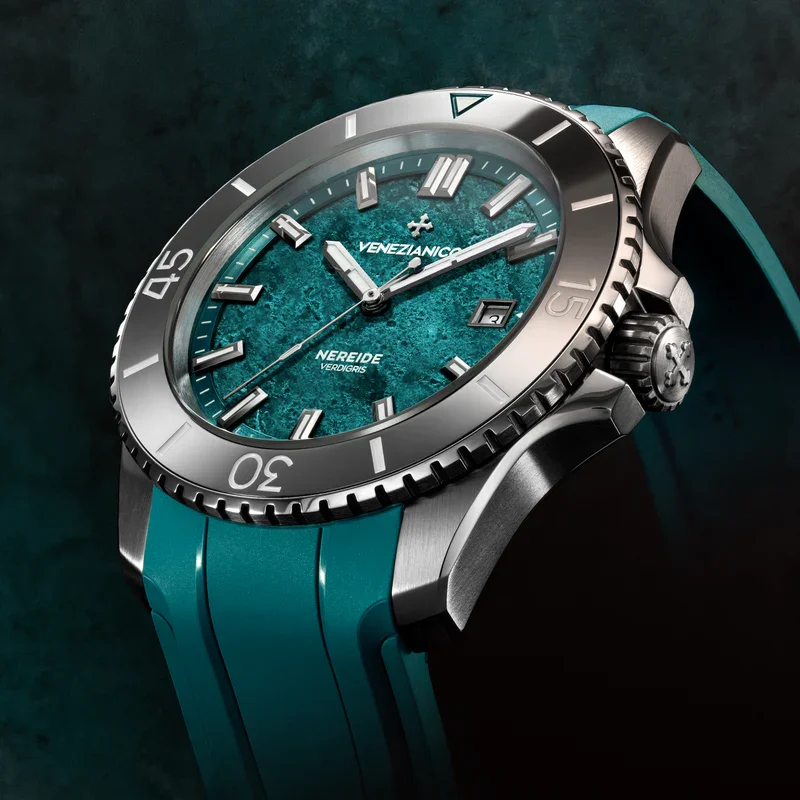


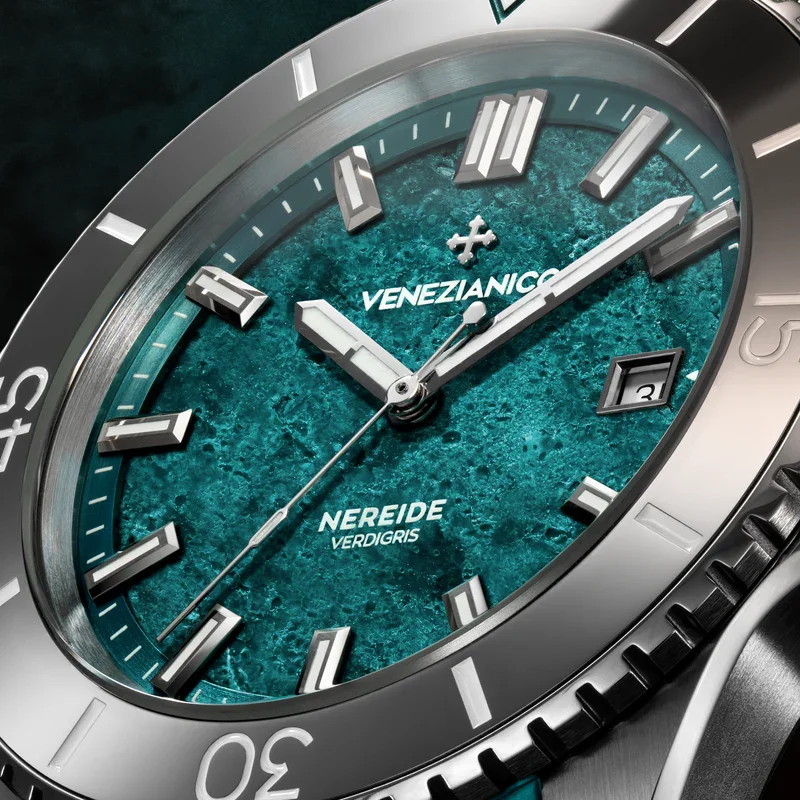
The Nereide Verdigris is the sort of watch that grabs attention for the right reason. It is not loud in a cheap way, nor is it trying too hard to manufacture character. Instead, the appeal comes from the dial, which takes inspiration from the green-blue verdigris patina that forms over time on the copper and brass surfaces of Venice. Venezianico says the dial is made from brass and goes through a controlled process of oxidation and flaming, with each one developing slightly differently. That is exactly the kind of detail that gives a watch presence before you even start talking about specifications.
This is a proper full-sized dive watch at 42mm across with a 49mm lug-to-lug measurement, so it has some substance on the wrist. That size works here because it is not pretending to be a compact vintage skin diver. It is a modern sports watch, and the broader case gives the textured dial room to breathe. The 316L stainless steel case, screw-down crown, sapphire crystal with anti-reflective coating and 200 metres of water resistance all point to a watch designed to back up its looks with genuine everyday usability.
Where the Nereide Verdigris really separates itself is in the material storytelling. The brand’s own explanation is one of its strongest selling points: Venice’s metals are slowly transformed by the lagoon air, and that same process becomes the inspiration for the dial. It is not decorative for decoration’s sake. The watch feels connected to a specific visual phenomenon, and that gives the whole thing more depth than a standard colour variant ever could.
The surface also sounds especially appealing because it is not clean and flat. Venezianico describes it as rich in texture, with irregular shades of green, turquoise and blue, producing visual depth and shifting reflections under the light. In watch terms, that usually translates into a dial that keeps rewarding a closer look, which is exactly what you want from a piece at this level.
Mechanically, the Nereide Verdigris uses the Swiss-made Sellita SW200-1 automatic movement, which is a sensible choice. It is proven, serviceable and entirely appropriate for a sporty watch at this price point. The tungsten bezel insert is another welcome touch, especially as Venezianico highlights its scratch resistance and high hardness. Add BGW9 Super-LumiNova and a rubber strap, and the whole package feels coherent. Nothing is there by accident.
At €1,295, this is not an impulse buy, but it does feel like a watch offering something genuinely more distinctive than the usual crowded field of divers in this range. Plenty of dive watches can claim capability. Far fewer can claim a dial that feels this tied to place, process and mood.
The Arsenale Bizantino: Pattern, Restraint and a Different Kind of Dress Sport Watch
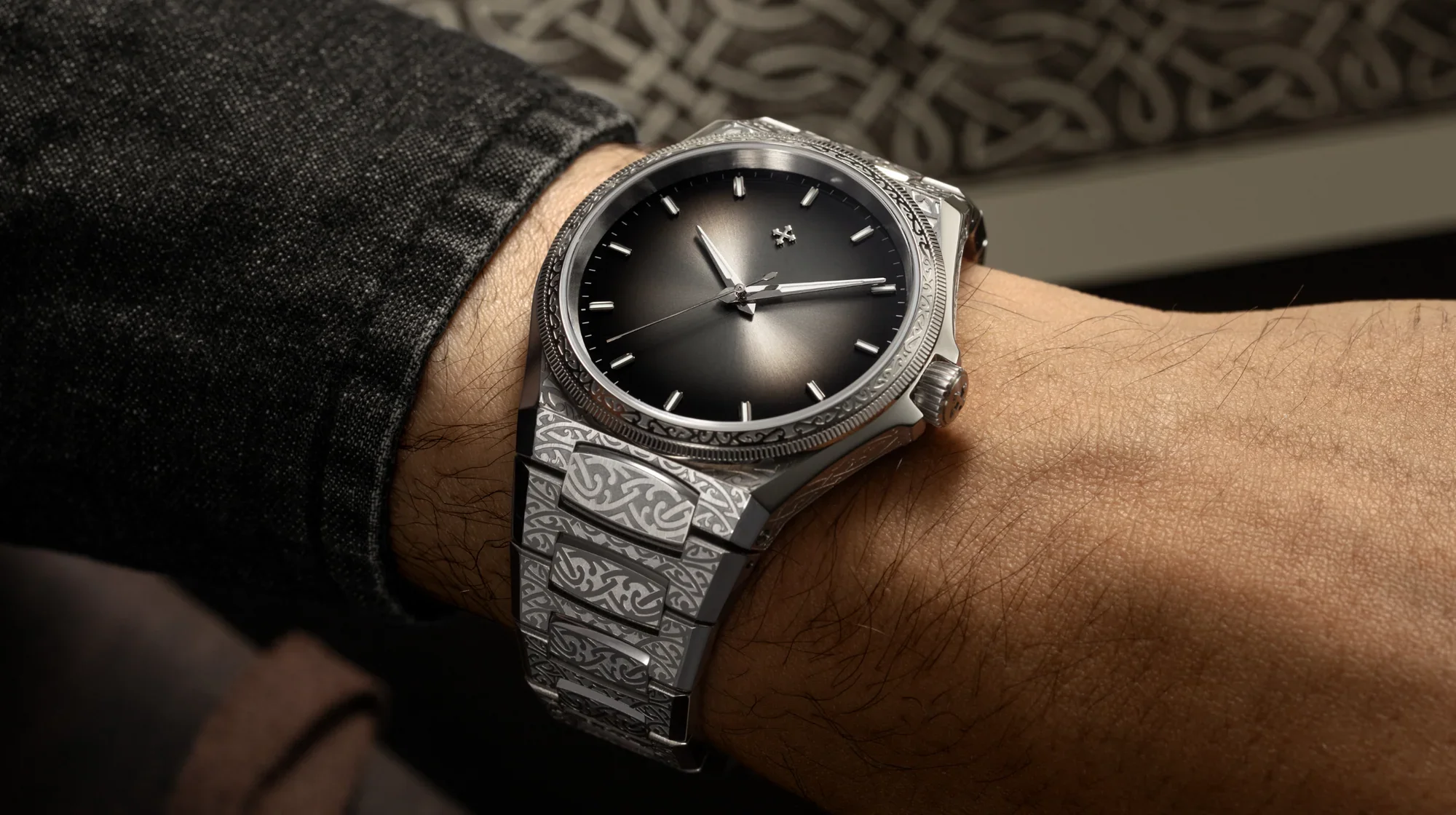
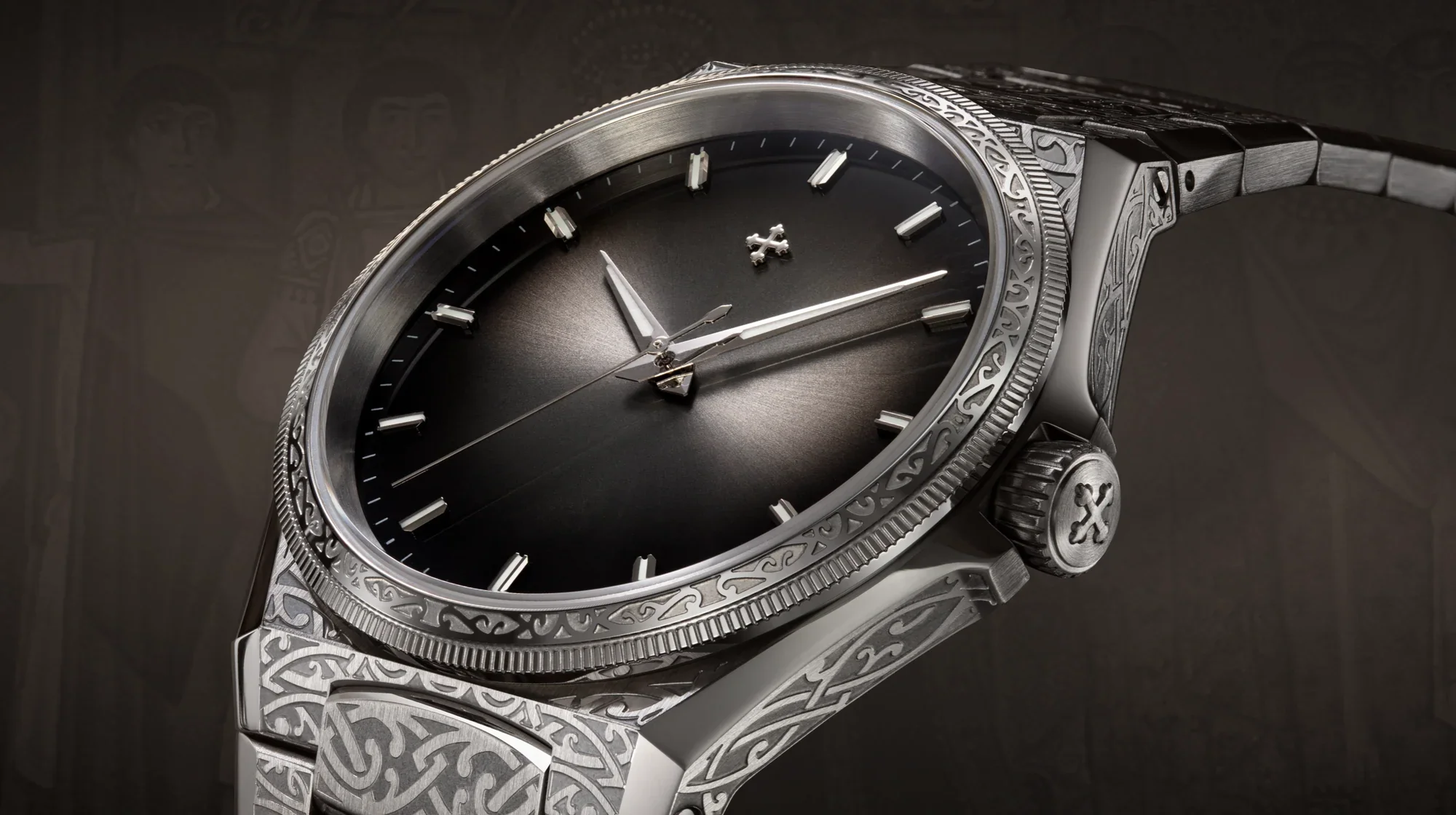
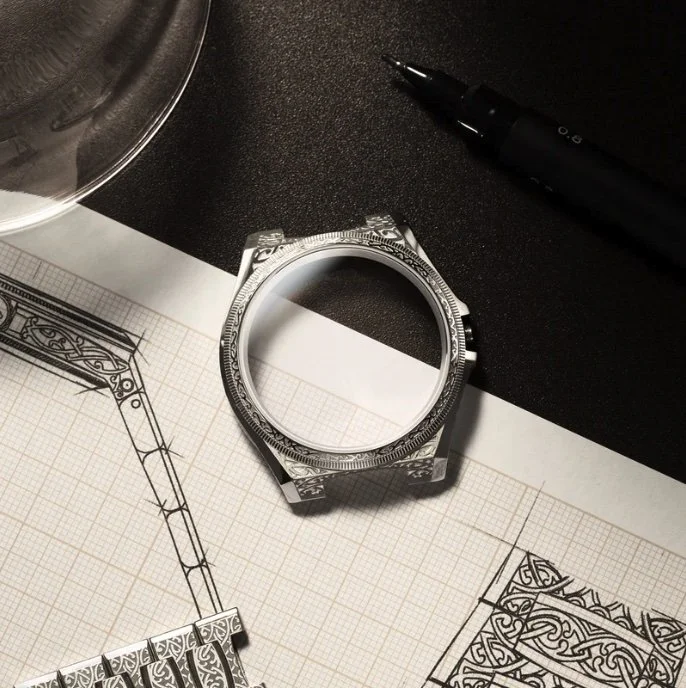

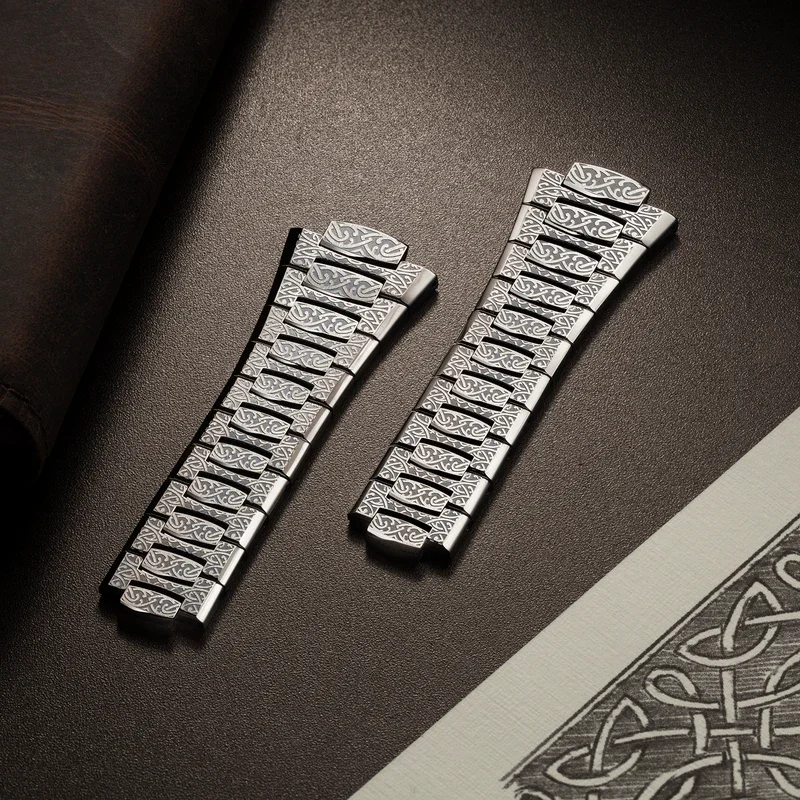
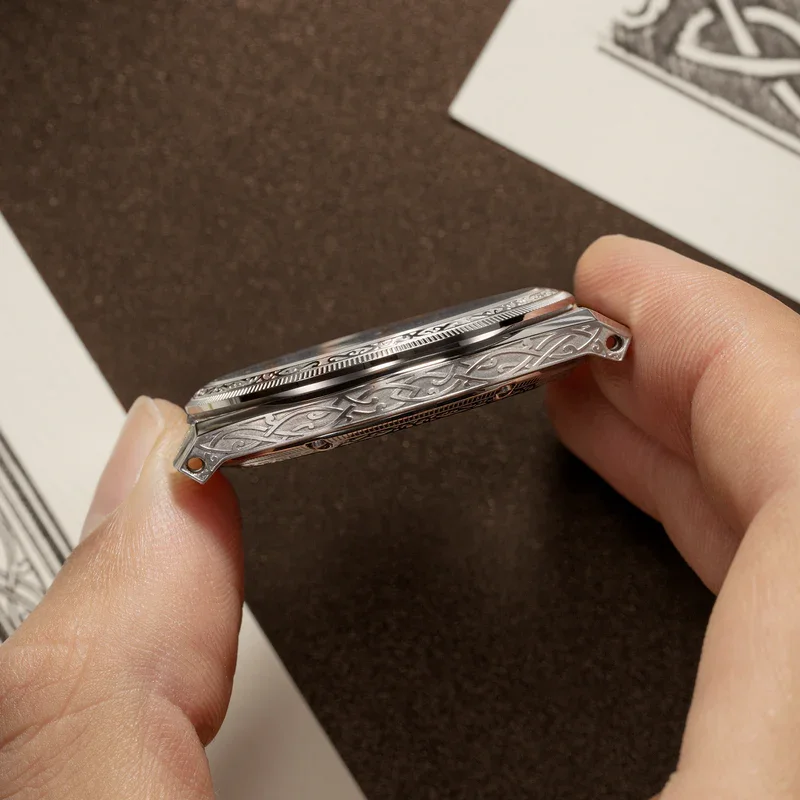
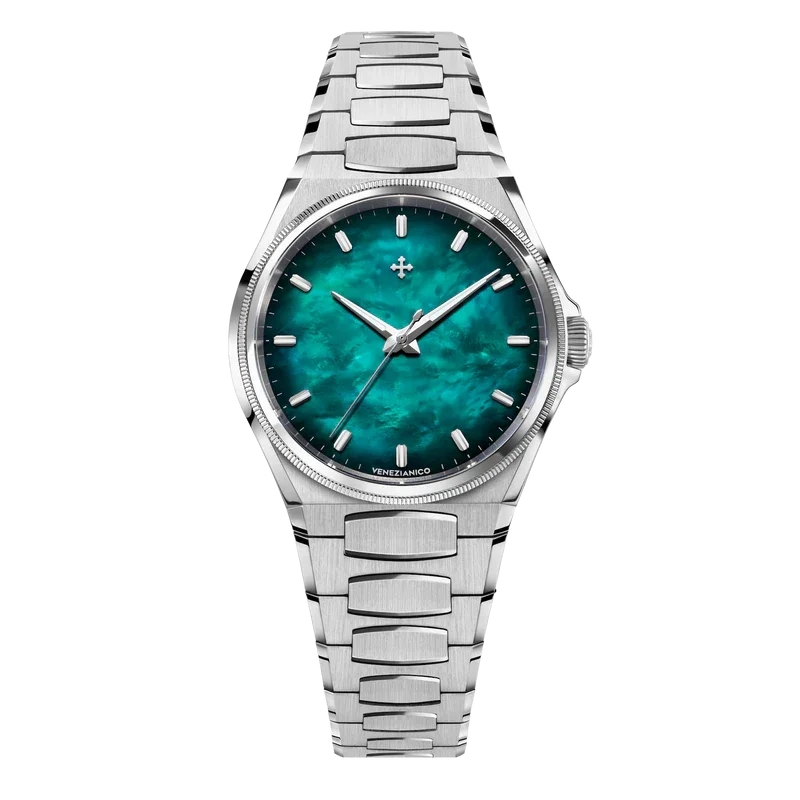
If the Nereide Verdigris shows Venezianico at its most atmospheric, the Arsenale Bizantino shows the brand at its most architectural. This watch comes from a very different place visually. Rather than relying on patina, colour variation or overt texture on the dial, it builds its identity through engraved surfaces and a strong decorative language inspired by Byzantine art and the geometric motifs seen across Constantinople-influenced architecture and mosaics.
Venezianico explicitly links the design to that artistic heritage and to the way Venice absorbed those Eastern influences into its own visual culture.
That inspiration could easily have tipped into excess, but the Arsenale Bizantino seems more controlled than that. The case and bezel are engraved, as is the Canova Concept bracelet, while the anthracite dial uses an enamelled sunray finish with a subtle fumé gradient. On paper, that is a lot going on. In practice, it sounds like the darker dial acts as the calm centre, letting the engraved steel do the expressive work around it. Venezianico describes the result as a contrast between decorative richness and essential purity, and that feels like a fair summary of what makes this one stand out.
The dimensions look particularly well judged. At 40mm across, 44mm lug to lug and 9.95mm thick including the crystal, the Arsenale Bizantino should wear with much more elegance than the Nereide. This is a slimmer, sharper proposition, and the proportions suggest a piece that can sit comfortably between sport and dress rather than being trapped in either category.
What I like most here is the emphasis on surface treatment. Venezianico says the engravings are designed to follow the curves of each surface, creating a continuous visual rhythm across the watch, while light refracts over the reliefs to enhance depth and precision. That kind of integrated case-and-bracelet thinking is where modern watch design gets interesting. It is not just about putting a nice dial inside a competent case. It is about making the whole object feel designed as one piece.
Inside, the Arsenale Bizantino uses the Miyota 9039 automatic movement, another practical and widely understood choice. The rest of the specification is sensible too, with sapphire crystal, anti-reflective coating and 50 metres of water resistance. This is clearly not trying to be a rugged tool watch. It is aiming instead for something more refined and design-led, and its specification supports that role well enough without distracting from the visual concept.
At €900, the Arsenale Bizantino feels like a particularly interesting buy because it occupies a slightly less crowded lane. The market is full of integrated-bracelet watches and full of textured dials, but fewer pieces bring a clear decorative point of view that feels culturally specific without becoming costume jewellery. This looks like a watch that knows exactly what lane it wants to occupy, and that alone makes it easier to remember than half the market. It is tasteful without being timid, decorative without becoming fussy, and slim enough to slip under a cuff without behaving like it deserves its own introduction music. The fact that Venezianico has kept it under 10mm thick only strengthens that appeal.
There is also something satisfying about the restraint here. A watch inspired by Byzantine ornament could very easily have ended up looking like a cathedral gift shop exclusive. Instead, the anthracite dial, fumé effect and relatively compact case keep things under control, while the engraved case, bezel and bracelet do the heavy lifting. The result sounds like a watch with actual point of view, which is rarer than brands like to admit.
What These Two Watches Say About Venezianico
Taken together, these two pieces make a pretty convincing case for the brand.
The Nereide Verdigris is the more emotional watch of the pair. It leans into texture, colour and atmosphere, and it does so with enough technical backbone to avoid feeling like a pretty face with nothing behind the eyes. The Arsenale Bizantino is more composed and more design-led, using engraving and proportion rather than raw colour to make its point. Different watches, different moods, same underlying idea: Venezianico is at its best when it ties Venetian references to genuinely distinctive watch design rather than merely sprinkling heritage dust over a standard template.
What is probably most encouraging here is that narrowing this down to just two examples took me a considerable amount of time. Picking only two watches from the Venezianico range felt a bit like being told you can only order two things from the menu when you have already mentally committed to five. That, in itself, says quite a lot. Plenty of younger brands can produce one standout model. Venezianico looks more interesting because there is a broader language forming across the collection, and these two models show that the brand’s Venetian influence is more than brochure copy.
There is a wider story developing too. The introduction of the proprietary V5000 calibre in 2025 does not directly affect these two references, but it does suggest a brand trying to build long-term credibility rather than simply churning out attractive short-term hits. In other words, this is not just Venice on a dial. There appears to be some ambition under the bonnet as well.
If you have the time, I would strongly advise taking a look around the wider collection. Even after settling on these two, it still feels like I left a few very worthy contenders sitting on the bench.
Winding Things Up
Firstly, Venezianico is interesting because it feels deliberate.
The brand has a clear identity, and more importantly, it seems willing to do something with it. The Nereide Verdigris is the one for anyone who wants their dive watch to have mood, texture and a little Venetian romance without descending into theatrical nonsense.
The Arsenale Bizantino takes a cooler, slimmer route, proving that decorative inspiration does not have to come at the expense of balance or wearability.
If the Nereide Verdigris is the watch that catches your eye from across the room, the Arsenale Bizantino is the one that waits until you are closer, then quietly gets smug about its details. Both work. Both feel considered. And both suggest that Venezianico is doing something more interesting than simply making decent watches with Italian names attached. It is building a visual identity of its own, which is one of the hardest things tho master.
For a brand still shaping its place in the market, that is a very good sign. Venice has inspired more than its fair share of overblown storytelling over the years, but in this case the translation into watch design actually lands.
No gondolas required.
All image rights - Venezianico
Go to Venezianico